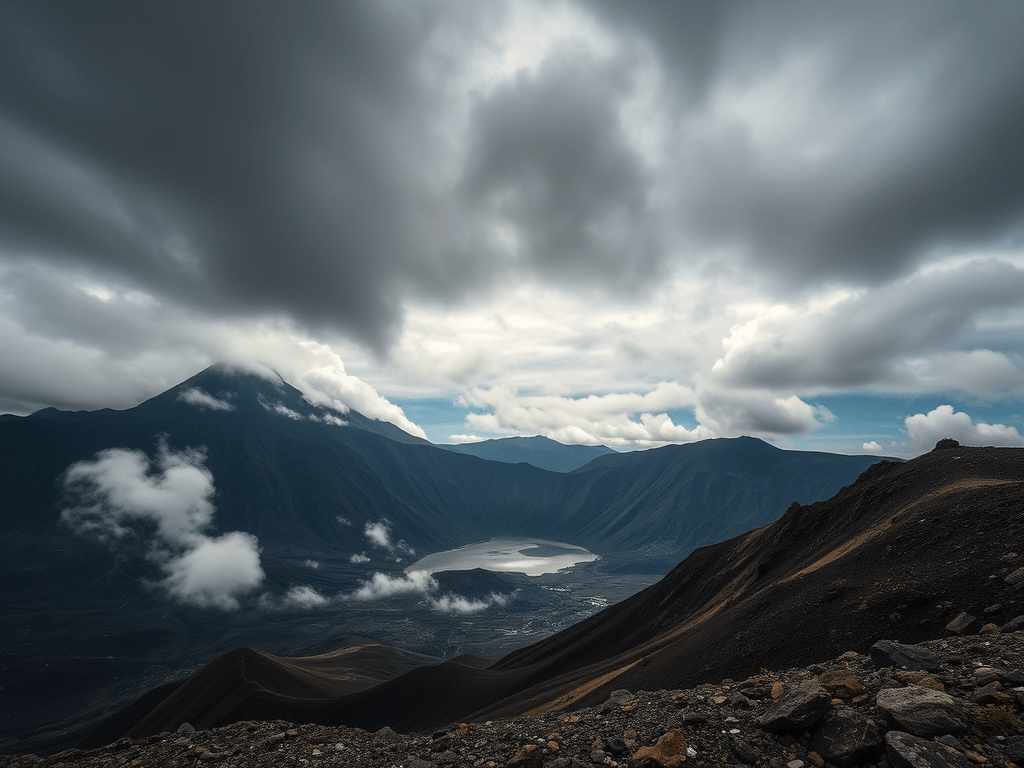
The Campi Flegrei, a sprawling caldera simmering beneath the bustling Bay of Naples, is once again reminding us of its immense power.
A series of unsettling seismic events has gripped the region, leaving residents on edge and raising questions about what the future holds for this volcanic hotspot.
While no major damage or injuries have been reported so far, the persistent tremors serve as a stark reminder of the Earth’s dynamic nature and the potential for larger events.
Over the past few days, the area around Pozzuoli, the heart of the Campi Flegrei, has experienced a surge in earthquake activity. A notable 3.9 magnitude quake struck just after midnight, followed by a series of smaller tremors throughout the morning.
This seismic swarm, characterized by multiple earthquakes in a short period, has understandably caused widespread concern.
The shallow depth of these quakes, often originating just a few kilometers below the surface, amplifies their impact. Residents describe feeling strong shaking, even from relatively low-magnitude events. This proximity to the surface also increases the risk of landslides and ground deformation.
Why is this happening?
The Campi Flegrei is a supervolcano, a massive volcanic depression formed by past eruptions. It’s a restless giant, constantly monitored by scientists due to its potential for future activity. The current seismic unrest is likely linked to the movement of magma and fluids beneath the surface. This “breathing” of the volcano is a normal phenomenon, but it can also be a precursor to more significant events.
What are the possible scenarios?
Scientists are working diligently to understand the current activity and assess the potential risks. Several scenarios are possible:
- Continued Seismic Swarm: The tremors could continue for days, weeks, or even months, gradually decreasing in intensity. This is a common pattern for volcanic unrest.
- Increased Seismic Activity: The current swarm could intensify, leading to larger earthquakes. While unlikely to reach catastrophic levels, stronger quakes could cause damage to buildings and infrastructure.
- Ground Deformation: The movement of magma can cause the ground to rise or fall. Significant ground deformation can destabilize structures and trigger landslides.
- Hydrothermal Activity: Changes in the volcanic system can affect hydrothermal activity, leading to increased steam emissions or the opening of new fumaroles.
- Eruption: While considered less likely in the immediate future, an eruption is a possibility. The Campi Flegrei has a history of explosive eruptions, and future events cannot be ruled out.
What is being done?
The National Institute of Geophysics and Volcanology (INGV) is closely monitoring the situation, using a network of instruments to track seismic activity, ground deformation, and gas emissions. Civil protection authorities are also prepared to respond to any emergencies. Local communities are being kept informed and advised on safety procedures.
What can residents do?
It’s crucial for residents to stay informed about the situation and follow the guidance of local authorities. Knowing what to do in the event of an earthquake can significantly reduce risks. It’s also important to be aware of potential hazards, such as falling debris and unstable ground.
The Uncertainty of Volcanoes
Volcanoes are complex systems, and predicting their behavior is a challenging task. While scientists can monitor activity and assess probabilities, they cannot provide guarantees. The current seismic unrest in the Campi Flegrei serves as a reminder of the power of nature and the importance of preparedness. We must respect the Earth’s forces and learn to coexist with these dynamic environments.
The situation in the Campi Flegrei is evolving, and it’s essential to stay updated with the latest information from reliable sources. The INGV website and local news outlets are good sources for current updates.
The ground continues to tremble beneath the feet of residents in the Phlegraean Fields, near Naples, as a relentless series of earthquakes rocks the region.
Following a day of heightened seismic activity, a powerful 3.9 magnitude quake struck shortly after midnight, sending shockwaves through the area and sending terrified residents pouring into the streets.
The tremors, which have become a disturbingly familiar occurrence in recent months, show no signs of abating. Just this morning, two more jolts, measuring 3.2 and 2.8 on the Richter scale, respectively, rattled the already shaken populace.
Since midnight, a total of eight tremors have been recorded, keeping nerves on edge and fueling fears of a potential escalation.
In Pozzuoli, the epicenter of the seismic swarm, the local government has taken decisive action, closing all schools today as a precautionary measure.
This decision aims to allow for thorough structural assessments of educational facilities and to provide a sense of security to families.
The Palatrincone sports hall in Pozzuoli has been transformed into a makeshift shelter, providing refuge for families who felt unsafe in their homes.
Nine families have sought shelter there, while an estimated 500 people have spent the night in designated parking areas, wrapped in thermal blankets provided by emergency services.
Miraculously, despite the intensity and frequency of the quakes, no injuries or major structural damage have been reported thus far.
However, the psychological toll on the population is significant, with many experiencing heightened anxiety and fear.
The National Institute of Geophysics and Volcanology (INGV) continues to closely monitor the situation, analyzing the seismic data and attempting to predict future activity.
The shallow depth of the quakes, often originating just a few kilometers below the surface, contributes to their intensity and the widespread feeling of unease.
While the current tremors are classified as “very light” on the Richter scale, their persistent occurrence and the region’s volcanic nature raise concerns about potential escalation.
The Campi Flegrei caldera, a supervolcano capable of massive eruptions, demands constant vigilance and preparedness.
The situation in the Phlegraean Fields remains tense, with residents bracing for further tremors and hoping for a return to stability.
The resilience of the local communities is being tested, but their spirit remains strong as they face this unsettling challenge together.

 SummerSimo Travel Troubles Notes and The Purring Page
Leave a comment