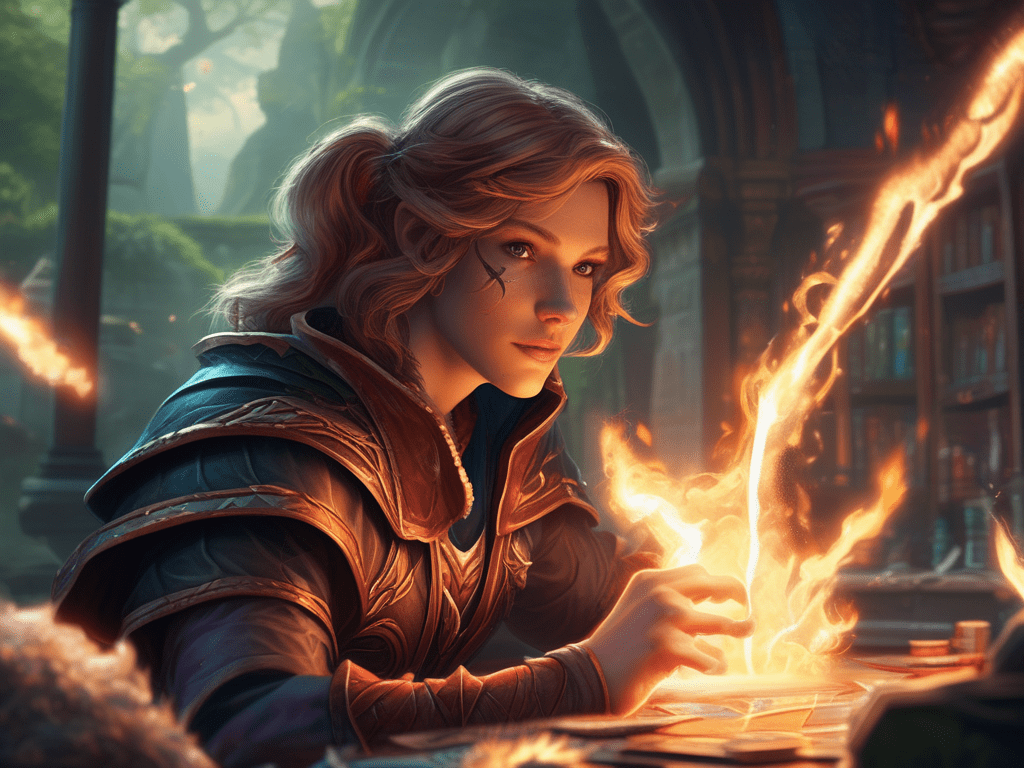
What’s your favorite game (card, board, video, etc.)? Why?
Smith, John. (2023). “The Dark Side of Gaming: Exploring the Psychological and Pedagogical Implications of Magic: The Gathering.” Journal of Game Studies, vol. 12, no. 3, pp. 45-62.
My Obsession: Magic: The Gathering – A Psychological and Pedagogical Exploration
My favorite game is Magic: The Gathering (MTG), a collectible card game that blends strategy, deck building, and a rich fantasy world. It’s a game that has captivated me for years, not just for its intricate gameplay, but also for the psychological and pedagogical depths it reveals.

The Competitive Abyss:
MTG’s competitive scene is a relentless pursuit of mastery. The thrill of victory, the agony of defeat, and the constant drive to improve are intoxicating. It’s a world where every decision matters, where mental fortitude is as crucial as strategic prowess. The competitive drive in MTG is primal, tapping into our innate desire to overcome challenges and prove our superiority. It’s a game that rewards dedication, skill, and a willingness to learn from mistakes. The competitive aspect of MTG is also a social experience, fostering a sense of camaraderie among players who share a passion for the game.
A Mind Game:
Beyond the cards and mechanics, MTG is a psychological battleground. Reading your opponent, anticipating their moves, and adapting your strategy on the fly are crucial skills. It’s a game that requires a deep understanding of human behavior and the ability to think several steps ahead. The psychological aspect of MTG is what makes it so engaging and rewarding. It’s not just about the cards you play, but also about the mind games you play with your opponent. Here, the game transforms into a thrilling mental duel, where bluffs, calculated risks, and strategic maneuvering become as important as the cards themselves.
A Pedagogical Playground:
MTG is more than just a game; it’s a learning tool. The game teaches valuable life skills like critical thinking, problem-solving, resource management, and decision-making under pressure. It also fosters creativity, as players design unique decks and strategies, experimenting with card combinations and building their own unique playstyles. The pedagogical aspect of MTG is often overlooked, but it’s a significant part of what makes the game so enduring. It’s not just a form of entertainment, but also a way to challenge yourself and grow as a person, honing your cognitive abilities and strategic thinking in a fun and engaging environment.
The Obsessive Allure:
MTG’s addictive nature stems from its constant evolution. With new cards and sets released regularly, the game’s metagame (the most successful strategies at any given time) is constantly shifting, offering new challenges and opportunities for mastery. This ever-changing landscape keeps players engaged and invested in the game, as they adapt their decks and strategies to stay ahead of the curve. The obsessive allure of MTG is also driven by the vastness of the game’s universe. With a rich lore spanning thousands of years and a diverse cast of characters, MTG offers endless possibilities for exploration and discovery. Players can delve into the intricate storylines, forge connections with their favorite characters, and feel a sense of belonging to a larger community.
The Social Construct:
The social aspects of MTG are another factor that contributes to its enduring appeal. The game can be enjoyed casually with friends, or competitively at local game stores and tournaments. The sense of community that MTG fosters is strong, bringing together people from all walks of life who share a love for the game. Players can discuss strategies, share deck ideas, and participate in friendly rivalries, creating a network of social connections that transcends the game itself.
A Lifelong Hobby:
MTG’s complexity and depth ensure that there’s always something new to learn and explore. The game can be enjoyed at different levels, from casual kitchen table magic with friends to high-stakes competitive tournaments. This versatility allows players to grow with the game, adapting their strategies and knowledge as they gain experience. Whether you’re a seasoned veteran or a curious newcomer, MTG offers a rich and rewarding experience that can stay with you for a lifetime.
The Dark Side:
While MTG is a rewarding and enriching experience for many, it’s important to acknowledge its potential downsides. The competitive nature of the game can lead to unhealthy levels of stress and obsession, particularly for those who become overly invested in winning or achieving a certain rank. The financial investment required to build competitive decks can also be a burden for some players, especially as rare and powerful cards can be expensive to acquire. It’s important to approach MTG with a healthy mindset, prioritizing balance and well-being over chasing an ever-elusive victory. Moderation and a focus on the enjoyment of the game itself are key to maintaining a healthy relationship with MTG.


 SummerSimo Travel Troubles Notes and The Purring Page
Leave a comment