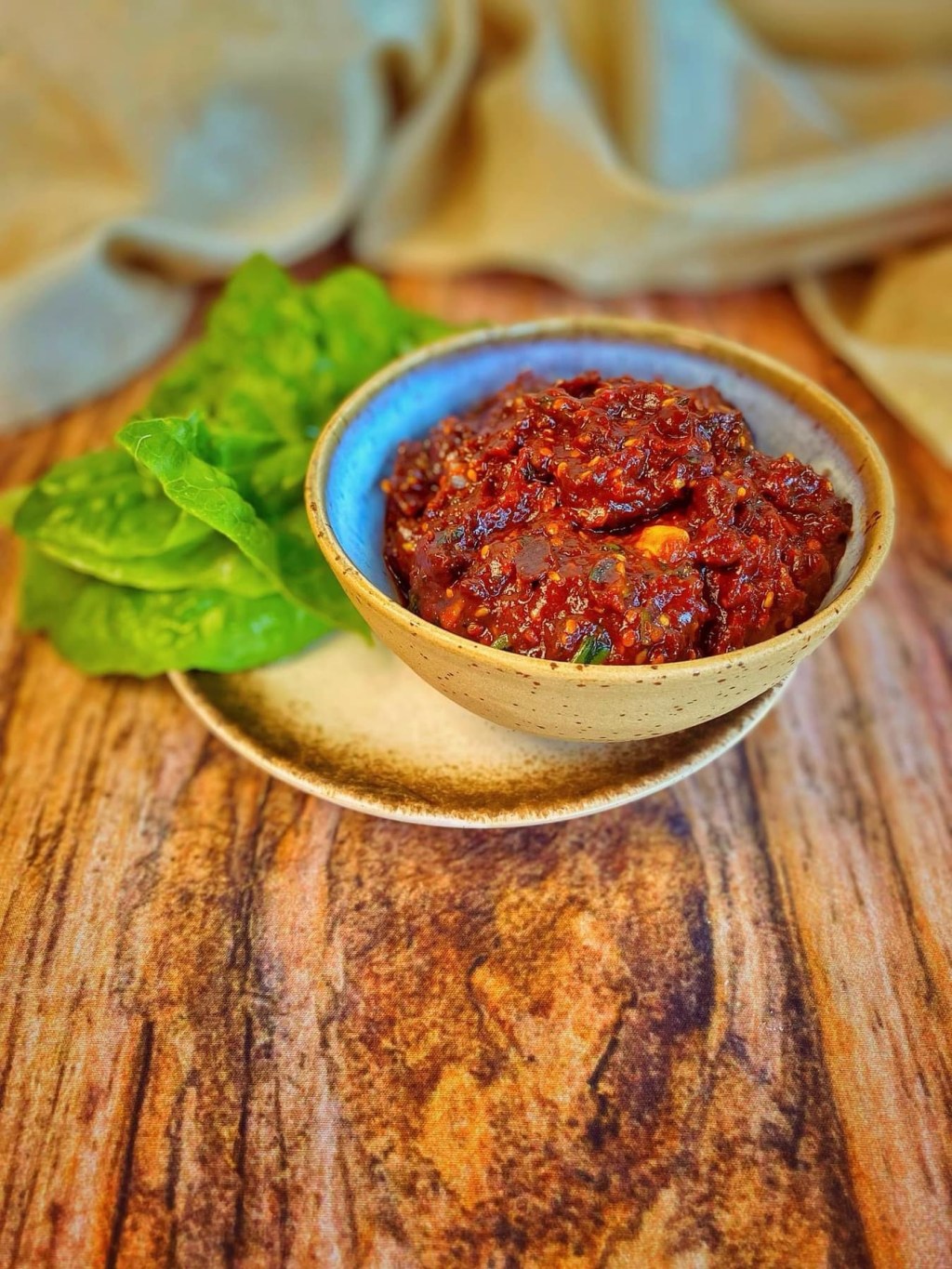
Korean cuisine is renowned for its bold flavors and unique combinations of ingredients. Among the many sauces and condiments that enrich Korean dishes, ssamjang (쌈장) holds a special place. This thick, spicy paste is an essential element of ssam, a traditional dish that consists of food wrapped in a leaf, usually lettuce or perilla.
The Ingredients of ssamjang.
ssamjang is a flavorful mixture that combines several key ingredients of Korean cuisine. Here is an overview of the main ingredients:
- Doenjang (된장): Fermented soybean paste. This ingredient gives ssamjang a depth of umami flavor, with earthy and salty notes.
- Gochujang (고추장): Fermented red chili paste. Adds a sweet and complex spiciness typical of Korean cuisine.
- Sesame Oil: Adds a nutty note and rich aroma that balances the spiciness of gochujang.
- Onion: Provides a natural sweetness and crisp texture.
- Garlic: Adds a pungent, aromatic flavor.
- Green Onions: Provides freshness and a slight onion flavor.
- Cane Sugar (optional): Can be added to balance the flavors and add a slight sweetness.
Preparing Ssamjang
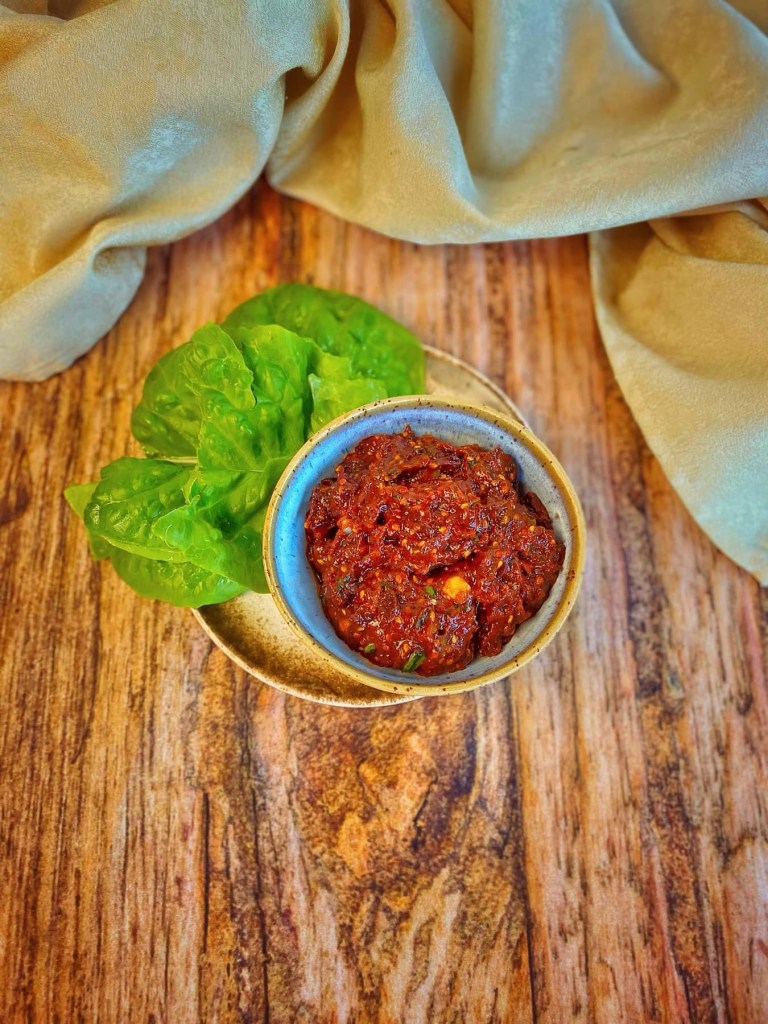
Preparing ssamjang is a simple process that takes only a few minutes. Here is a basic recipe for making this delicious sauce:
Ingredients:
- 2 tablespoons doenjang
- 1 tablespoon of gochujang
- 1 tablespoon sesame oil
- 1/2 onion, finely chopped
- 2 cloves of garlic, chopped
- 2 green onions, chopped
- 1 teaspoon brown sugar (optional)
Procedure:
- In a bowl, combine the doenjang and gochujang.
- Add the sesame oil and mix well until a smooth paste is obtained.
- Incorporate the onion, garlic and chopped green onions.
- If desired, add brown sugar and mix until all ingredients are well combined.
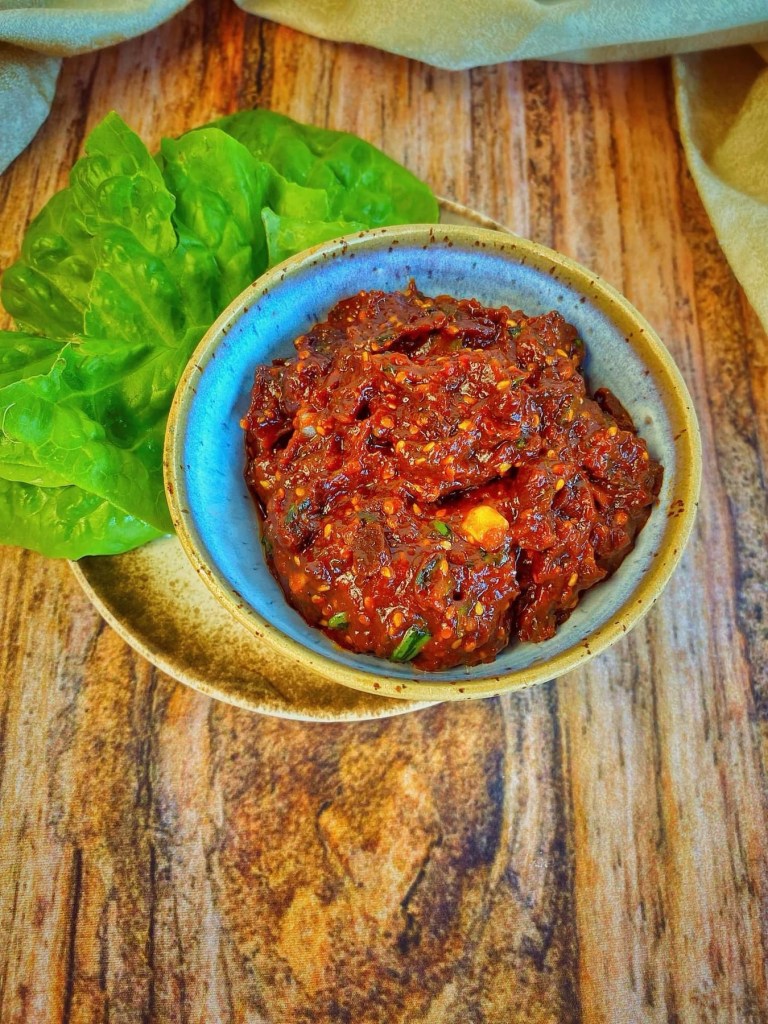
The ssamjang is now ready to be used as a dressing for ssam or as an accompanying sauce for various Korean dishes.
Use of ssamjang
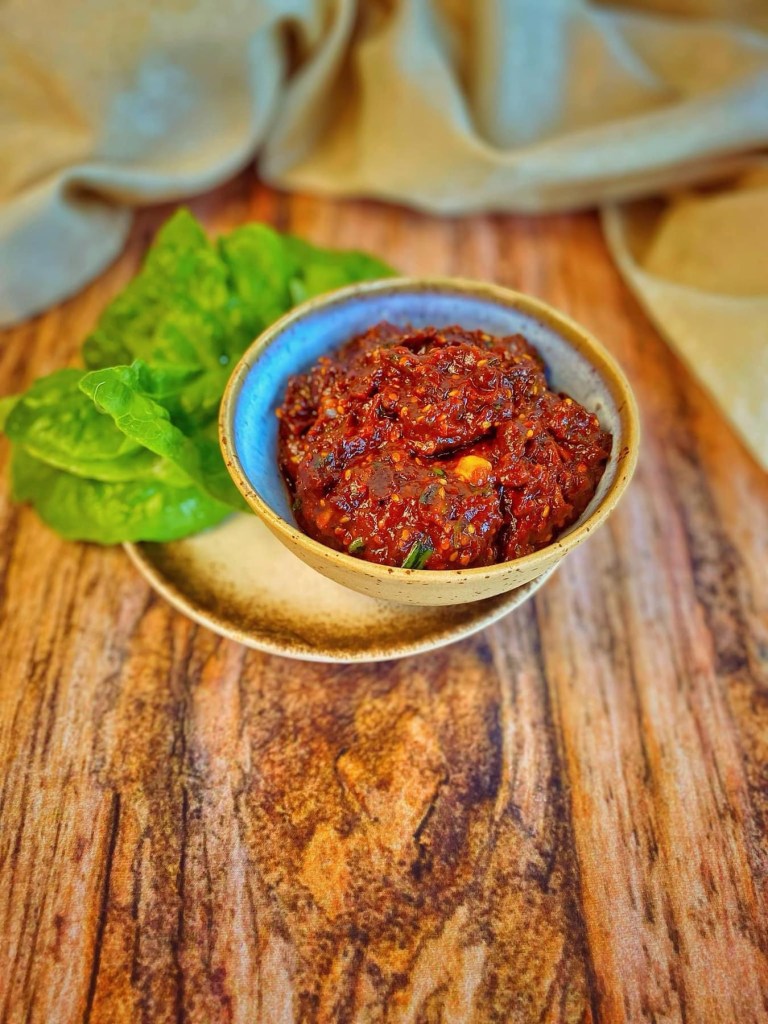
ssamjang is traditionally used in ssam, where it is spread on a lettuce or perilla leaf, along with grilled meat (often samgyeopsal, pork belly), rice and other vegetables. The leaf is then wrapped and eaten as a single bite, offering an explosion of flavors and textures.
In addition to ssam, ssamjang can be used as an accompanying sauce for Korean barbecue, as a condiment for raw or cooked vegetables, or even as an ingredient in other recipes to add a touch of Korean flavor.
Conclusion.
ssamjang is a versatile and flavorful sauce that embodies the essence of Korean cuisine. With its combination of fermented, spicy, and aromatic ingredients, it adds depth and complexity to any dish. Whether you are making authentic Korean ssam or simply looking to enrich your dishes with a unique touch of flavor, ssamjang is a must-have condiment in your kitchen.

 SummerSimo Travel Troubles Notes and The Purring Page
Leave a comment