The fragmentation of Poland into Piast princedoms from 1138 to 1308 marks a pivotal era that shaped the nation’s future trajectory. While initially driven by the desire for regional autonomy among the sons of Boleslaw III, this period of division had profound consequences, both positive and negative, for the Polish state.
A Decentralized Landscape:
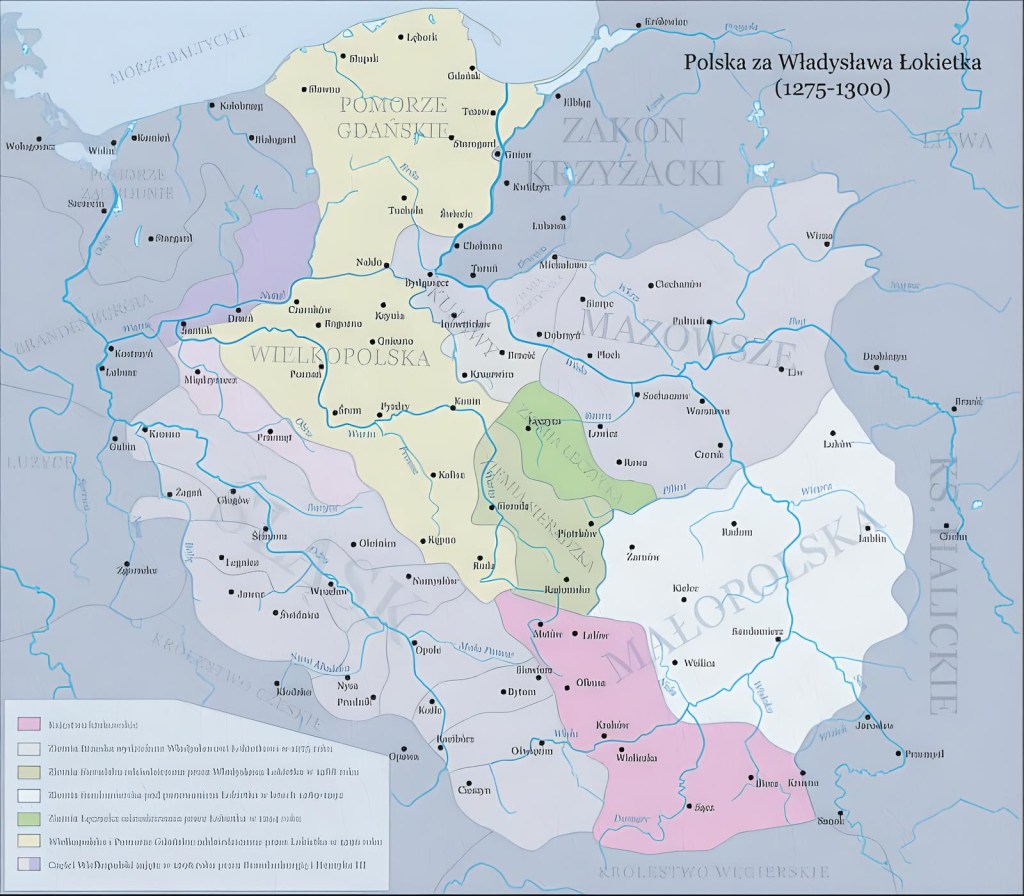
The division of Poland into five princedoms—Silesia, Great Poland, Little Poland, Kuyavia, and Mazovia—created a decentralized political landscape. Each princedom developed its own unique identity, customs, and political structures, contributing to a diverse and dynamic regionalism. This fragmentation also fostered a sense of local autonomy and self-governance, which would later prove crucial in the struggle for national unity.

Internal Strife and External Threats:
However, the Piast fragmentation also brought about internal strife and weakened the overall strength of the Polish state. The princes frequently engaged in power struggles, vying for the title of High Duke, which theoretically represented the head of the Piast dynasty. These internal conflicts often led to alliances with foreign powers, further destabilizing the political landscape.
The fragmented Polish lands also faced external threats from neighboring powers, such as the Teutonic Knights and the Mongol Empire. The lack of a unified defense made the princedoms vulnerable to invasion and subjugation.
The Path to Reunification:
Despite the challenges, the desire for a unified Polish state persisted. In the 13th century, several attempts were made to reunite the divided lands, but these efforts were largely unsuccessful. It wasn’t until the reign of Wladyslaw I the Elbow-High (1306-1333) that Poland began to regain its unity. Through a combination of military prowess, political maneuvering, and diplomatic skill, Wladyslaw I managed to consolidate power and establish a strong central authority.
However, the reunification process was not without its challenges. The provinces of Silesia and Mazovia remained outside of the newly reunified Polish kingdom, highlighting the lasting impact of the Piast fragmentation.
A Legacy of Regionalism and Resilience:
The Piast fragmentation left a lasting legacy on Polish society and culture. The regional identities that emerged during this period continue to shape the country’s diverse cultural landscape. Moreover, the experience of fragmentation and the struggle for reunification fostered a sense of national resilience and determination that would prove crucial in later centuries.
A Lesson in Unity:
The Piast fragmentation serves as a cautionary tale about the dangers of division and the importance of unity in the face of external threats. It also highlights the resilience of the Polish people and their unwavering pursuit of a unified and independent state. The lessons learned during this turbulent period would ultimately pave the way for the establishment of a powerful Polish kingdom that would play a significant role in European history.
The Significance of the Fragmentation:
Despite the initial chaos and instability, the Piast fragmentation played a crucial role in the development of Polish statehood. It fostered a sense of regional identity and diversity that would later become a source of strength for the reunited kingdom. It also led to the development of regional institutions and legal codes, which would be incorporated into the later Polish state.
Moreover, the fragmentation period exposed Poland to a wider range of cultural and political influences. The contact with the Holy Roman Empire and the Teutonic Order led to the adoption of new technologies, legal concepts, and artistic styles.
Conclusion:
The Piast fragmentation was a period of both challenges and opportunities for Poland. While it initially weakened the country, it also laid the groundwork for the eventual reunification and the emergence of a stronger, more resilient Polish state. The regional identities and institutions that developed during this period continue to shape Polish society and culture today.

 SummerSimo Travel Troubles Notes and The Purring Page
Leave a comment