
On the occasion of his thirtieth jubilee, Pharaoh Rameses II asked the Hittite king Hattusilis III for the hand of his favourite 13 years old daughter. Ramses and the Hittites had fought an inconclusive battle twenty fine years earlier, and five years later, in 1269 BCE, the two kingdoms had signed a peace treaty to end a two-hundred-year conflict for control of the lands of the eastern Mediterranean.
The treaty pledged eternal friendship, lasting peace, territorial integrity, nonaggression, extradition, and mutual aid, similar to the ideas enshrined in today’s United Nations. It was the first peace treaty in recorded history.
Negotiations for the marriage were lengthy and mostly handled by King Hattusilis’s Babylonian wife, Puduḫepa, sometimes described as one of the most influential women in the ancient Near East. Extensive correspondence bearing Puduḫepa’s seal was found when the Hittite capital of Hattusha was rediscovered in 1833, and through its dense cuneiform script we can follow them almost step by step.
Her original request was that her daughter should become the Pharaoh’s primary wife rather than a secondary one. Rameses was 35 years old and had already had two primary wives, Nefertari and Isetnofret, both of whom had died. Puduchepa and Nefertari had maintained friendly relations, sending gifts and calling each other sister, and Queen Puduchepa had sent messages of concern when she heard of Nefertari’s failing health. Ramsess agreed to make her daughter his first wife.
Puduchepa was also concerned about her daughter’s personal servants, whom she asked the Pharaoh to protect. Their number is not specified, but they were probably many, considering that a Mitannian princess who had married Amenhotep III a century earlier arrived with 3,300 ladies in waiting.
Most of the correspondence, however, was about the dowry. In one such document, the pharaoh appears dissatisfied. Puduḫepa replied that the royal storehouse had caught fire, and then asked: “Does my brother have no property? … But brother, you are getting rich at my expense! This is unworthy of the reputation and dignity of a great lord”, and finally assured him that it would be greater than that received by the kings of Babylon. It would eventually consist of gold, silver, bronze, slaves, teams of horses, cattle, goats and thousands of sheep.
When the princess was ready, Puduḫepa sent a message to inform the Pharaoh of their departure. The caravan, protected by Hittite soldiers, would take her to the border, where Puduḫepa expected her daughter to meet some envoys who would anoint her “with fine oil and bring her to the house of the Great King, the King of the land of Egypt, my brother!”.
He replied, seemingly happy: “The Sun God, the Storm God, the Gods of Egypt and the Gods of the Land of the Hittites have decreed that our two great countries be united forever.”
King Hattusilis, unwilling to appear subservient, did not accompany the ladies. Though Ramses didn’t complain, his marriage stele depicted the king standing beside his wife and daughter, proclaiming that he had come “to seek his favour.”
The journey took far longer than expected, six months instead of the usual 6 weeks, but then it was a massive caravan moving slowly from one big camp to the next, and it was winter, when the ground was softened by the rain.
From Hattusha they travelled south through what is now Turkey to Adana, a city near the Mediterranean coast. From there they continued through the kingdom of Kizzuwatna to Aleppo in what is now Syria, and finally to Kadesh, where the Egyptians and Hittites had fought the famous battle years before. It was there, on the border of the Egyptian territories, that Queen Puduhepa sent a message to the Pharaoh, telling him that her and her daughter had “crossed rugged mountains and treacherous passes to reach Your Majesty’s border”.
Rameses sent a welcoming party to escort the princess through Canaan and into Egypt, and she arrived at Pi-Ramesse in February 1245 BCE, four years after the beginning of the marriage negotiations. On his wedding stele, Ramses describes seeing the caravan arrive with “the daughter of the great chief marching in front of the army that followed her”.
The Hittite princess original name was never mentioned, but a new one was given to her when she became the Great Royal Consort: Maathorneferure – meaning “Neferure, she who sees Horus”.According to Egyptian custom, there was no wedding ceremony.
She lived in the harem of Gurob, south of El Faiyum, while Rameses’ daughters presided over the Egyptian rituals and celebrations she couldn’t perform herself. She died young and her mother send another daughter, about whom, however, I found no information
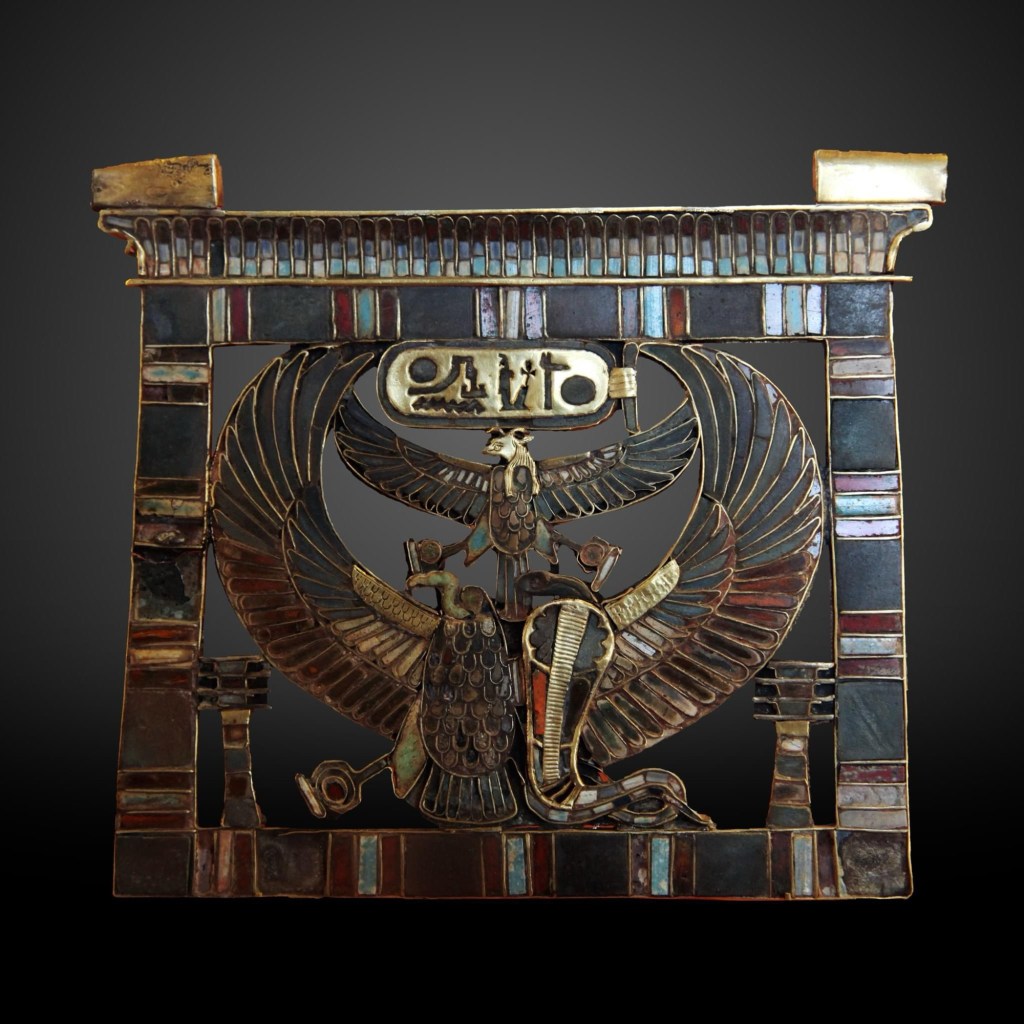
Amulet belonging to Ramses II, 1279- 1213 BCE. Gold, glass and turquoise, Louvre Museum, Paris.

𝗜𝗟 𝗠𝗔𝗧𝗥𝗜𝗠𝗢𝗡𝗜𝗢 𝗗𝗜 𝗥𝗔𝗠𝗦𝗘𝗦 𝗜𝗜
In occasione del suo trentesimo giubileo, il faraone Ramses II chiese la mano della figlia maggiore del re ittita Hattusilis III, che aveva solo tredici anni. Ramses e gli Ittiti avevano combattuto una battaglia inconcludente vent’anni prima e cinque anni dopo, nel 1269, i due regni firmarono un trattato di pace, ponendo fine a un conflitto durato duecento anni per il controllo delle terre del Mediterraneo orientale.
Il trattato prometteva amicizia eterna, pace duratura, integrità territoriale, non aggressione, estradizione e aiuto reciproco, simili alle idee custodite nelle odierne Nazioni Unite. Fu il primo trattato di pace documentato della storia.
Le trattative per il matrimonio furono lunghe e per lo più gestite dalla moglie babilonese del re, Puduḫepa, talvolta descritta come una delle donne più influenti del Medio Oriente antico. Moltissime tavolette recanti il sigillo di Puduḫepa sono state rinvenute durante la riscoperta della capitale ittita di Hattusa nel 1833 e, attraverso la fitta scrittura cuneiforme possiamo seguirle quasi passo per passo.
La sua richiesta iniziale era che la figlia diventasse la moglie principale del faraone, anziché una moglie secondaria. Ramses aveva 35 anni e aveva già avuto due mogli principali, Nefertari e Isetnofret, entrambe morte. Puduchepa e Nefertari avevano mantenuto relazioni amichevoli, inviandosi doni e chiamandosi reciprocamente sorella, e la regina Puduchepa aveva inviato messaggi di preoccupazione quando aveva saputo della salute cagionevole di Nefertari. Ramsess accettò la richiesta.
Puduchepa era anche preoccupata per i servitori personali della figlia, che chiese al faraone di proteggere. Il loro numero non è specificato, ma probabilmente erano molti, considerando che una principessa mitanniana che aveva sposato Amenhotep III un secolo prima era arrivata con 3.300 dame di compagnia.
La maggior parte della corrispondenza, tuttavia, riguardava la dote. In uno di questi documenti il faraone appare insoddisfatto. Puduḫepa rispose che il magazzino reale aveva preso fuoco e poi chiese: “Mio fratello non ha proprietà? … Ma fratello, ti stai arricchendo a mie spese! Questo è indegno della reputazione e della dignità di un grande signore”, per poi rassicurarlo che sarebbe stata più grande di quella ricevuta dai re di Babilonia. Alla fine consistette in oro, argento, bronzo, schiavi, squadre di cavalli, bestiame, capre e migliaia di pecore.
Quando fu il momento di partire, Puduḫepa inviò un messaggio per informare il faraone della loro partenza. La carovana sarebbe stata protetta da soldati ittiti e lei avrebbe seguito la figlia fino al confine, dove si aspettava di incontrare alcuni inviati che avrebbero “unto la testa di mia figlia con olio pregiato e l’avrebbero portata nella casa del Grande Re, il Re della terra d’Egitto, mio fratello!”.
Apparentemente felice, lui rispose,: “Il Dio Sole, il Dio della Tempesta, gli Dei dell’Egitto e gli Dei della Terra degli Ittiti hanno decretato che i nostri due grandi Paesi siano uniti per sempre”.
Il re Hattusilis non accompagnò le donne perché non voleva essere visto come un vassallo che rende omaggio a un sovrano superiore. Ramsess non si lamentò, ma la sua stele nuziale mostra il re in piedi accanto alla figlia, dove viene descritto come un grande re venuto “per cercare il favore del re Ramsess”.
Il viaggio durò molto più del previsto, sei mesi invece delle solite sei settimane, ma si trattava di un’enorme carovana che si spostava lentamente da un grande accampamento all’altro, ed era inverno, quando il terreno era ammorbidito dalla pioggia.
Da Hattusha viaggiarono verso sud attraverso l’attuale Turchia fino ad Adana, una città vicina alla costa mediterranea. Da lì proseguirono attraverso il regno di Kizzuwatna fino ad Aleppo, nell’attuale Siria, e infine a Kadesh, dove anni prima Egizi e Ittiti avevano combattuto la famosa battaglia. È qui, al confine con i territori egiziani, che la regina Puduhepa inviò un messaggio al Faraone, comunicandogli che lei e sua figlia avevano “attraversato aspre montagne e infidi passi per raggiungere il confine di Vostra Maestà”.
Ramses inviò un gruppo di accoglienza per scortare la principessa attraverso Canaan e l’Egitto, e lei arrivò a Pi-Ramesse nel febbraio del 1245 a.C., quattro anni dopo l’inizio delle negoziazioni prematrimoniali. Sulla sua stele nuziale, Ramses descrive l’arrivo della carovana con “la figlia del grande capo che marcia davanti all’esercito che la segue”.
Il vero nome della principessa ittita non fu mai menzionato, ma le ne fu attribuito uno nuovo quando divenne la Grande Sposa Reale: Maathorneferure, “Neferure, colei che vede Horus”. Secondo il costume egiziano, non ci fu alcuna cerimonia nuziale.
La sposa visse nell’harem di Gurob, a sud di El Faiyum, mentre le figlie di Ramses presiedevano ai rituali e alle celebrazioni egiziane che non poteva celebrare lei stessa. Morì giovane e sua madre mandò un’altra figlia, ma non ho trovato informazioni sul suo conto.
Amuleto appartenente a Ramses II, 1279-1213 a.C.. Oro, vetro e turchese, Museo del Louvre, Parigi.

 SummerSimo Travel Troubles Notes and The Purring Page
Leave a comment