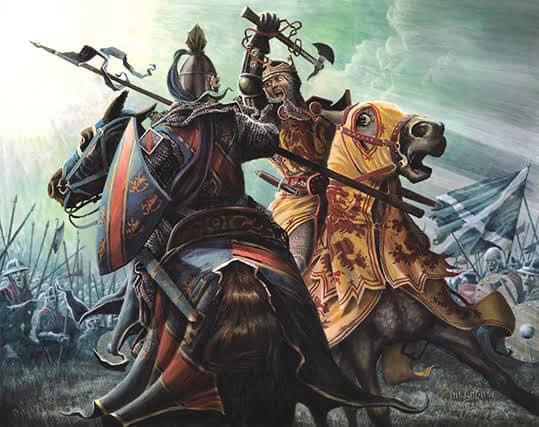
Robert the Bruce and his Scottish army fought Edward II and a larger English army at the Battle of Bannockburn in the year 1314. The decisive victory of Robert resulted in his territory and influence expanding. Before the battle almost all of Scotland was cleared of strongholds loyal to the English throne. By 1314, only two strongholds remained loyal under English control ; the besieged Stirling Castle and Berwick. The garrison at Stirling aggreed to surrender to Bruce if no relief came by the time of midsummer.
King Edward was intent on relieving the castle and assembled a large force of about 13,000 according to modern sources. Unlike his father however, the younger Edward was a weak and unpopular king. Morale was low on the English side due to years of dispute with his barons and other incompetencies. Edward’s army consisted of Welsh archers and a good portion of heavy cavalry. Bruce meanwhile, had a smaller estimated force of 7,000 with majority of his men being pikemen with a few light cavalry. Robert positioned his army at a forested part of the battlefield with the aim of funneling any attack into his heavy infantry.
The result of the battle was a disaster for the English. As with Stirling Bridge with William Wallace earlier, the Scottish pikemen were shown to be very effective against the heavy cavalry of the English army. Scottish independence would soon follow a few years later.
Picture from Andrew Hillhouse
Sources:
https://www.britannica.com/event/Battle-of-Bannockburn

 SummerSimo Travel Troubles Notes and The Purring Page
Leave a comment