The Colossal Neo-Hittite lion statue, carved from basalt, was indeed discovered near the Ain Dara temple in Syria in 1955. It’s estimated to date back to the 10th-8th centuries BCE. The Ain Dara temple is an important archaeological site with evidence of occupation from the Neolithic to the Hellenistic periods.
The statue itself is a testament to the artistic and cultural achievements of the Syro-Hittite states that emerged after the fall of the Hittite Empire. The lion motif was a common symbol of power and royalty in the ancient Near East, and its presence at Ain Dara suggests the importance of the site in the region.
Historical Context
The Late Bronze Age collapse around 1200 BCE led to the fragmentation of the Hittite Empire and the rise of smaller Syro-Hittite states. These states inherited much of the cultural and artistic traditions of the Hittites, including their religious iconography and architectural styles. The Ain Dara temple and its associated sculptures, including the colossal lion, are examples of this cultural continuity.
Current Status
The Ain Dara temple and its surrounding area suffered significant damage during the Syrian Civil War. The temple itself was bombed in 2018, and the fate of the colossal lion statue is uncertain. There are reports that it may have been looted or destroyed.
Additional Information
- Families: The lion statue is not associated with any particular family or dynasty. It is a symbol of power and royalty that was common in the ancient Near East.
- Accommodations and Links: The Ain Dara site is not currently accessible to tourists due to the ongoing conflict in Syria. However, there are several online resources that provide information about the site and its history.
- Official Sources: The Syrian Directorate-General of Antiquities and Museums (DGAM) is the official source of information about archaeological sites in Syria. However, due to the current situation, their website may not be accessible.
- Books and Novels: Several academic books and articles have been written about Ain Dara and the Syro-Hittite states. Some examples include:
- “The Archaeology of Syria: From Complex Hunter-Gatherers to Early Urban Societies” by Peter M. M. G. Akkermans and Glenn M. Schwartz
- “Ancient Syria: A Three Thousand Year History” by Trevor Bryce
The colossal lion statue is a fascinating artifact that provides insight into the art, culture, and history of the ancient Near East. While its current status is uncertain, it remains an important symbol of the region’s rich heritage.
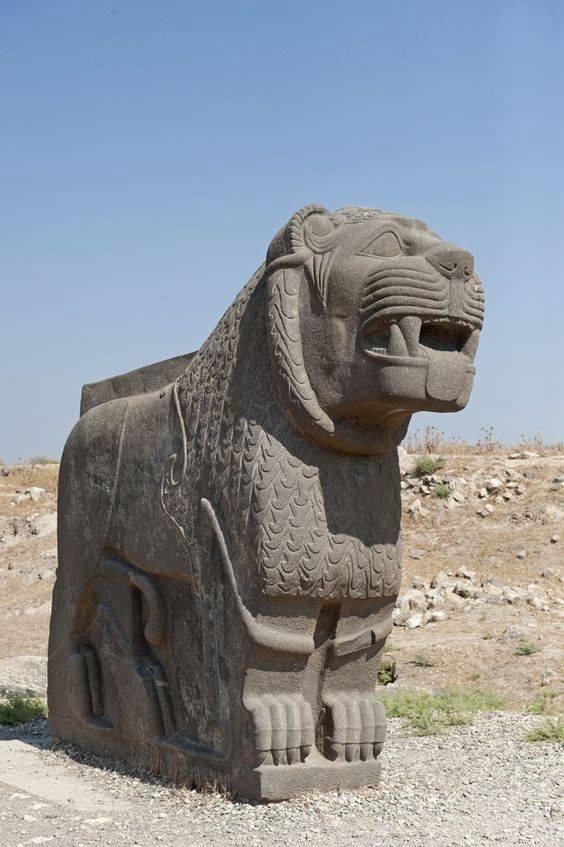
The Statue in Detail
- Size and Material: The lion is colossal indeed, measuring about 3 meters long and 1.5 meters high. It was carved out of a single block of black basalt, a volcanic rock known for its durability.
- Style and Symbolism: The lion exhibits typical Neo-Hittite features, like a stylized mane, muscular body, and a focus on geometric patterns in the carving. The lion was a prevalent symbol of power and kingship in ancient Near Eastern cultures, and this statue likely served a similar purpose at Ain Dara.
- Placement: The lion statue was originally located at the entrance of the Ain Dara temple, flanking the monumental staircase. This position would have reinforced the temple’s significance and the authority of its rulers.
The Ain Dara Temple Complex
- Layout: The temple followed a typical Syro-Hittite architectural style, with a raised platform, a monumental staircase, and a large central hall supported by columns. The walls and floors were decorated with intricate reliefs depicting various deities, mythical creatures, and scenes of ritual activity.
- Religious Significance: The temple is believed to have been dedicated to Ishtar/Astarte, a prominent goddess of love, fertility, and war in the ancient Near East. The presence of lion statues reinforces this connection, as lions were often associated with Ishtar.
- Unique Features: The temple at Ain Dara is unique for its impressive size and elaborate decorations. The basalt reliefs are some of the finest examples of Syro-Hittite art, providing valuable insights into their religious beliefs and artistic traditions. The temple’s design also features striking similarities to the Biblical description of Solomon’s Temple in Jerusalem, sparking debates about potential cultural connections.
Preservation and Future
- Damage and Looting: The Ain Dara temple suffered severe damage during the Syrian Civil War, with reports of looting and destruction of artifacts. The exact fate of the colossal lion statue remains unclear, but concerns have been raised about its potential loss or damage.
- Digital Preservation: Fortunately, detailed photographs and documentation of the Ain Dara temple and its sculptures were made before the conflict. Efforts are underway to create digital archives and virtual reconstructions of the site to preserve its cultural heritage for future generations.
- Hope for Restoration: While the current situation in Syria remains challenging, there is hope that one day the Ain Dara temple can be restored and its treasures, including the colossal lion statue, can be safely returned to their rightful place.

 SummerSimo Travel Troubles Notes and The Purring Page
Leave a comment