The Battle of Buda, fought between May 4 and August 21, 1541, marked a pivotal moment in European history, as the Ottoman Empire decisively ended the Kingdom of Hungary. This significant military engagement not only altered the political landscape of Central Europe but also set the stage for the transformation of Buda and its surrounding territories into a vital part of the Ottoman realm.
The Prelude to the Battle
The Kingdom of Hungary had been a formidable power in Central Europe, but by the early 16th century, it was weakened by internal strife and external threats. The Ottoman Empire, under the leadership of Sultan Suleiman the Magnificent, had been expanding its influence and territory across the Balkans and into Central Europe. The Battle of Mohács in 1526 had already dealt a severe blow to Hungary, leading to the death of King Louis II and the fragmentation of the kingdom.
The Siege and Capture of Buda
In 1541, the Ottomans set their sights on Buda, the capital of the Kingdom of Hungary. The siege began on May 4, with the Ottoman forces employing a combination of artillery bombardment and strategic maneuvers to weaken the city’s defenses. The defenders, though valiant, were outmatched by the superior numbers and tactics of the Ottoman army.
After months of relentless siege, the city of Buda fell to the Ottomans on August 21, 1541. The capture of Buda was not just a military victory; it symbolized the definitive end of the Kingdom of Hungary as an independent entity. The remaining territories of the kingdom were either absorbed into the Ottoman Empire or became vassal states.
The Establishment of the Budin Eyalet
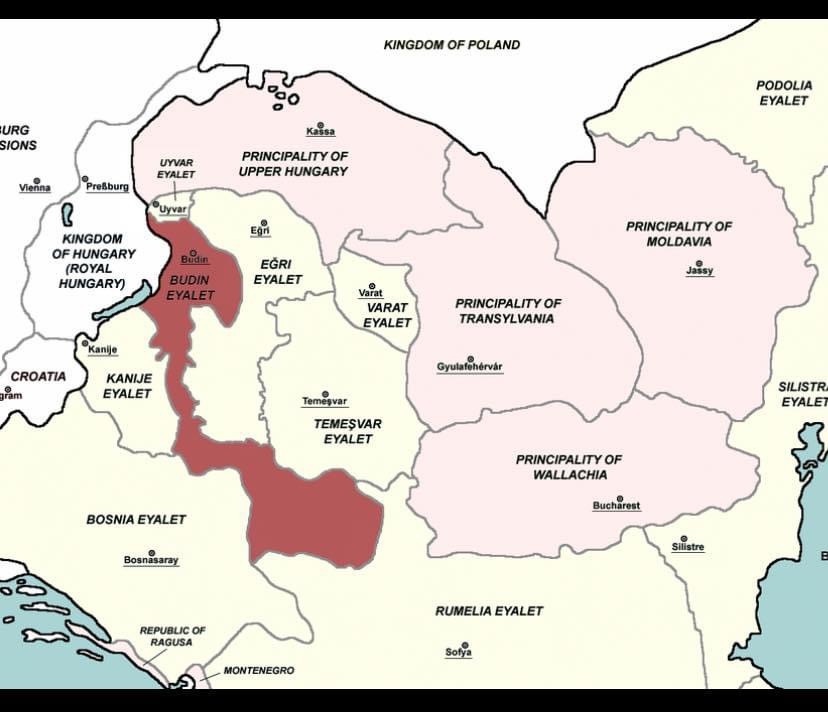
Following the conquest, the Ottomans established the Budin Eyalet (Pashalik), with Buda as its administrative center. This new province became a crucial part of the Ottoman Empire, serving as a strategic and economic hub in Central Europe. The Budin Eyalet was governed by a Pasha, who oversaw the administration, military, and taxation of the region.
It is important to note that while the Budin Eyalet was fully integrated into the Ottoman Empire, other regions such as Transylvania, Moldova, and Wallachia maintained a different status. These territories became vassal states, acknowledging Ottoman suzerainty but retaining a degree of autonomy. They were never fully incorporated as pashaliks, highlighting the varied nature of Ottoman control in the region.
The Transformation of Buda
The capture of Buda had profound implications for the city’s demographic and cultural landscape. Over the course of the 17th century, Buda underwent significant changes, becoming a majority Muslim city. The Ottomans implemented policies that encouraged the settlement of Muslims in the city, including the construction of mosques, baths, and other Islamic institutions. This transformation was part of a broader strategy to consolidate Ottoman control and integrate the region into the empire’s cultural and religious fabric.
Legacy of the Battle of Buda
The Battle of Buda and the subsequent establishment of the Budin Eyalet marked the end of the Kingdom of Hungary and the beginning of a new era in Central European history. The Ottoman presence in the region lasted for over a century, leaving a lasting impact on the cultural, architectural, and social landscape of Hungary.
The fall of Buda also underscored the shifting balance of power in Europe during the 16th century, as the Ottoman Empire continued its expansion into the heart of the continent. The legacy of this period is still evident today, as the historical and cultural influences of the Ottoman era remain an integral part of Hungary’s heritage.
In conclusion, the Battle of Buda was a decisive moment that reshaped the course of Hungarian and European history. The Ottoman victory not only ended the Kingdom of Hungary but also transformed Buda into a significant center of Ottoman administration and culture, leaving an indelible mark on the region’s history.

 SummerSimo Travel Troubles Notes and The Purring Page
Leave a comment