The sky is a canvas, and the weather is its artist, painting a spectrum of colors that evoke emotions, tell stories, and even predict the future. From the fiery reds of a sunset to the ominous grays of an approaching storm, weather colors are a fascinating phenomenon that captivates our senses and influences our daily lives.
The Science Behind Weather Colors
The colors we see in the sky are primarily the result of the scattering of sunlight by the atmosphere. This scattering is influenced by the size and composition of particles in the air, as well as the angle of the sun. Here’s a closer look at some common weather colors and the science behind them:
- Blue Skies: On a clear day, the sky appears blue because of Rayleigh scattering. This phenomenon occurs when the molecules in the atmosphere scatter shorter wavelengths of light (blue and violet) more than longer wavelengths (red and yellow). Our eyes are more sensitive to blue light, and thus, we perceive the sky as blue.
- Red and Orange Sunsets: As the sun sets, its light has to pass through a greater thickness of the Earth’s atmosphere. This scatters the shorter blue wavelengths out of our line of sight, leaving the longer red and orange wavelengths. The result is a breathtaking display of warm colors that can vary depending on atmospheric conditions, such as the presence of dust or pollution.
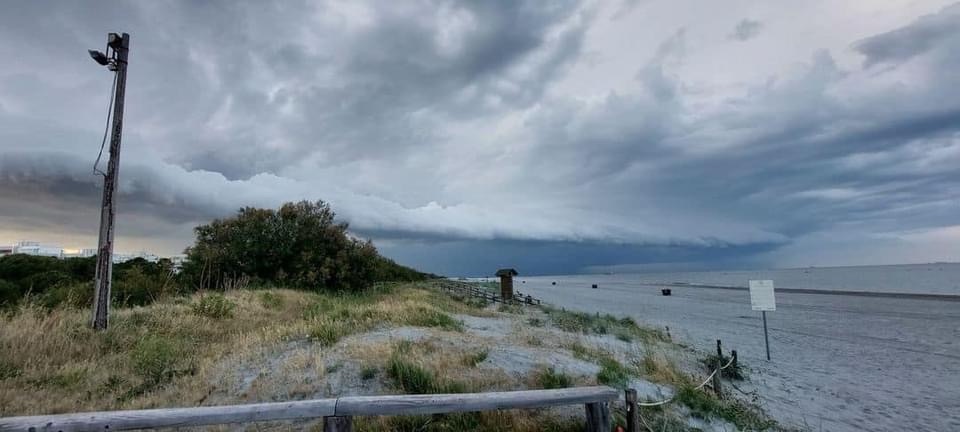
- Gray Clouds: Clouds appear gray when they are thick enough to block most of the sunlight. The water droplets or ice crystals in the clouds scatter all wavelengths of light equally, resulting in a white or gray appearance. The darker the cloud, the more water it contains, which can be an indicator of impending rain or storms.
- Green Skies: A greenish tint in the sky is often associated with severe weather, such as thunderstorms or tornadoes. This unusual color can occur when the reddish light from a setting sun is scattered by water droplets in a storm cloud, creating a greenish hue. While not a guarantee of severe weather, a green sky is a signal to stay alert.
- Purple Skies: Occasionally, the sky can take on a purple hue, especially during twilight. This can happen when the red and blue light from the sun mix in the atmosphere. Purple skies can also be a result of volcanic ash or other particles in the air that scatter light in unique ways.
Cultural and Emotional Impact
Weather colors are not just a scientific curiosity; they have a profound impact on our emotions and cultural expressions. Artists, poets, and musicians have long drawn inspiration from the colors of the sky, using them to convey moods and themes. For instance, a bright blue sky is often associated with happiness and tranquility, while a stormy gray sky can evoke feelings of melancholy or foreboding.
In many cultures, weather colors also hold symbolic meanings. For example, in some Native American traditions, a red sky at night is considered a good omen, while a red sky in the morning is seen as a warning of bad weather to come. This aligns with the old sailor’s adage: “Red sky at night, sailor’s delight; red sky in the morning, sailor’s warning.”
Predicting Weather Through Colors
Observing the colors of the sky can also provide clues about upcoming weather conditions. Here are a few tips:
- Red Sky at Night: Indicates high pressure and stable air coming in from the west, suggesting good weather.
- Red Sky in the Morning: Suggests that a low-pressure system is moving in from the east, bringing potential bad weather.
- Dark, Ominous Clouds: Often a sign of heavy rain or thunderstorms.
- Yellow or Brownish Sky: Can indicate the presence of dust or pollution, which may affect air quality.
Conclusion
Weather colors are a beautiful and complex interplay of light and atmosphere, offering both aesthetic pleasure and practical insights. Whether you’re an artist seeking inspiration, a meteorologist predicting the weather, or simply someone who loves to gaze at the sky, the colors of the weather provide a rich tapestry of visual and emotional experiences. So next time you look up, take a moment to appreciate the ever-changing palette of the sky.


 SummerSimo Travel Troubles Notes and The Purring Page
Leave a comment