The Macedonian phalange, a formidable military formation, was a cornerstone of the Kingdom of Macedonia’s military might, particularly during the reigns of Philip II and his illustrious son, Alexander the Great, in the fourth century BC. This innovative tactic was characterized by the strategic arrangement of soldiers, known as Macedonian hoplites, who wielded a unique and powerful weapon: the sarissa.
The Sarissa: A Game-Changing Weapon
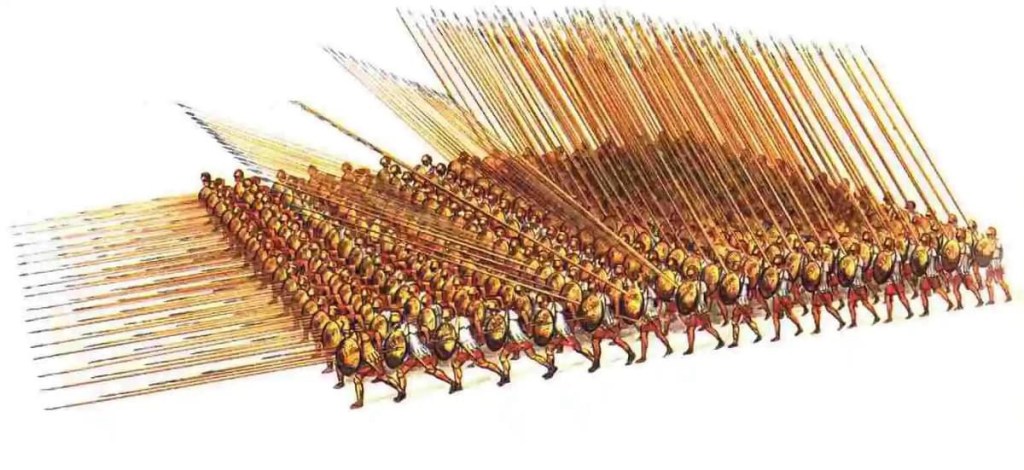
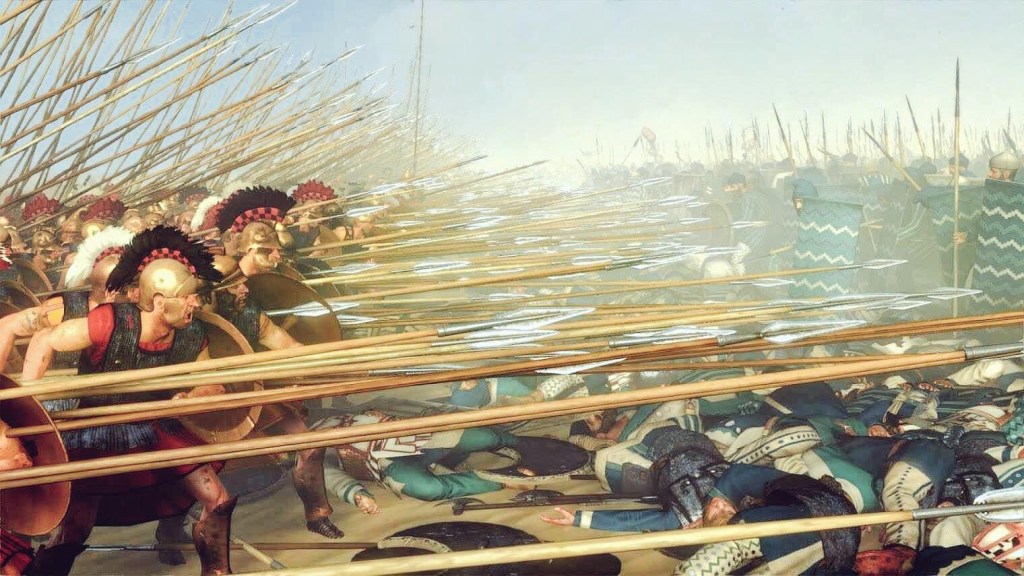
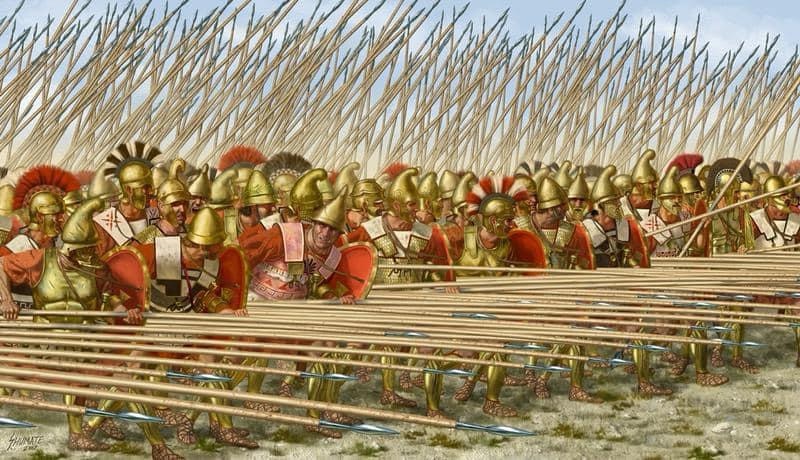
The sarissa was a distinctive and revolutionary weapon that set the Macedonian phalange apart from other military formations of the time. Measuring up to 6 meters in length, the sarissa allowed Macedonian hoplites to engage their enemies from a significantly greater distance than the shorter spears used by their adversaries. This extended reach provided a tactical advantage, enabling the phalange to strike effectively while maintaining a defensive barrier against enemy forces.
Formation and Organization
The phalange was meticulously organized into deep rows, creating an imposing and nearly impenetrable wall of spears on the battlefield. Each hoplite was trained to maintain precise coordination and discipline, ensuring that the formation moved as a cohesive unit. This organization not only maximized the offensive capabilities of the sarissa but also provided a robust defense against frontal assaults.
Discipline and Coordination: Keys to Success
The superiority of the Macedonian phalange lay in its discipline, coordination, and the effective use of the sarissa. Soldiers underwent rigorous training to master the complex maneuvers required to maintain the integrity of the formation. This discipline was crucial in numerous battles, where the phalange’s ability to hold its ground and execute precise movements often determined the outcome.
The Phalange in Action: Alexander’s Conquests
The effectiveness of the Macedonian phalange was demonstrated in the conquests of Alexander the Great. Under his leadership, the phalange played a pivotal role in the expansion of the Macedonian Empire, securing victories in battles across Persia, Egypt, and beyond. The combination of the sarissa’s reach and the phalange’s disciplined formation allowed Alexander to outmaneuver and overpower larger and more diverse enemy forces.
Evolution and Adaptation
Despite its initial success, the Macedonian phalange was not without its limitations. Its effectiveness depended heavily on the discipline and training of the soldiers, as well as the tactics employed by the enemy. As military strategies evolved, so too did the phalange. Over time, adaptations were made to address the changing nature of warfare, ensuring that the Macedonian military remained a formidable force.
Legacy of the Macedonian Phalange
The legacy of the Macedonian phalange endures as a testament to the ingenuity and strategic prowess of ancient military leaders. The combination of the sarissa and the disciplined formation of hoplites revolutionized warfare in the ancient world, setting a standard for military tactics that influenced subsequent generations.
In conclusion, the Macedonian phalange was a revolutionary military formation that played a crucial role in the successes of Philip II and Alexander the Great. Its disciplined organization, combined with the innovative use of the sarissa, made it a formidable force on the battlefield. While the phalange eventually evolved to meet the demands of changing warfare, its impact on military history remains undeniable.
Sources:
- Text from Archaeohistory
- Generic images from the internet

 SummerSimo Travel Troubles Notes and The Purring Page
Leave a comment