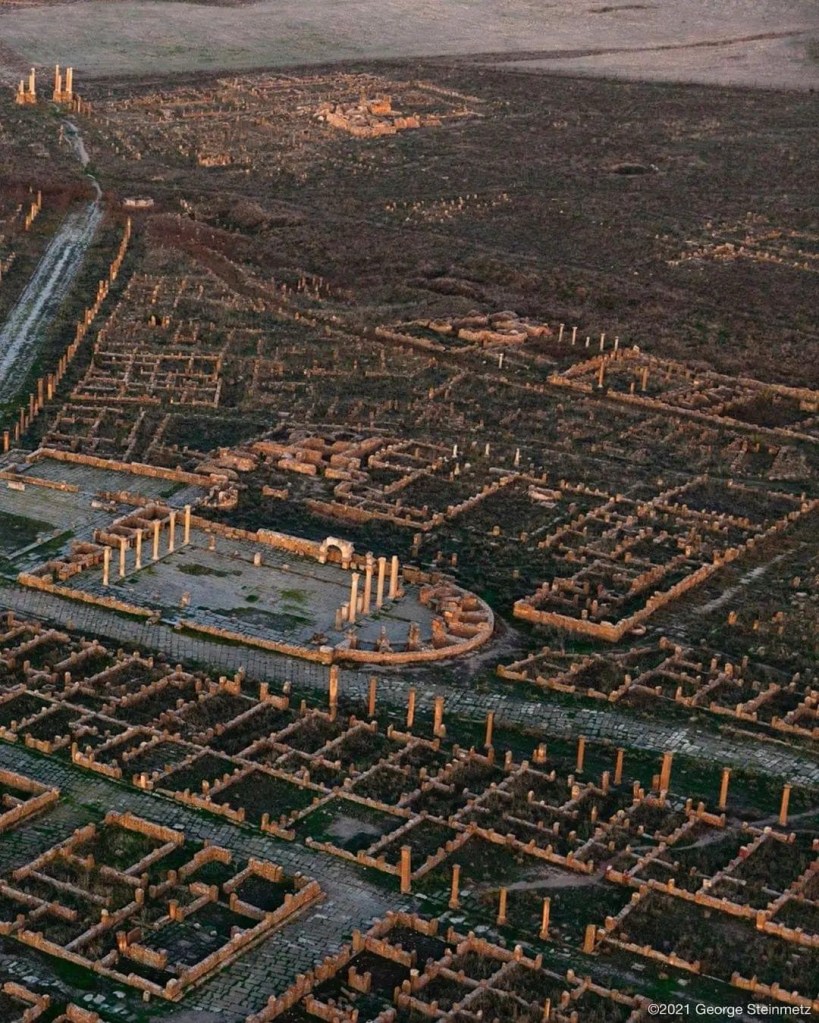
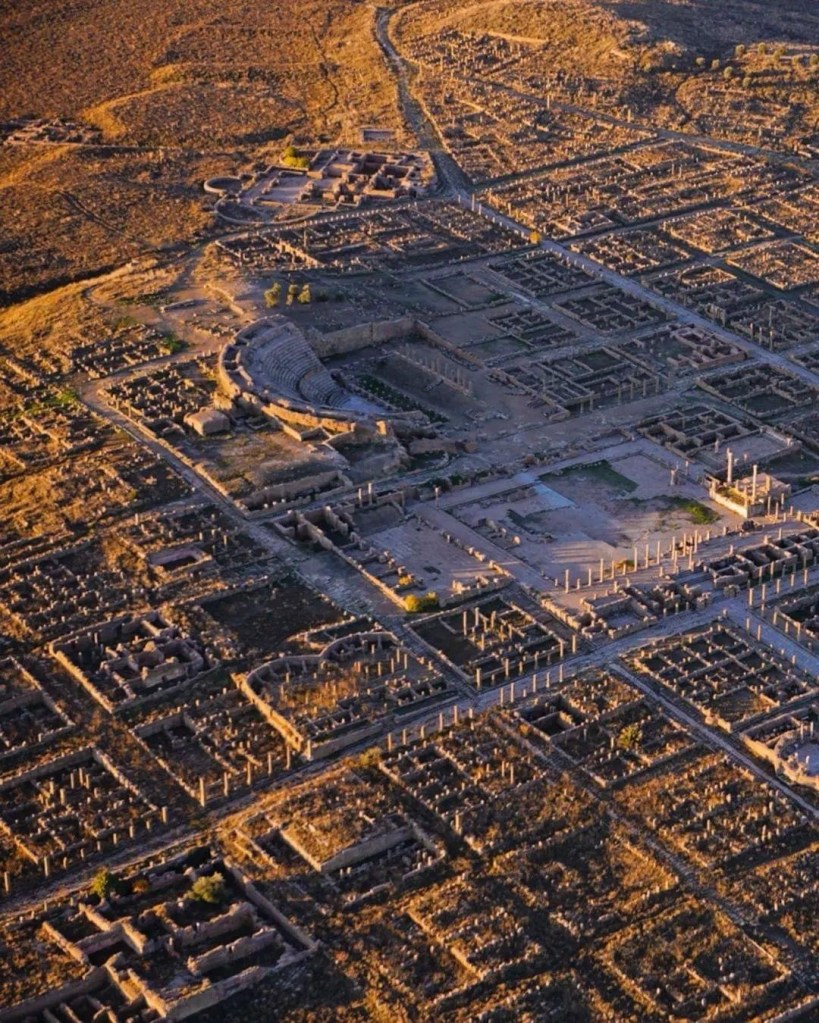
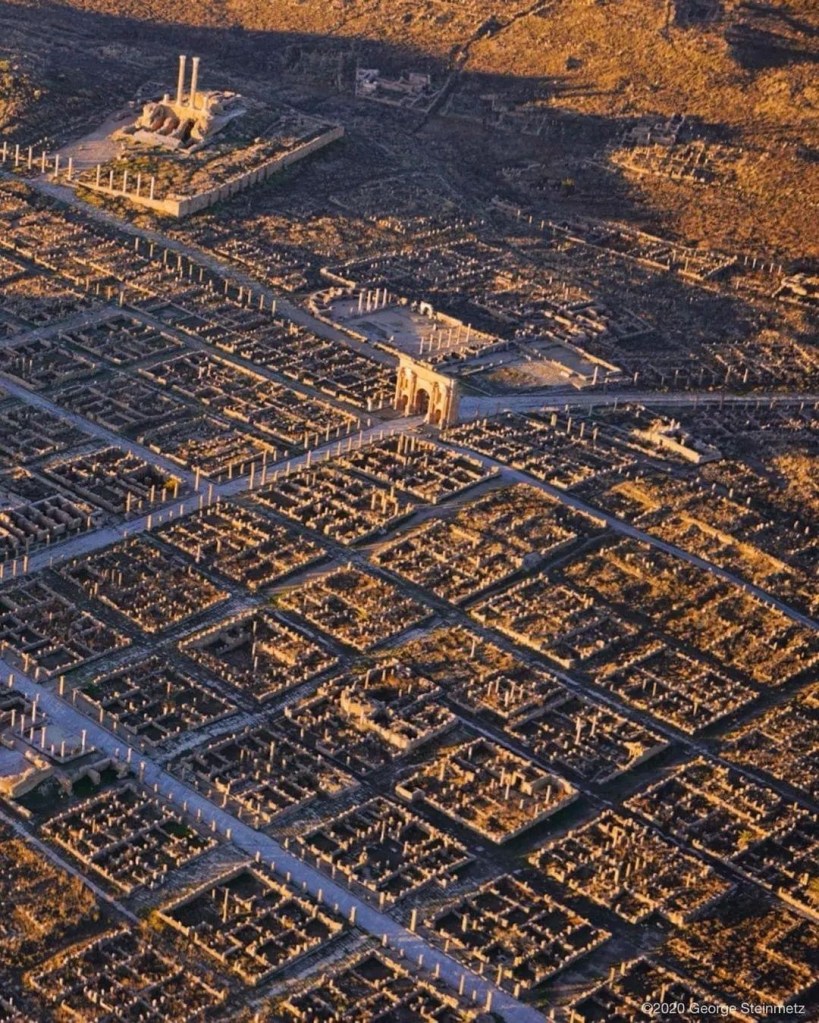
High in the Aurès Mountains of Algeria lies Timgad, a city that stands as a testament to Roman engineering and urban planning. Founded by Emperor Trajan around 100 CE, Timgad is renowned for its remarkably well-preserved grid plan, a hallmark of Roman town planning.
Among its many architectural wonders, the Arch of Trajan is particularly striking. This 12-meter-high triumphal arch, partially restored in 1900, greets visitors as they enter the city, a grand reminder of Rome’s imperial power.
The city’s 3,500-seat theater is another highlight, offering a glimpse into the cultural life of the Roman populace. Its excellent condition allows visitors to imagine the ancient performances that once took place here.
Timgad’s Capitoline Temple, dedicated to Jupiter, rivals the grandeur of the Pantheon in Rome. The temple’s dimensions and design reflect the significance of religion and the influence of Roman architecture.
A unique feature of Timgad is its ancient library, a gift from Julius Quintianus Flavius Rogatianus to the Roman people. Costing a staggering 400,000 sesterces, the library underscores the value placed on knowledge and learning in Roman society.
In recognition of its historical and cultural significance, Timgad was designated a UNESCO World Heritage Site in 1982. The preservation of its structures offers invaluable insights into Roman urban life and architectural prowess.


 SummerSimo Travel Troubles Notes and The Purring Page
Leave a comment