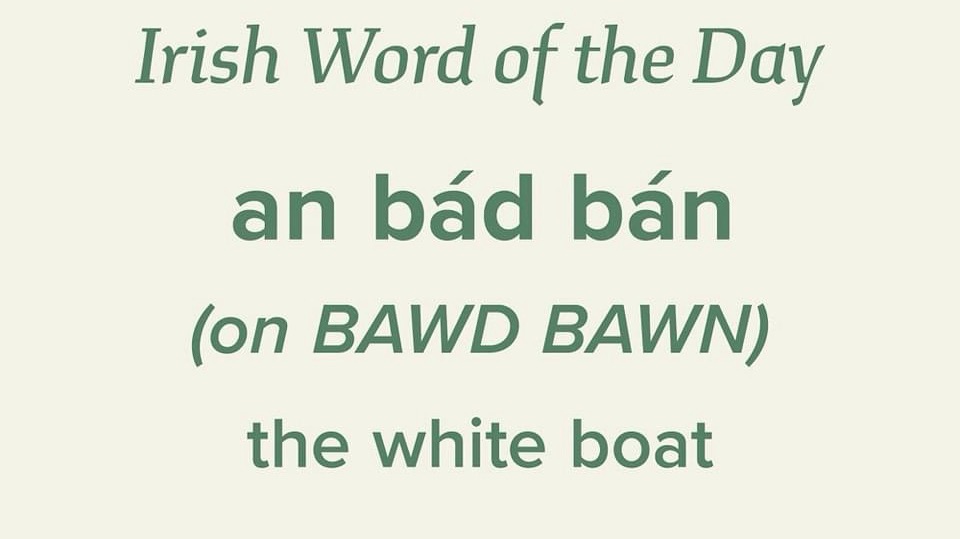
In Irish, “an bád bán” translates to the white boat, a term steeped in the history of Irish emigration. This phrase not only identifies a specific type of vessel but also carries with it deep emotional and cultural connotations, symbolizing the journey of countless Irish emigrants who left their homeland in search of new opportunities across the seas.
The origin of “an bád bán” is tied to the era of significant Irish migration, particularly around the time of ships like the Nianda Dane, which embarked from Cobh. These large white passenger ships stood in stark contrast to the smaller, typically black, currachs and workboats that dotted the Irish coastline. While the smaller boats were symbols of local life and daily sustenance, the imposing white ships represented a gateway to the unknown—a departure from the familiar into the vastness of new horizons.
From this, the saying “Thug sé an bád bán air féin” emerged, meaning “he took the white boat on himself” or simply, “he emigrated.” This phrase encapsulates the profound step of leaving one’s country, culture, and family behind, often with no prospect of return. The white boat became a symbol of both loss and hope, embodying the dual nature of emigration as a departure filled with sorrow yet driven by the promise of a better future.
Today, although the mode of emigration has largely shifted from sea to air, “an bád bán” remains a powerful symbol in the Irish collective memory, evoking the legacy of those who left the island. It serves as a reminder of the resilience and courage of the Irish diaspora and the cultural ties that continue to link them to Ireland, no matter where in the world they might find themselves.

 SummerSimo Travel Troubles Notes and The Purring Page
Leave a comment