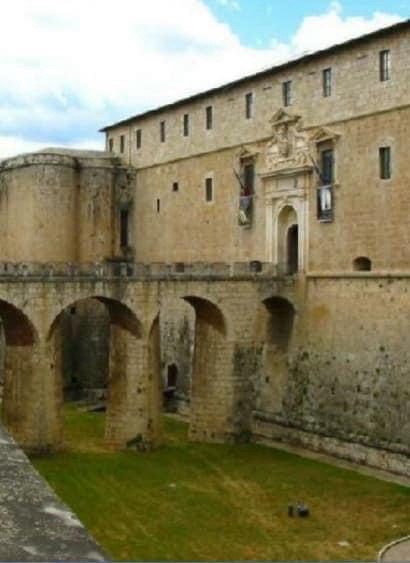
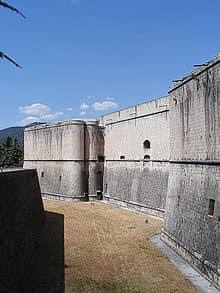
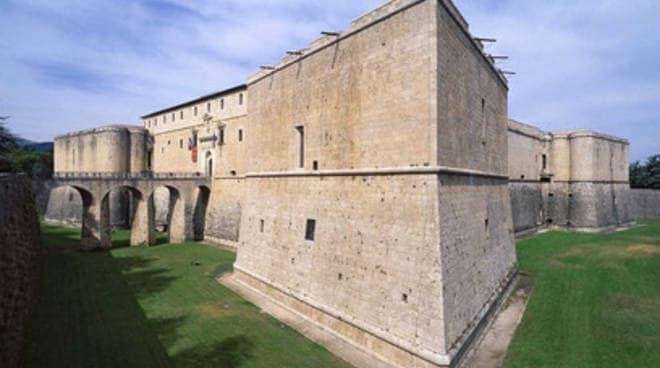
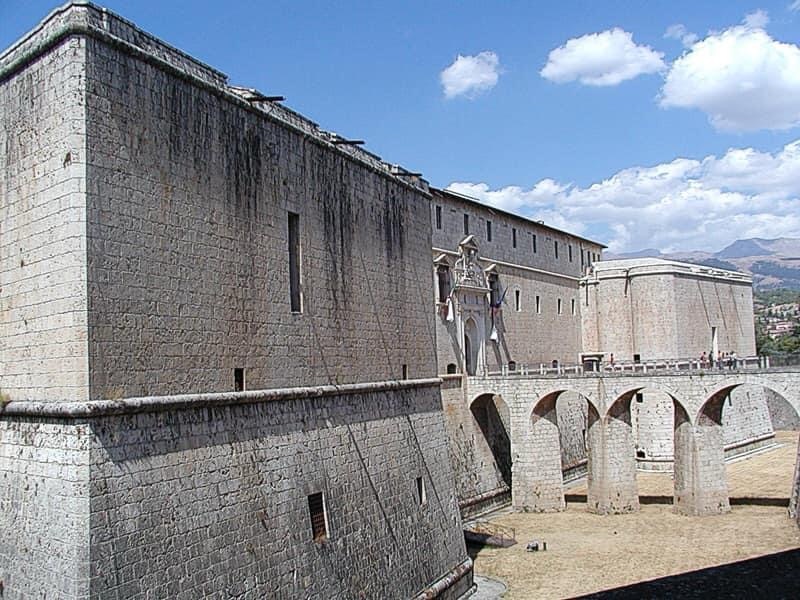
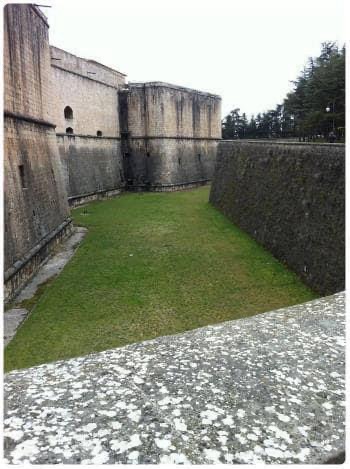
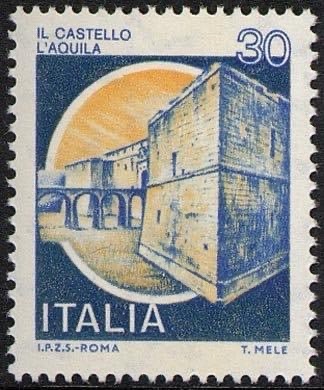
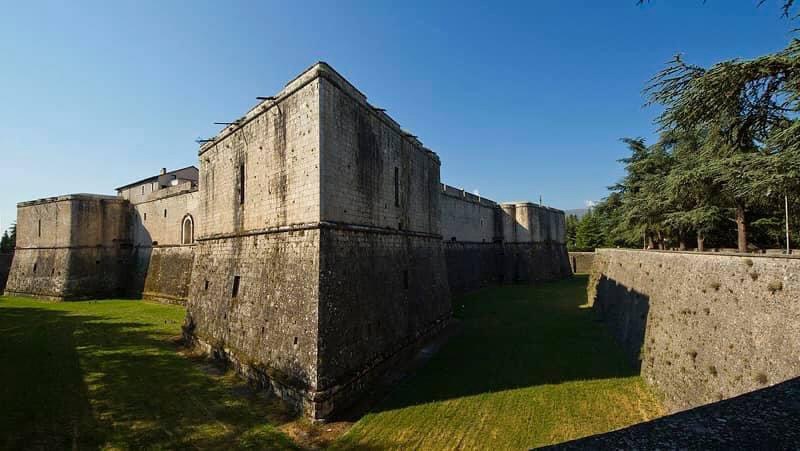
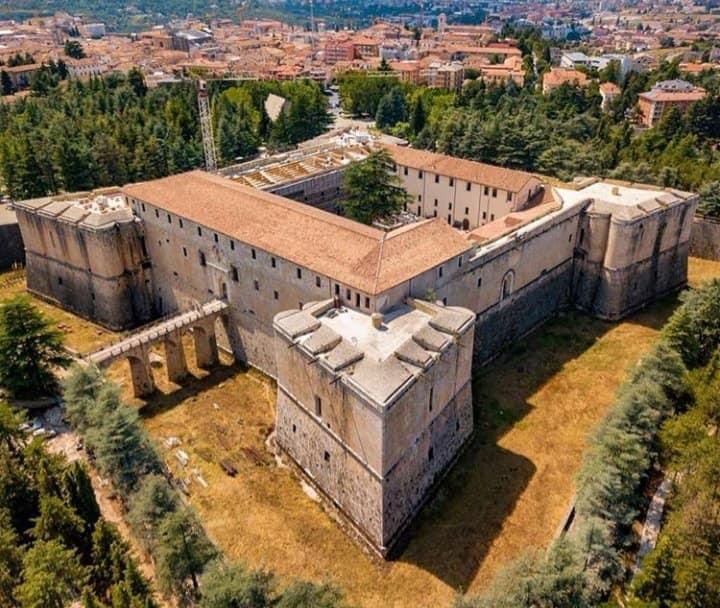
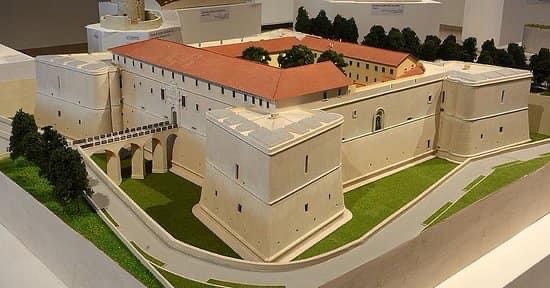
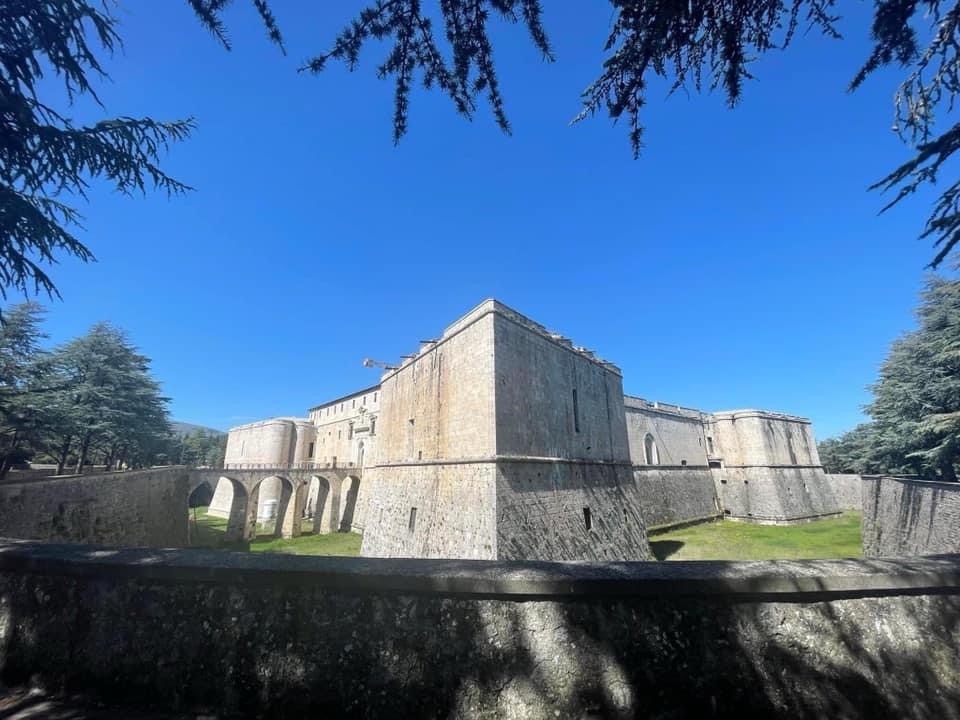
The Spanish Fort, also known as the 16th-century Castle, is located in the heart of the city of L’Aquila. Its construction was ordered by the Spanish viceroy Don Pedro de Toledo to strengthen control over the city and to defend against possible revolts. The fortress features thick and mighty walls, a moat and a drawbridge. In addition to being an important historical and architectural landmark, the castle is now a cultural center that hosts exhibitions, events, and the National Museum of Abruzzo, which houses archaeological finds and valuable works of art.
Here are some interesting facts and trivia about the Spanish Castle or Fort in L’Aquila:
- Costs and Labor: The construction of the castle was incredibly expensive for the time, so much so that the people of L’Aquila were forced to contribute high taxes and forced labor, prompting quite a few protests.
- Never Used for Defense: Despite its impressive defensive structure, the castle was never actually used in battle. Its main role was to demonstrate Spanish power and deter possible revolts.
- Earthquake of 2009: The castle suffered significant damage during the 2009 earthquake. Part of the moat collapsed and there was structural damage, but thanks to restoration, it was reopened to the public.
- Legends and Ghosts: Like many ancient fortresses, Spanish Fort is the focus of local legends, including stories of ghosts of Spanish soldiers who are said to still roam within its walls.
- Ambitious Project: The original plan called for an even larger and more complex fortress, but it was scaled back due to cost and logistical difficulties.
- Secret Tunnels: It is said that there are secret tunnels underneath the castle that connected the fortress to other parts of the city, used for quick and secret movement during sieges or emergency situations.

 SummerSimo Travel Troubles Notes and The Purring Page
Leave a comment