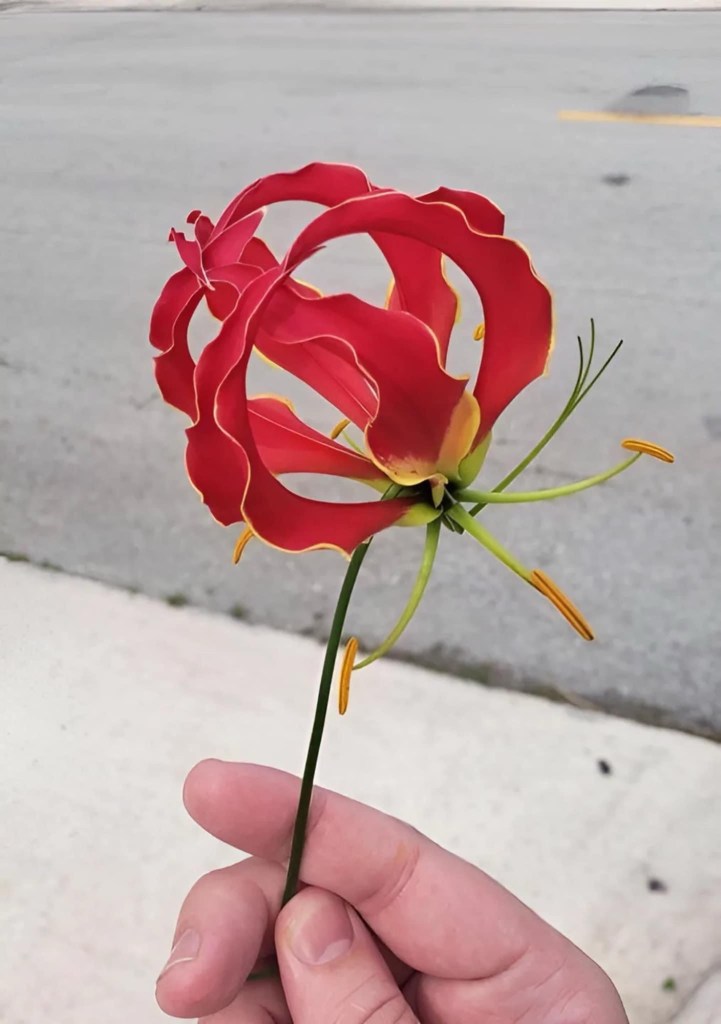
The Flame Lily (Gloriosa superba), is renowned for its striking red and yellow flowers with flame-like petals. It’s native to tropical and southern Africa and Asia, thriving in warm climates with well-drained soil.
In Zimbabwe, the Flame Lily holds significant cultural and national importance, symbolizing beauty, strength, and resilience. It was declared the national flower of Zimbabwe to celebrate the country’s natural heritage. The plant has medicinal uses in traditional medicine, although it’s also highly toxic if ingested improperly.
The Flame Lily’s vibrant appearance and adaptability make it a symbol of the nation’s spirit, embodying the beauty and resilience of Zimbabwe’s people and landscape.
The Flame Lily, or Gloriosa superba, is surrounded by several legends and cultural stories, especially in regions where it is indigenous. Here are a couple of notable legends:
- African Legend: In some African cultures, the Flame Lily is believed to have mystical properties. It is often associated with protection and is thought to ward off evil spirits. The plant’s striking appearance, resembling flames, is seen as a symbol of life and vitality.
- Royal Symbolism: In certain regions of Africa, the Flame Lily is considered a royal flower. It is believed that the flower’s regal colors and unique structure make it a symbol of nobility and high status.
- Indian Mythology: In India, where the plant is also found, it is sometimes associated with various myths and traditional beliefs. The flower is often linked to beauty and is used in various cultural rituals and celebrations.
While these legends underscore the plant’s cultural significance, it’s also important to note the plant’s toxicity, which adds a layer of caution to its handling and use in traditional practices.

 SummerSimo Travel Troubles Notes and The Purring Page
Leave a comment