Biography:
- Full Name: Maria Theresia Walburga Amalia Christina
- Birth and Death: Born on 13 May 1717, died on 29 November 1780.
- Reign: She ruled the Habsburg dominions from 1740 until her death in 1780, being the only woman to hold the position in her own right (suo jure).
Titles and Territories:
- Sovereign Territories:
- Austria
- Hungary
- Croatia
- Bohemia
- Transylvania
- Mantua
- Milan
- Galicia and Lodomeria
- Austrian Netherlands
- Parma
- By Marriage:
- Duchess of Lorraine
- Grand Duchess of Tuscany
- Holy Roman Empress
Historical Significance:
- War of Austrian Succession: Maria Theresa’s accession triggered the War of Austrian Succession (1740-1748), which saw her defending her right to the throne against various European powers.
- Reforms: She is known for her extensive administrative reforms, which included centralizing and modernizing the Habsburg bureaucracy, reforming the tax system, and improving military efficiency.
- Cultural Patronage: Maria Theresa supported education and the arts, founding institutions such as the Theresian Military Academy and promoting cultural development within her dominions.
Personal Life:
- Marriage: She married Francis Stephen of Lorraine in 1736, who became Holy Roman Emperor as Francis I.
- Children: Maria Theresa had 16 children, including notable figures such as Marie Antoinette, Queen of France, and Joseph II, Holy Roman Emperor.
Legacy:
- Education and Health: She emphasized the importance of education and introduced compulsory primary education. She also reformed the healthcare system and instituted measures for public health.
- Legal Reforms: Maria Theresa worked on legal reforms to ensure a more equitable justice system.
- Economic Policies: Her economic policies aimed at strengthening the Habsburg economy, encouraging agricultural development, and promoting trade.
Art and Representation:
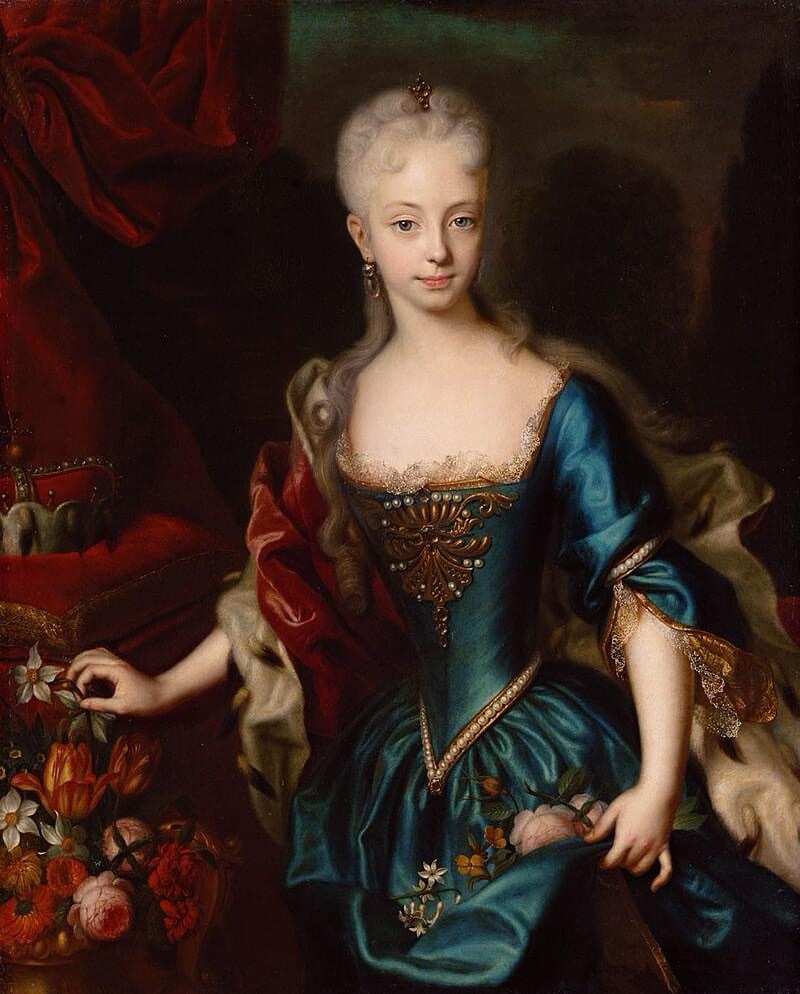
- Painting by Andreas Moeller: Maria Theresa was depicted by various artists, including Andreas Moeller, whose paintings capture her regal presence and significance as a ruler.
Maria Theresa remains a pivotal figure in European history, known for her strong leadership, extensive reforms, and influence on the Habsburg Empire’s stability and prosperity.

 SummerSimo Travel Troubles Notes and The Purring Page
Leave a comment