Behold the Winged Victory of Samothrace
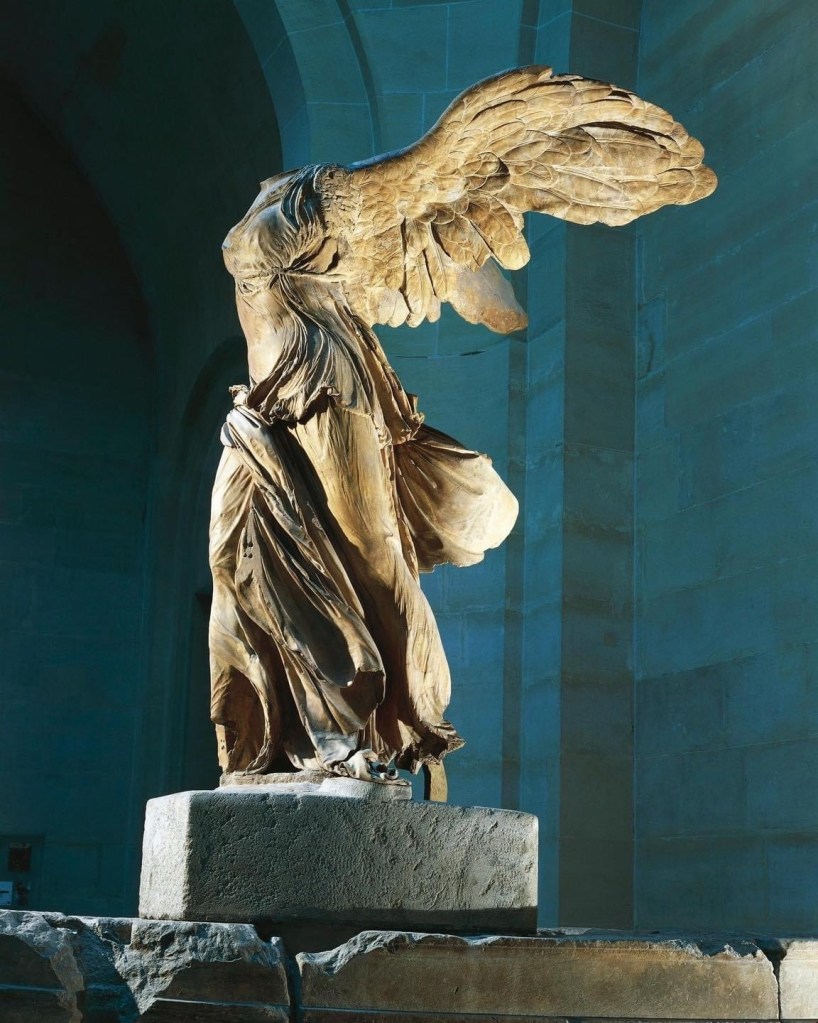
The Winged Victory of Samothrace, also known as the Nike of Samothrace, is one of the most celebrated and iconic sculptures of ancient Greek art. It stands as a testament to the artistic and cultural achievements of the Hellenistic period. Here is an in-depth exploration of this magnificent masterpiece:
Historical Context:
- Date and Origin: The Winged Victory of Samothrace is believed to have been created around 200-190 BC. It was discovered in 1863 on the island of Samothrace in the northern Aegean Sea, which was a major center for the cult of the Great Gods.
- Purpose: The statue was likely erected to commemorate a naval victory, possibly by the people of Rhodes, and was dedicated to the goddess Nike, who personified victory.
Artistic Features:
- Material and Size: The statue is made of Parian marble and stands at about 2.75 meters (9 feet) high. It originally stood on the prow of a ship, also carved from marble, which added to its dramatic effect.
- Pose and Expression: The Nike of Samothrace is depicted with her wings spread wide, as if she is descending triumphantly from the heavens. The dynamic pose conveys a sense of movement and energy, with the wind-swept drapery clinging to her body, revealing the intricate details of her form.
- Hellenistic Style: The statue is a prime example of Hellenistic art, characterized by its dramatic realism, intricate detailing, and dynamic composition. The sense of movement and the play of light and shadow on the drapery are hallmarks of this period.
Discovery and Restoration:
- Excavation: The statue was discovered by French archaeologist Charles Champoiseau in 1863. It was found in pieces, with the body separated from the wings and the ship’s base.
- Restoration: The fragments were transported to the Louvre Museum in Paris, where the statue was meticulously restored. Despite the loss of the head and arms, the sculpture remains a powerful and awe-inspiring work.
Cultural Significance:
- Symbol of Victory: As a representation of Nike, the goddess of victory, the statue symbolizes triumph and success. It has inspired countless works of art and has become a universal symbol of victory and achievement.
- Influence on Modern Art: The Winged Victory of Samothrace has influenced numerous artists and designers, and its dynamic form and powerful presence continue to captivate audiences around the world.
- Museum Display: Today, the statue is prominently displayed at the Louvre Museum in Paris, where it is one of the museum’s most visited and admired exhibits. It is positioned at the top of the Daru staircase, creating a dramatic and imposing presence.
Interesting Facts:
- Inspiration for Logos: The statue has inspired various logos and designs, including the famous Nike swoosh, which represents the wing of the goddess.
- World War II: During World War II, the statue was moved to the Château de Valençay to protect it from potential damage during the German occupation of France.
- Restoration Projects: The Winged Victory of Samothrace has undergone several restoration projects, with the most recent one in 2013-2014, which included cleaning and structural reinforcement to ensure its preservation for future generations.
The Winged Victory of Samothrace is not only a masterpiece of ancient Greek art but also a symbol of human achievement and the timeless pursuit of excellence. Its dynamic form, rich history, and enduring influence make it a treasured cultural artifact that continues to inspire and captivate people around the world. Beholding the Winged Victory of Samothrace is to witness the profound artistry and spirit of a civilization that has left an indelible mark on human history.

 SummerSimo Travel Troubles Notes and The Purring Page
Leave a comment