The tarot is a deck of cards used primarily for divination and spiritual purposes, but also for card games in some cultures. A standard tarot deck contains 78 cards, divided into two main groups: the Major Arcana and the Minor Arcana.
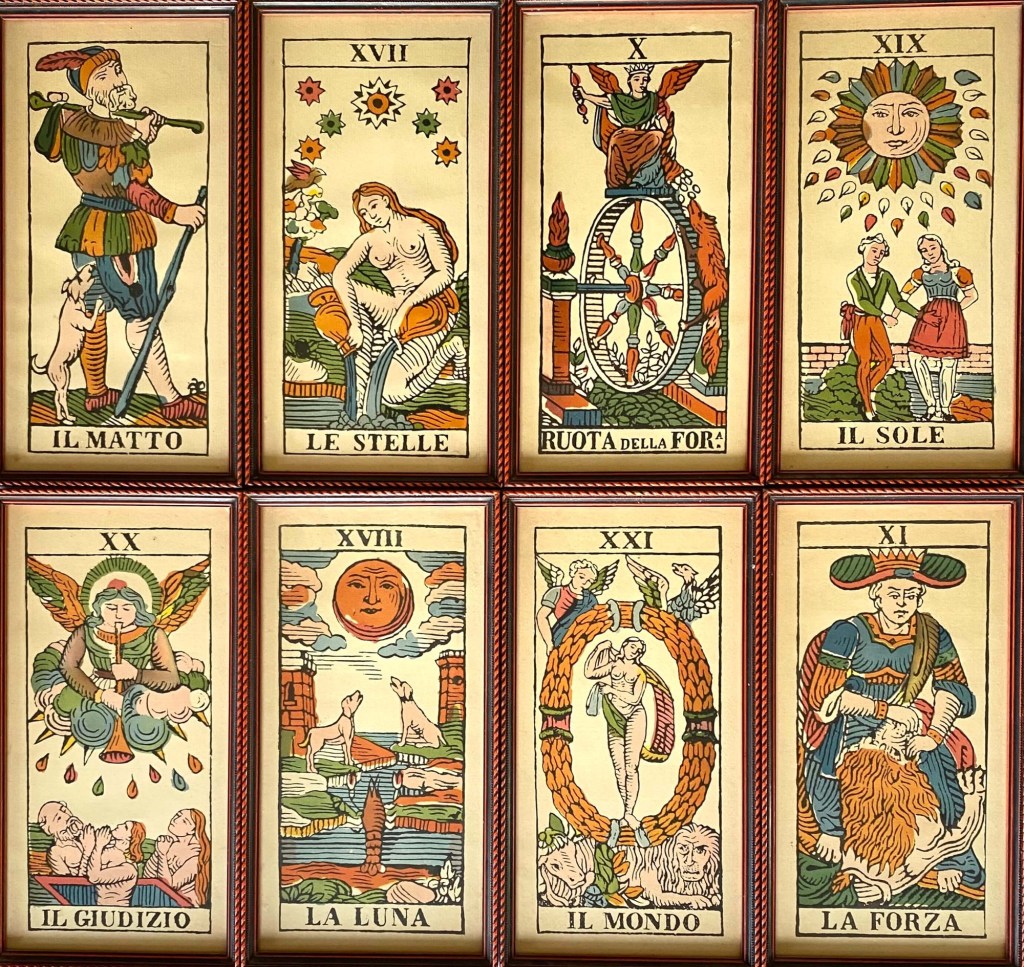
- Major Arcana (22 cards): These cards are often considered the most significant in the deck and represent universal archetypes and great life lessons. Examples of Major Arcana cards include the Fool, the Magician, the Papess, the Emperor, Death, and the Sun.
- Minor Arcana (56 cards): These cards are similar to traditional playing cards and are divided into four suits: Cups, Deniers, Swords and Wands. Each suit has ten numbered cards (Ace to Ten) and four court cards (Jack, Knight, Queen and King).
History and Birth
The origin of the tarot is uncertain and shrouded in mystery, but there are some commonly accepted theories regarding their history:
- Medieval Origins: Tarot cards first appeared in the 15th century in Europe, specifically in northern Italy. The first known tarot decks were created for the Visconti-Sforza family. At first, tarot cards were used as playing cards and only later were they adopted for divinatory purposes.
- Cultural Influences: Some scholars suggest that tarot might have influences from different cultures, including Ancient Egypt, India and China. However, these theories have not been fully confirmed.
- Development and Diffusion: During the Renaissance, tarot spread throughout Europe and began to be used for divination. In the late 18th century, the tarot became associated with occultism, thanks to figures such as Antoine Court de Gébelin and Jean-Baptiste Alliette (known as Etteilla), who helped develop esoteric interpretations of the cards.
Divination with Tarot
Tarot divination is a practice that uses the deck of cards to gain insights, guide decisions, and predict possible futures. Here is an overview of how divination with tarot works:
- Preparation:
- Environment: Find a quiet, comfortable place for the reading. Many practitioners light candles or incense to create a sacred atmosphere.
- Intent: Formulate a clear question or focus on an area of life about which you wish to gain clarity.
- Mixing and Drafting:
- Mixing: Shuffle the cards with the question or intent in mind. Some practitioners may also cut the deck.
- Drafting: There are multiple drafts (spreads) for tarot card reading, each with a different number of cards and configuration. Some of the most common drafts include:
- Three-Card Drafting: Used for simple answers. The cards represent the past, present and future.
- Celtic Cross: One of the most detailed spreads, with ten cards that explore the situation in depth.
- Five-pointed Star: A spread that analyzes different perspectives of an issue.
- Interpretation:
- Card Meanings: Each card has specific meanings that may vary depending on its position in the drafting and combination with other cards. Interpretations can include psychological, spiritual and practical aspects.
- Intuition: Tarot reading is not only based on the traditional meanings of the cards, but also on the reader’s intuition. Spiritual connection and personal interpretation are essential for an effective reading.
Tarot divination is a complex and highly subjective art, and there is no specific sequence of cards that guarantees a big money win. However, there are certain cards that are commonly associated with prosperity, luck, and financial success. If these cards appear in a reading, especially when combined, they can indicate a possible win or a significant improvement in the financial situation.
Cards Associated with Prosperity and Money.
- Ten of Coins (Pentacles):
- It symbolizes material abundance, long-term prosperity, financial security and family success. It is one of the most positive cards in terms of money.
- Axis of Denarii (Pentacles):
- Represents new financial opportunities, unexpected gains, and potential for wealth. It often indicates a promising new beginning in terms of finances.
- King of Denarii (Pentacles):
- Denotes an experienced and successful person in financial matters. May represent an influential figure who helps achieve financial success or the attainment of a position of power and wealth.
- Nine of Coins (Pentacles):
- Symbolizes financial independence, luxury and personal satisfaction achieved through one’s own efforts. It is a very positive card with regard to financial well-being.
- Wheel of Fortune (Major Arcana):
- It indicates sudden and fortunate changes, cycles of good fortune and unexpected opportunities. It is a powerful card that can suggest a favorable turn in finances.
- The World (Major Arcana):
- Represents completion, achievement and overall success. In a financial context, it can indicate the achievement of important financial goals and a situation of abundance.
- The Sun (Major Arcana):
- Symbolizes success, joy, and prosperity. It is an extremely positive card that can indicate a phase of great good fortune and happiness, including the possibility of a financial windfall.
Possible Sequences.
A sequence of cards that could indicate a big money win could include a combination of the above. For example:
- Asso di Denari, Ten of Coins, Wheel of Fortune:
- This combination suggests a new opportunity leading to great abundance and a fortunate change in finances.
- King of Diamonds, Nine of Diamonds, The Sun:
- This sequence could indicate the achievement of financial independence and a period of economic success and happiness.
- The World, Ten of Coins, The Sun:
- This combination suggests the completion of a cycle of financial success, leading to a situation of abundance and joy.
Final Considerations.
It is important to remember that tarot cards offer indications and insights rather than certain predictions. The cards may suggest future trends and potentials, but it is always critical to use your own judgment and make informed decisions. In addition, the tarot reading is strongly influenced by the reader’s intuition and the specific context of the question.


 SummerSimo Travel Troubles Notes and The Purring Page
Leave a comment