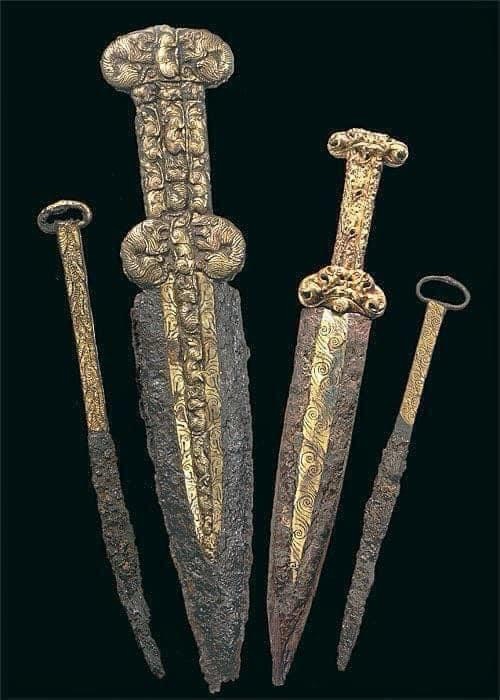
The akinakes and kinžali are ancient weapons that hold significant historical and cultural value. These weapons, often adorned in the “Zvírinomu” style, offer a fascinating glimpse into the craftsmanship and artistry of ancient civilizations, particularly those in the regions of the Caucasus, Persia, and Scythia.
The Akinakes
Origins and Use:
The akinakes is a type of short sword or dagger that originated in the regions of Persia and Scythia around the 6th century BCE. It was a popular weapon among the Persians, Scythians, and other nomadic tribes of the Eurasian steppes. The akinakes is characterized by its relatively short blade, typically measuring between 35 to 45 centimeters, making it ideal for close combat.
Design and Features:
The akinakes often features a double-edged blade with a leaf-like shape, tapering to a sharp point. The hilt usually has a simple crossguard and a grip that could be made from wood, bone, or metal. The pommel of the akinakes often features intricate designs, sometimes depicting animals, mythological creatures, or geometric patterns.
The Kinžali
Origins and Use:
The kinžali, also known as a kindjal or qama, is a type of double-edged dagger that was widely used in the Caucasus region, including Georgia, Armenia, and the surrounding areas. It dates back to the same period as the akinakes, around the 6th-5th centuries BCE. The kinžali was not only a weapon but also a symbol of social status and a crucial part of traditional attire.
Design and Features:
The kinžali typically has a straight, double-edged blade ranging from 30 to 50 centimeters in length. The blade is often broader than that of the akinakes and may feature fullers (grooves) to reduce weight and improve balance. The hilt of the kinžali is usually crafted from wood, bone, or horn and is often intricately decorated.
The “Zvírinomu” Style
The term “Zvírinomu” style refers to a specific artistic and decorative style that was prevalent in the ancient cultures of the Eurasian steppes, particularly among the Scythians and related tribes. This style is characterized by the use of animal motifs, intricate patterns, and a high level of craftsmanship.
Key Features of the Zvírinomu Style:
- Animal Motifs: The Zvírinomu style often features depictions of animals such as lions, eagles, deer, and mythical creatures like griffins. These motifs were believed to have symbolic meanings, representing strength, courage, and protection.
- Intricate Patterns: Weapons adorned in the Zvírinomu style often feature intricate geometric patterns and interwoven designs, showcasing the artisan’s skill and attention to detail.
- Material and Techniques: The use of precious metals, such as gold and silver, along with advanced metalworking techniques like inlaying and engraving, were common in this style. These techniques added both aesthetic and functional value to the weapons.
Historical and Cultural Significance
The akinakes and kinžali, adorned in the Zvírinomu style, are more than just weapons; they are artifacts that reflect the cultural and artistic achievements of ancient civilizations. These weapons were often buried with their owners, serving as grave goods that provided protection in the afterlife and demonstrated the deceased’s status and wealth.
Today, these ancient weapons are valuable historical artifacts that offer insights into the social, cultural, and artistic practices of ancient Eurasian societies. They are preserved in museums and collections around the world, admired for their beauty and craftsmanship.
In conclusion, the akinakes and kinžali of the 6th-5th centuries BCE, adorned in the Zvírinomu style, are remarkable examples of ancient weaponry and artistry. Their intricate designs and historical significance make them a fascinating subject of study and admiration for historians, archaeologists, and enthusiasts alike.

 SummerSimo Travel Troubles Notes and The Purring Page
Leave a comment