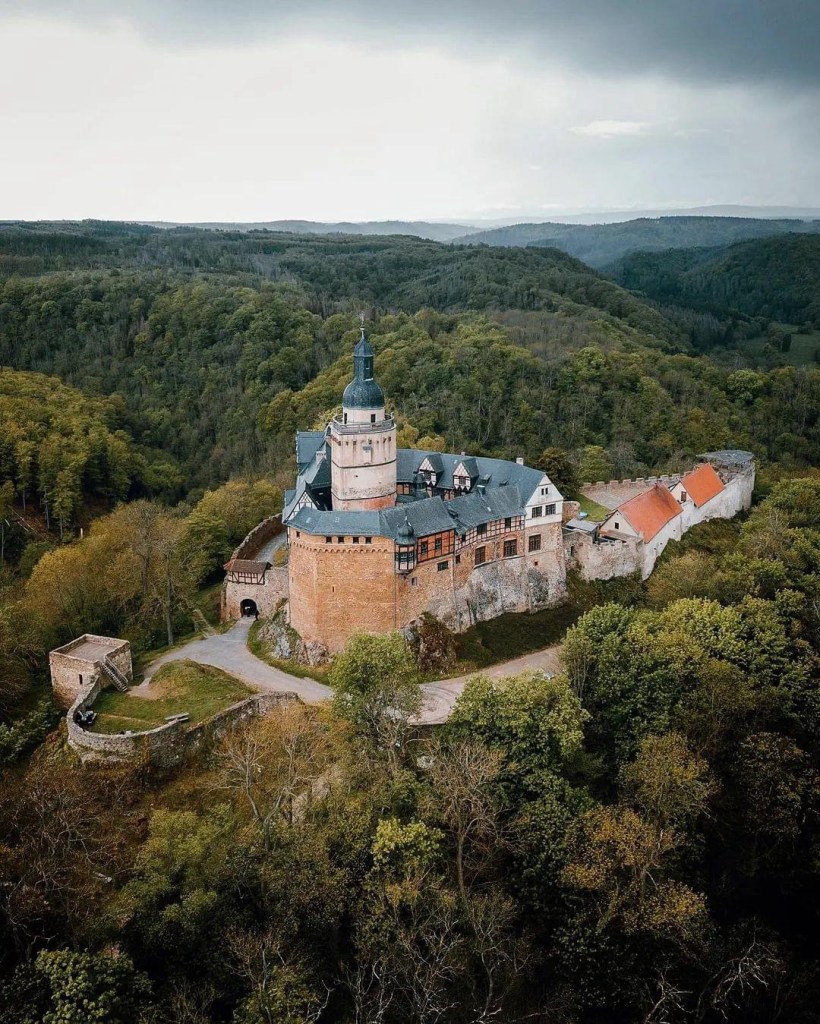
Falkenstein Castle (German: Burg Falkenstein), also formerly called New Falkenstein Castle (Burg Neuer Falkenstein) to distinguish it from Old Falkenstein Castle, is a German hill castle in the Harz Mittelgebirge, dating to the High Middle Ages. It is located in the town of Falkenstein between Aschersleben and Harzgerode.
Falkenstein was built between 1120 and 1150 by the lords of the Konradsburg who henceforth styled themselves as Grafen von Falkenstein (Counts).
According to legend, Falkenstein Castle has its origins in a murder: around 1080, the Saxon nobleman Egeno II of Konradsburg slew Count Adalbert II of Ballenstedt in a fight, whereupon the murderer was allegedly made to give up his family seat to be converted into a monastery. As a result, Egeno’s son, Burchard of Konradsburg, had the new Falkenstein Castle built.
In 1220, during the reign of Prince Henry of Anhalt the Anhalt ministerialis, Eike of Repgow, from what is now Reppichau, drew up the Sachsenspiegel the first German law book here. The book is dedicated to its commissioner, Hoyer of Falkenstein. In 1437 the castle was given as a fief by the Bishopric of Halberstadt to the House of Asseburg, in whose hands the castle remained until its confiscation after the Second World War.
The castle was one of several backdrops in the seven-part children’s series shot by GDR television, Spuk unterm Riesenrad, and one of the locations for the DEFA fairy tale film Schneeweißchen and Rosenrot (“Snow White and Rose Red”), as well as featuring in the Polizeiruf 110 episode Die Entdeckung.

 SummerSimo Travel Troubles Notes and The Purring Page
Leave a comment