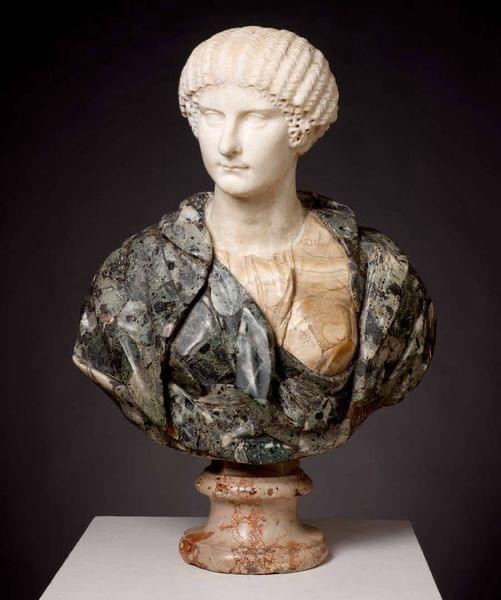
Agrippina the Younger, also known as Julia Agrippina, was a prominent and influential figure in the Roman Empire during the 1st century AD. Here is a brief overview of her history and life:
Early Life:
- Born on November 6, AD 15, in Ara Ubiorum (modern-day Cologne, Germany).
- She was the daughter of Germanicus, a popular Roman general, and Agrippina the Elder, a granddaughter of Emperor Augustus.
- Agrippina was the sister of Emperor Caligula.
Marriages and Rise to Power:
- Agrippina’s first marriage was to Gnaeus Domitius Ahenobarbus, and they had a son, Lucius Domitius Ahenobarbus, who would later become Emperor Nero.
- After her first husband’s death, she married Gaius Sallustius Crispus Passienus, a wealthy Roman, but he also died under mysterious circumstances.
- Agrippina then married her uncle, Emperor Claudius, in AD 49, solidifying her influence in the Roman political sphere.
Political Influence:
- As Claudius’s wife, Agrippina wielded significant power and was involved in many political machinations.
- She was instrumental in the adoption of her son Nero by Claudius, positioning him as the heir over Claudius’s biological son, Britannicus.
- Agrippina is believed to have orchestrated the poisoning of Claudius in AD 54, allowing Nero to ascend to the throne.
Reign of Nero:
- Initially, Agrippina held considerable influence over Nero and the empire, acting as a regent.
- However, as Nero grew older, he sought to assert his independence and ultimately turned against his mother.
- Agrippina’s power waned, and in AD 59, Nero ordered her assassination.
Legacy:
- Agrippina the Younger is remembered as a powerful and ambitious woman who navigated the treacherous political landscape of ancient Rome.
- Her life and actions have been depicted in various historical texts and dramatizations, often highlighting her role in the rise of Nero and the complexities of her ambitions.
Agrippina’s life is a testament to the turbulent and often dangerous nature of Roman imperial politics.

 SummerSimo Travel Troubles Notes and The Purring Page
Leave a comment