Caterina de’ Pazzi: a family, a life crashed by conspiracy
Her father had been the “great” Jacopo de’ Pazzi, a well-known figure in Florence as a wealthy and merry banker who came into possession of a huge family inheritance. Caterina, who was born in 1463, when Jacopo was 40 years old, and who was his only child, did not have Jacopo’s wife Maddalena Serristori as her mother, but a woman unknown to us today. The public image of her father, who touched the pinnacle of power in Florence by twice holding the office of Prior, was shattered by his involvement in the famous conspiracy against the Medici. Medici and Pazzi were related (Jacopo’s nephew, Guglielmo, had married a sister of Lorenzo the Magnificent, Bianca), but divided by a strong rivalry fueled by issues of inheritance and succession rights. The conspiracy against the Medici was hatched through Jacopo’s nephew Francesco de’ Pazzi, treasurer of Pope Sixtus IV; he availed himself of a not inconsiderable network of accomplices, but failed, and Jacopo fled Florence to avoid capture; recognized in the Apennines and handed back to the Florentines, he was executed on April 30, 1478.
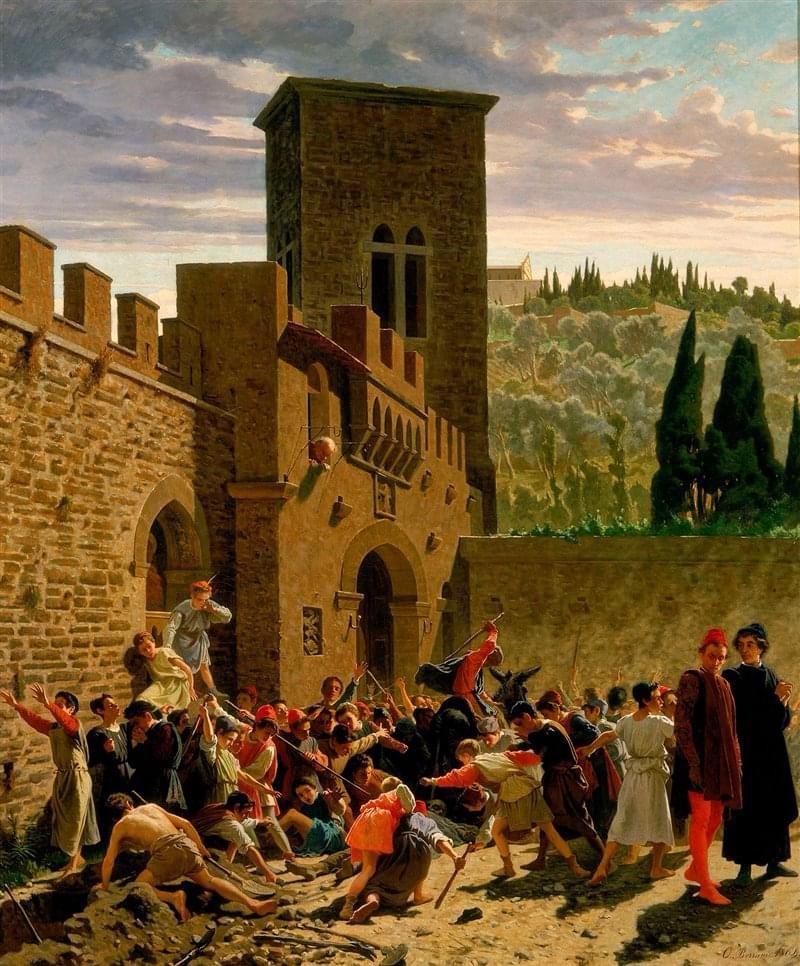
These events occurred when Catherine was 16 years old. Among the conspirators had been the presbyter Stefano di ser Niccolò da Bagnone, Jacopo de’ Pazzi’s chaplain, who had been officially entrusted with Caterina’s education. Charged with killing Lorenzo, whom he considered a tyrant, the cleric was captured, tortured, and had his ears and nose cut off before being hanged. Catherine, who was illegitimately legitimized and thus bore the Pazzi surname, found herself in an uncomfortable situation, to say the least: not only her father and guardian, but also two of her cousins had been executed following the failure of the conspiracy, while the rest of the men in her family had been exiled and the Pazzi surname condemned to “damnatio memoriae.” After his death, the body of Caterina’s father was vilified: dug up from the family chapel in Santa Croce because of popular superstition, which saw in a series of heavy rains that followed in May 1478 a divine signal of the error of burying a sinner in consecrated ground, it was buried outside the walls of Florence and three weeks after his death, in a macabre game, exhumed by some boys who went to carry it in front of Palazzo Pazzi. The body was then thrown into the Arno.
Catherine and her stepmother Magdalene were presented with a choice: either to enter the convent or to continue living in Florence while renouncing the right to marry. Crushed by grief and shame, also fearing for their personal safety, the two women entered the convent of Monticelli, or rather buried themselves there, for they did not come out again until their death (which in Maddalena’s case, in desperation, came soon, in 1480). Of the convent was abbess Filippa de’ Medici, an authoritative and exemplary Clarissa figure in prayer and silence, who became Catherine’s spiritual guide. The young Pazzi took her vows and gave herself to atonement by consuming herself in penances and privations: we know nothing else about her monastic life, partly because she died very young, at 27, on August 23, 1490, two years after Abbess Filippa de’Medici.
Catherine was beatified in the 18th century by Pope Benedict XIV.
(Anonymous portrait of Renaissance nun – Odoardo Borrani, The Discovery of the Body of Jacopo de’ Pazzi)


 SummerSimo Travel Troubles Notes and The Purring Page
Leave a comment