The Stela of Akhenaten, Nefertiti, and their daughters is a remarkable artifact from ancient Egypt, dating back to the New Kingdom, specifically to Dynasty XVIII during the Amarna Period. This period, roughly spanning from 1353-1336 BCE, is named after its capital city, Akhetaten, modern-day Tell el-Amarna, which was founded by Pharaoh Akhenaten as the center for the worship of the sun god Aten.
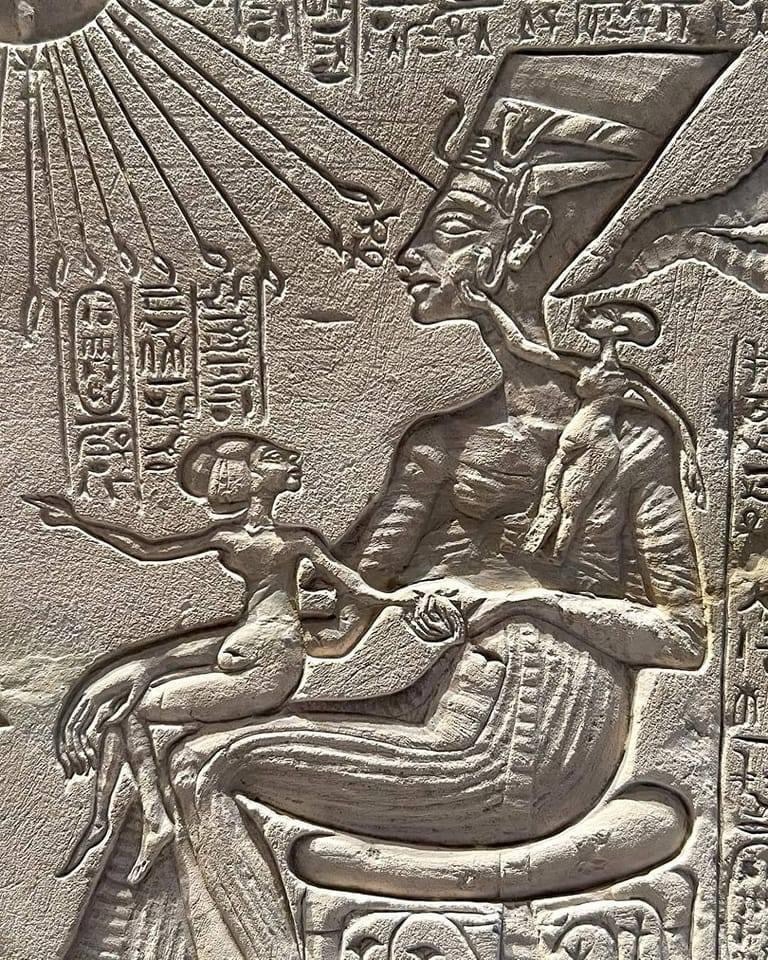
This limestone stela depicts a unique and intimate moment in the life of the royal family, showcasing Akhenaten, his queen Nefertiti, and their daughters in a domestic, almost tender scene that was quite unusual in the context of traditional Egyptian royal iconography. Such depictions were part of Akhenaten’s broader religious and artistic reforms, which included a shift towards monotheism (the worship of Aten) and a move away from the traditional religious practices centered around the god Amun.
The art from the Amarna Period is distinctive for its realism and the portrayal of the royal family with elongated heads, slender limbs, and exaggerated features, which some scholars interpret as a stylistic representation of the divine nature of the pharaoh and his family. The stela often shows the family in the rays of the Aten, usually depicted as a sun disk with hands extending life-giving ankhs to the royal couple and their offspring.
This particular stela is significant not only for its artistic value but also for the light it sheds on the religious and cultural changes during Akhenaten’s reign. It illustrates the personal relationship between the pharaoh and his god, as well as the elevated status of Nefertiti, who is often shown nearly equal in stature to her husband, which was a departure from previous conventions.
After Akhenaten’s death, his successors, including Tutankhamun, moved the capital back to Thebes and reinstated the worship of Amun. Akhenaten’s city, Akhetaten, and its art, including stelae like this one, were abandoned or destroyed in an attempt to erase the memory of what was considered a heretical interlude in Egyptian history. However, discoveries like the Stela of Akhenaten, Nefertiti, and their daughters provide invaluable insights into this fascinating period.

 SummerSimo Travel Troubles Notes and The Purring Page
Leave a comment