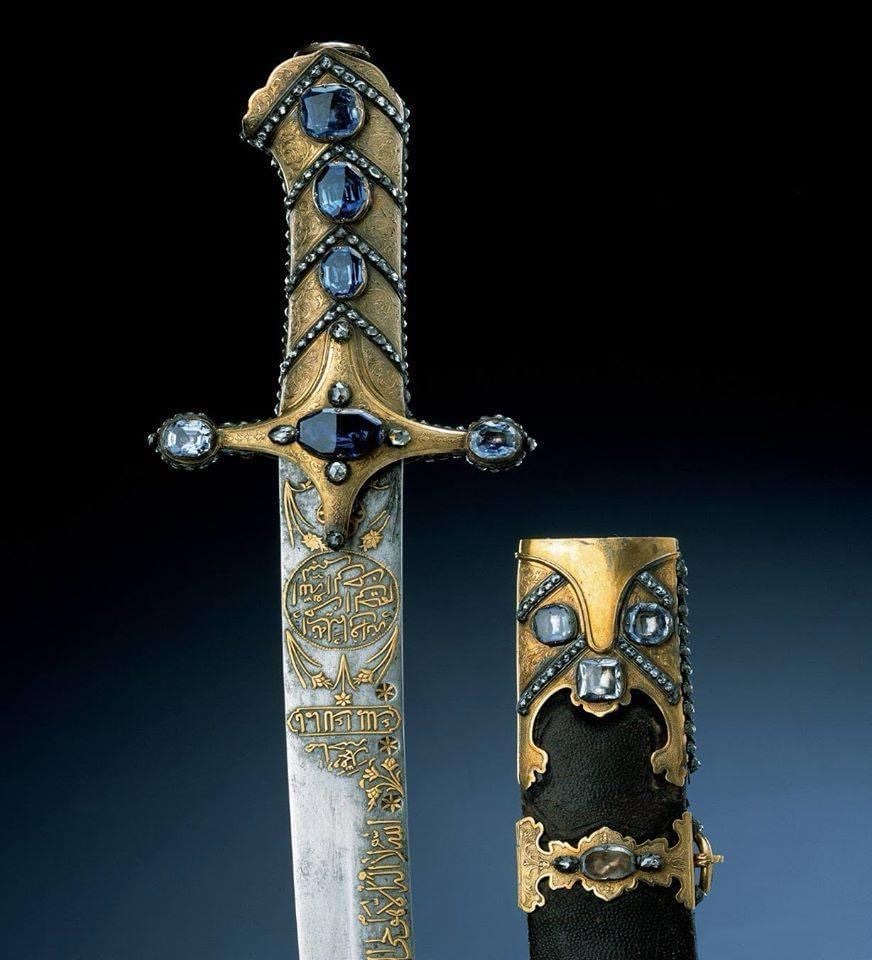
The saber with an Ottoman blade is the famous piece housed in the Dresden Armoury (Rüstkammer) of the Staatliche Kunstsammlungen Dresden, Germany. This piece is renowned for its exquisite craftsmanship and historical significance. The Dresden Armoury is one of the oldest and most significant collections of arms and armor in Europe, and it includes a wide array of weapons, armors, and artifacts from various periods and regions.
The 16th century was a period of significant military encounters between the European states and the Ottoman Empire, leading to a cultural and technological exchange in military hardware, including firearms and bladed weapons. Ottoman blades were highly valued in Europe for their superior quality and the skill involved in their manufacture, often incorporating Damascus steel known for its durability and distinctive patterns.
Such a saber would typically feature an elegantly curved blade, designed for slashing, and would often be decorated with intricate patterns or inscriptions, sometimes in gold inlay, showcasing the high level of artistry and craftsmanship. The sabers were not only weapons of war but also symbols of power and prestige.
The specific history, provenance, and detailed descriptions of the decorations and inscriptions on the saber in the Dresden Armoury would provide insights into the cultural exchanges between the Ottoman Empire and Europe during the 16th century. These pieces are considered invaluable for the study of historical arms and armor, as well as for understanding the broader historical and cultural interactions of the period.

 SummerSimo Travel Troubles Notes and The Purring Page
Leave a comment