Göbekli Tepe, located in southeastern Turkey, represents one of the most fascinating archaeological discoveries in recent history, fundamentally altering our understanding of human civilization’s early development. Dating back to the 10th millennium BCE, it predates Stonehenge by at least 6,000 years, challenging the traditional timeline of the Neolithic Revolution—the period when human societies transitioned from nomadic hunter-gatherer lifestyles to settled agricultural communities.
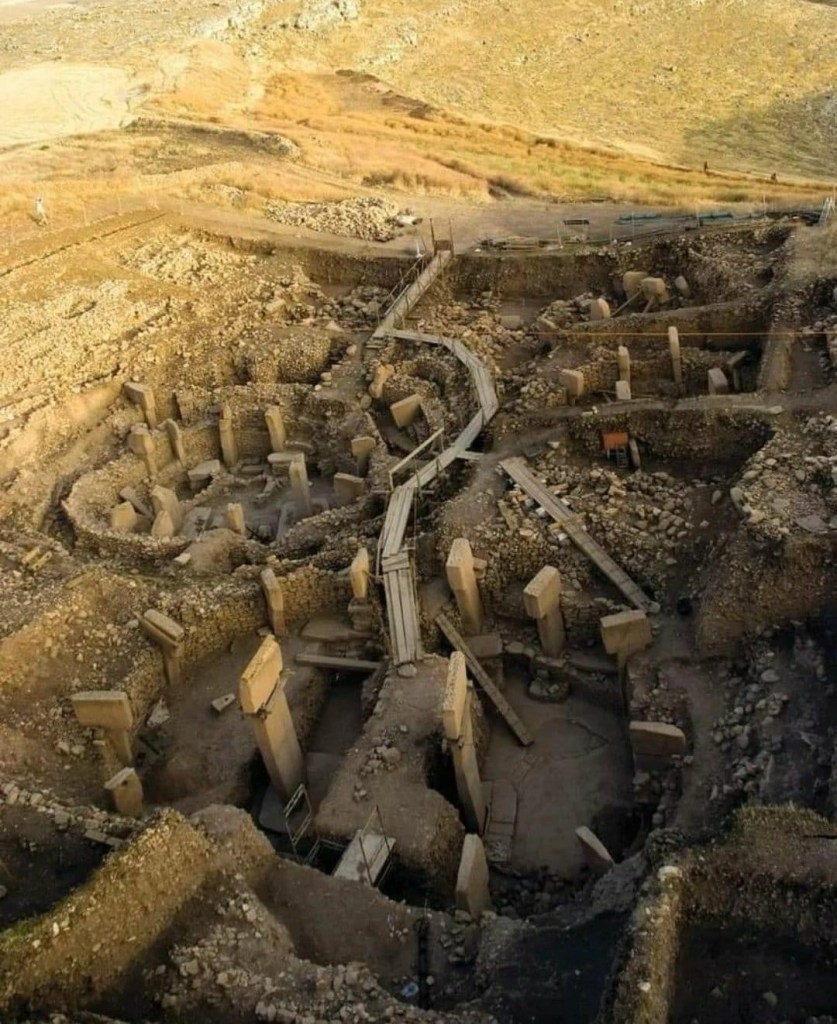
What makes Göbekli Tepe unique is not just its age but its complexity and scale. The site consists of multiple circles of towering T-shaped stone pillars, some of which are carved with intricate depictions of animals and abstract symbols. These megaliths, which are thought to have been used for ceremonial or religious purposes, indicate a level of social organization and artistic sophistication previously not associated with societies of this period.
The mystery deepens when considering that Göbekli Tepe was constructed by hunter-gatherers who had not yet developed agriculture or permanent settlements, according to most archaeological evidence. This challenges the conventional narrative that the development of agriculture was a prerequisite for the construction of such monumental structures and complex societies.
Researchers are intrigued by several unanswered questions: How were pre-agricultural people able to organize and execute such a large-scale project? What purpose did Göbekli Tepe serve? Theories suggest it might have been a religious or ceremonial site, possibly the world’s first temple, a pilgrimage site, or a social gathering place that drew people from wide regions.
One of the most compelling aspects of Göbekli Tepe is its deliberate burial. Around 8000 BCE, for reasons still unknown, its creators buried the site under thousands of tons of earth, preserving it until its rediscovery in the 1960s, with Klaus Schmidt beginning its excavation in 1994. This act of burying the site has led to much speculation. Some researchers suggest it might have been a way to consecrate the site after its use had ended, while others propose it could signify a shift in religious or social practices.
Göbekli Tepe continues to be an active archaeological site, with only a fraction of its vast area excavated. Each season of excavation brings new discoveries that may, in time, offer insights into these mysteries. The site not only provides a window into the spiritual life of early hunter-gatherer societies but also prompts a reevaluation of the path that led to the development of complex societies and the rise of civilization itself.

 SummerSimo Travel Troubles Notes and The Purring Page
Leave a comment