The Natural History Museum in Vienna, also known as Naturhistorisches Museum Wien, is one of the most important and large natural history museums worldwide. It was opened in 1889 and is located in the Museumsquartier near the Hofburg Palace in Vienna, Austria. The museum’s extensive collection spans across multiple floors, featuring exhibits on zoology, geology, paleontology, mineralogy, and anthropology.
One of its most famous exhibits is the Venus of Willendorf, an 11.1-centimeter-tall figurine that is around 29,500 years old, representing one of the earliest forms of human art. The museum also boasts an impressive collection of meteorites, including the Tissint Martian meteorite, and a vast array of dinosaur skeletons, among which is a Diplodocus.
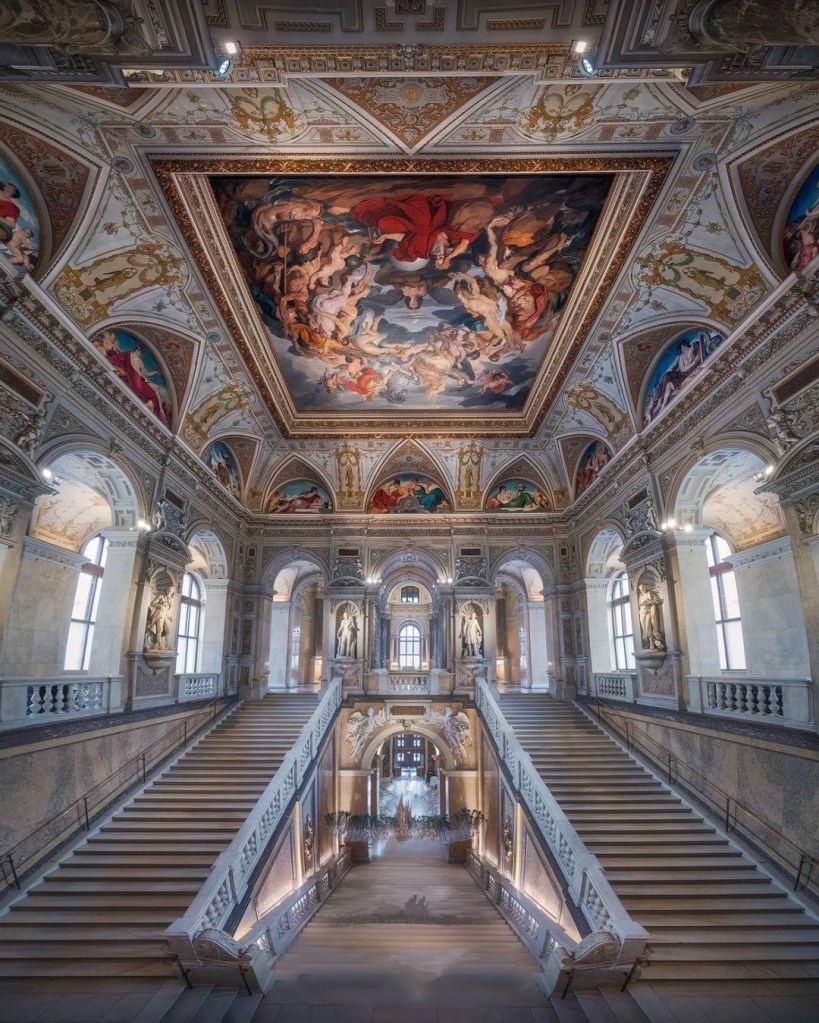
The building itself is a piece of art, with an ornate Neo-Renaissance design that mirrors that of the Art History Museum (Kunsthistorisches Museum) across Maria-Theresien-Platz, emphasizing the close relationship between art and science. The Natural History Museum in Vienna not only serves as a research institution but also as a place of learning and wonder for visitors of all ages.

 SummerSimo Travel Troubles Notes and The Purring Page
Leave a comment