After the collapse of the Caliphate of Córdoba in the early 11th century, al-Andalus had split into small kingdoms or city-states known as the Taifas. These states constantly fought with each other but were unable to raise large armies of their own, so they became reliant instead on the Christian kingdoms of the north for military support. This support was secured through the regular payment of parias (tributes) to the Christian kings, but the payments became a fiscal burden that drained the treasuries of these local rulers. As the payments of tribute began to falter, the Christian kingdoms resorted to punitive raids and eventually to conquest.
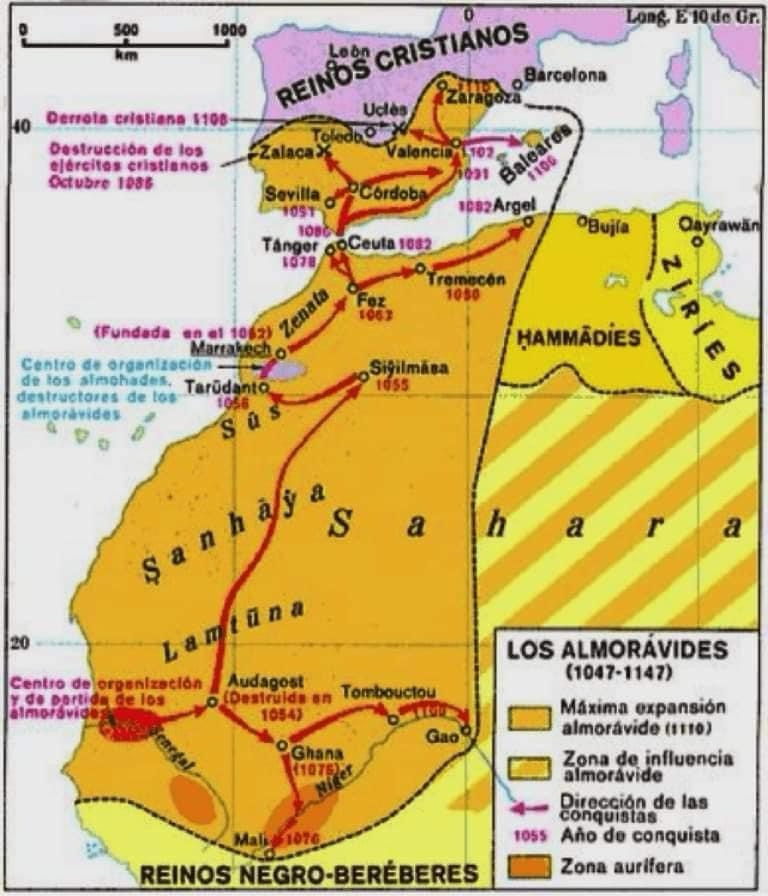
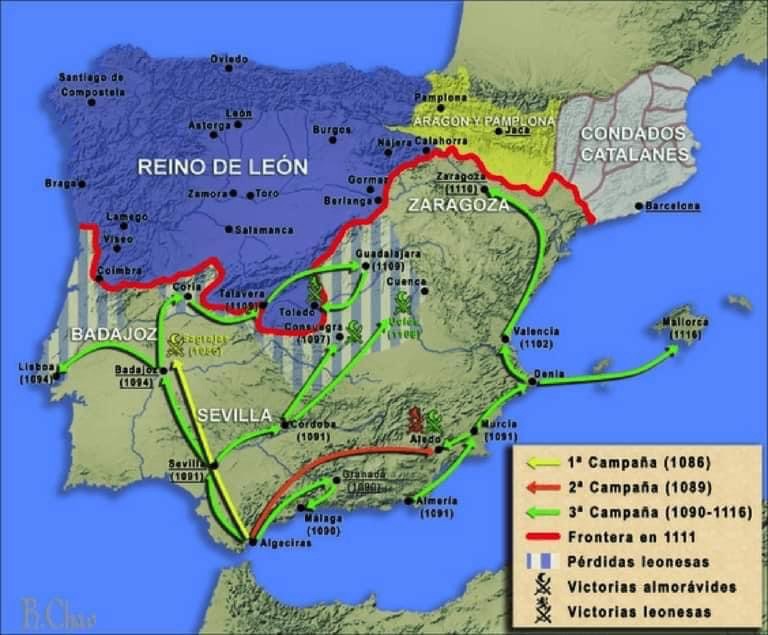
After the Almoravid capture of Ceuta (1083) on the southern shore of the Strait of Gibraltar, the way was now open for Ibn Tashfin to intervene in al-Andalus. It was in this same year that Alfonso VI, king of Castile and León, led a military campaign into southern al-Andalus to punish al-Mu’tamid of Seville for failing to pay him tribute. His expedition penetrated all the way to Tarifa, the southernmost point of the Iberian Peninsula. A couple of years later, in May 1085, he seized control of Toledo. Soon after, he also began a siege of Zaragoza. These dramatic events forced the Taifa kings to finally consider seeking an external intervention by the Almoravids. The Taifa kings were aware of the risks that came with an Almoravid intervention but considered it the best choice among their bad options.
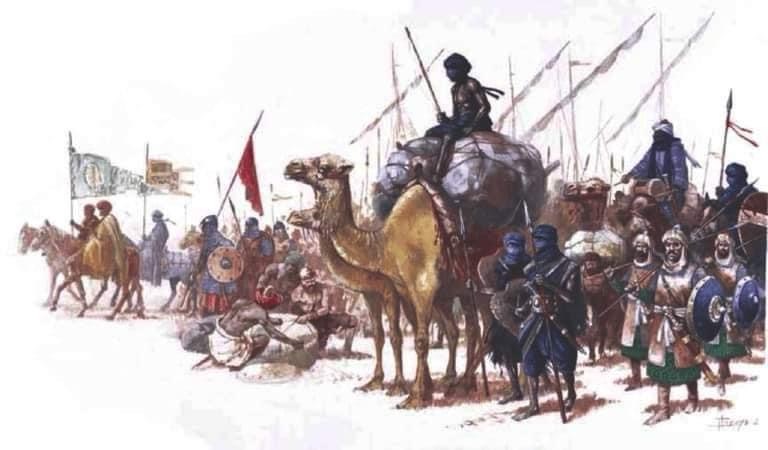
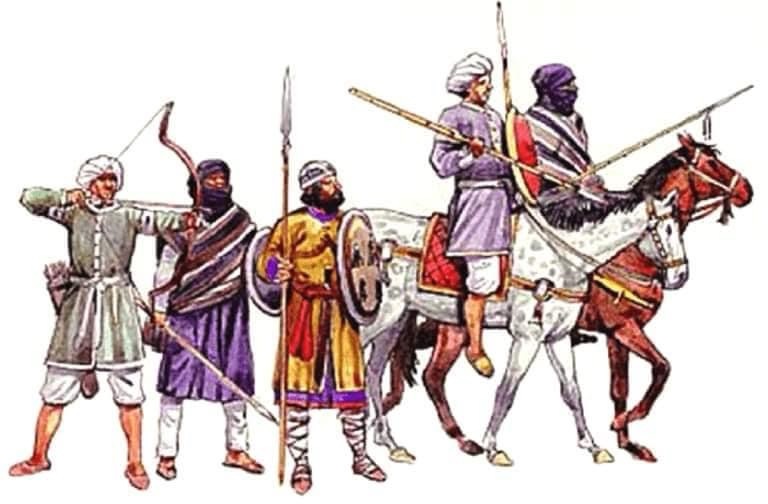
As a condition for his assistance, Yusuf Ibn Tashfin demanded that Algeciras (a city on the northern shore of the Strait of Gibraltar, across from Ceuta) be surrendered to him so he could use it as a base for his troops. Al-Mu’tamid agreed. Ibn Tashfin, wary of the hesitation of the Taifa kings, immediately sent an advance force of 500 troops across the strait to take control of Algeciras. They did so in July 1086 without encountering resistance. The rest of the Almoravid army, numbering around 12,000, soon followed. Ibn Tashfin and his army then marched to Seville, where they met up with the forces of al-Mu’tamid, al-Mutawwakil, and Abdallah ibn Buluggin. Alfonso VI, hearing of this development, lifted his siege of Zaragoza and marched south to confront them. The two sides met at a place north of Badajoz, called Zallaqa in Arabic sources and Sagrajas in Christian sources. In the Battle of Sagrajas (or Battle of Zallaqa), on 23 October 1086, Alfonso was soundly defeated and forced to retreat north in disorder. Al-Mu’tamid recommended that they press their advantage, but Ibn Tashfin did not pursue the Christian army further, returning instead to Seville and then to North Africa.
Yusuf Ibn Tashfin would return to Algeciras several more times. In his visit in 1090 he finally gave the order to invade the Muslim kingdoms of Al-Andalus, taking Sir ibn Abu Bakr the medina of Tarifa before the end of the year and marching on Seville in 1091. In the following years all the peninsular Taifa kingdoms would fall into Almoravid hands.

 SummerSimo Travel Troubles Notes and The Purring Page
Leave a comment