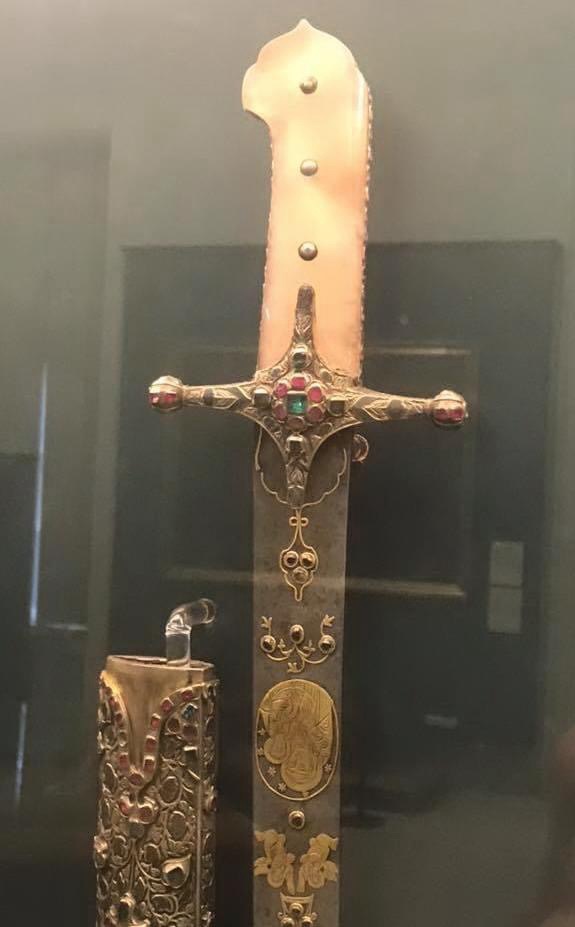
A Turkish saber from the last quarter of the 17th century is a remarkable artifact, reflecting the military might and artistic sophistication of the Ottoman Empire during a period of intense military engagement and cultural development. Here’s an overview of its characteristics, historical context, and significance.
Characteristics
- Blade: The blade of a Turkish saber from this period would likely be slightly curved, facilitating both slashing and thrusting motions. The curvature would be less pronounced than that of later Ottoman swords like the Yatagan. It would be made of high-quality steel, possibly Damascus steel, admired for its strength, durability, and distinctive patterns.
- Hilt: The hilt would be designed for a single-handed grip, with a guard that might be relatively simple or elaborately decorated, depending on the saber’s intended use (battlefield vs. ceremonial use). Materials for the hilt could include wood, ivory, or metals, often adorned with intricate inlays or engravings.
- Scabbard: The scabbard, like the saber itself, would vary in decoration. Leather over wood with metal fittings would be common, with those used in ceremonial contexts or belonging to higher-ranking individuals being more lavishly decorated.
Historical Context
By the last quarter of the 17th century, the Ottoman Empire was undergoing significant military and political challenges. The period was marked by wars with the Holy League, culminating in significant battles such as the second siege of Vienna in 1683. These events spurred military innovations and a continued evolution in arms and armor, including sabers.
Significance
- Military Importance: The saber was a crucial weapon for the Ottoman cavalry and officers. Its design was influenced by both practical use in combat and the empire’s interactions with neighboring cultures, including the Persians and Europeans.
- Artistic Expression: Ottoman metalwork was renowned for its beauty and intricacy. A saber from this period would not only be a weapon but also a piece of art, showcasing the skill of its maker and the wealth and taste of its owner.
- Cultural Symbol: Weapons such as sabers were symbols of power, status, and martial skill. They were often given as gifts in diplomatic exchanges, serving as representations of the Ottoman Empire’s strength and sophistication.
Collectibility
For collectors and historians, a Turkish saber from the 17th century is a highly prized item due to its age, craftsmanship, historical significance, and beauty. Its value would be determined by factors such as its condition, provenance, the fineness of its decorations, and any associations with historical figures or events.
Such a saber provides a tangible connection to the Ottoman Empire’s military history and cultural achievements during a pivotal era. It embodies the fusion of practical military needs with the artistic and cultural heights achieved by Ottoman craftsmen.

 SummerSimo Travel Troubles Notes and The Purring Page
Leave a comment