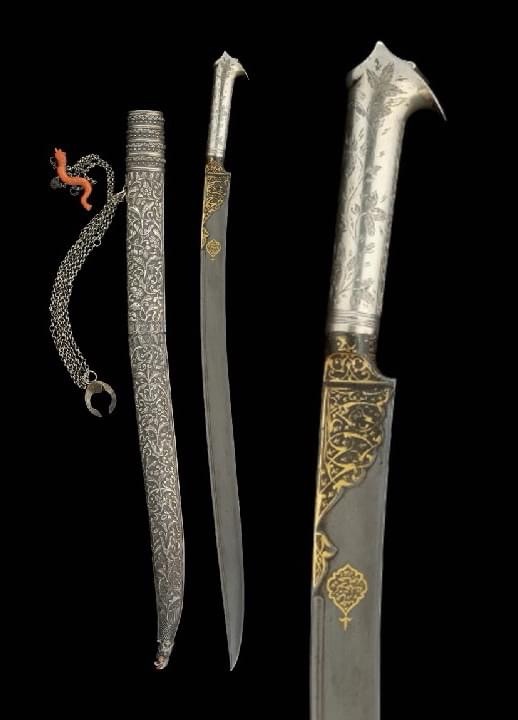
A rare Yatagan from the Ottoman Empire, dating back to around 1800, is a fascinating piece of history and artistry. The Yatagan was a type of Ottoman Turkish sword used from the mid-16th to late 19th centuries. Its distinctive feature is its curved blade, which lacks a guard and has a pronounced curve, making it particularly effective for slashing attacks. Here’s a closer look at its characteristics and significance:
Design and Features
- Blade: The Yatagan’s blade is typically around 60-80 cm in length, with a single-edged design that curves slightly towards the sharp edge. The blade often features intricate decorations, inscriptions, or calligraphy, which could include verses from the Quran, the owner’s name, the maker’s signature, or blessings for the owner.
- Handle: The handle is usually made from two pieces of ivory, horn, wood, or metal, and is characterized by its “ear-shaped” hilt, which provides a secure grip. The absence of a guard is a distinctive feature of the Yatagan, differentiating it from many other swords of the period.
- Scabbard: The scabbard of a Yatagan is often made of wood covered in leather or metal, with decorative elements that match or complement the sword itself.
Historical and Cultural Significance
- Usage: The Yatagan was widely used by the infantry units of the Ottoman army, particularly by the Janissaries, who were elite infantry soldiers. Its design was well-suited for close combat within the confines of the narrow streets and alleys of the Ottoman Empire’s urban centers.
- Symbolism: Beyond its utility as a weapon, the Yatagan was a symbol of status and personal valor. The craftsmanship and decorations made each Yatagan unique, reflecting the wealth and taste of its owner.
- Artistry: The artistic value of the Yatagan lies in its intricate decorations and the skill required to make one. Craftsmen known as “Yatagan ustası” (Yatagan masters) were highly respected. The decoration often involved techniques such as inlaying gold or silver into the blade, a method known as “Tughra.”
Collectibility
A rare Yatagan from around 1800 is a highly prized item among collectors of antique weapons and Islamic art due to its age, craftsmanship, historical significance, and the beauty of its design. Factors affecting its value include the condition, provenance, the intricacy of its decorations, and any historical figures associated with it.
Collectors and historians appreciate these swords not only as weapons of war but also as works of art that offer insight into the culture, technology, and aesthetics of the Ottoman Empire during its zenith.

 SummerSimo Travel Troubles Notes and The Purring Page
Leave a comment