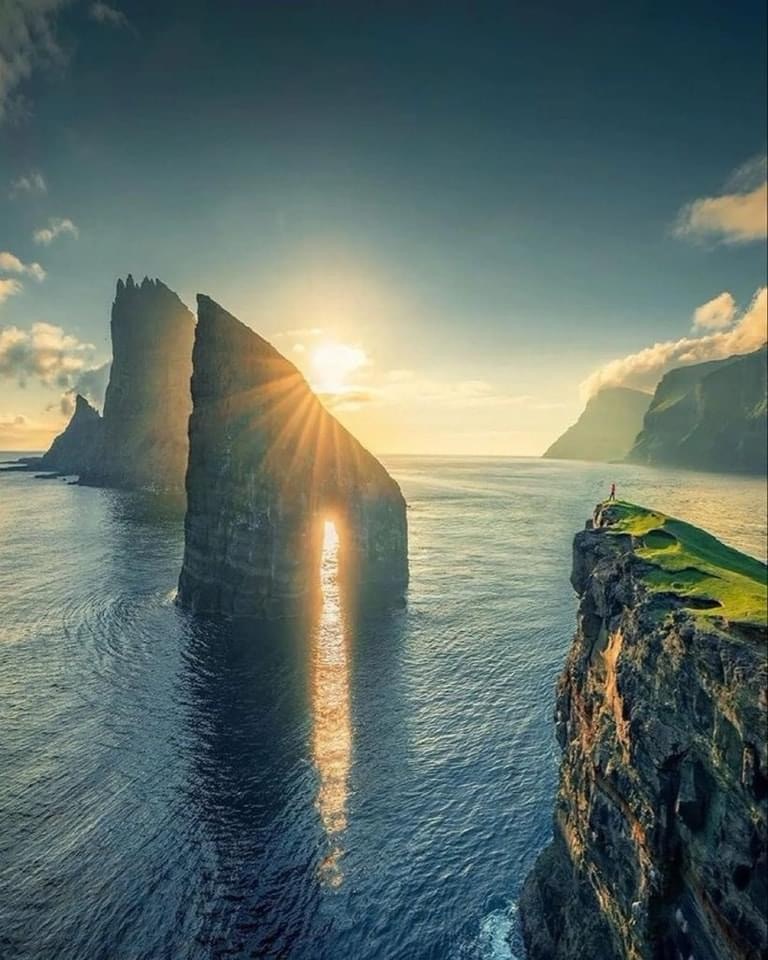
The Faroe Islands, an archipelago under the sovereignty of the Kingdom of Denmark, are located in the North Atlantic Ocean, roughly midway between Norway and Iceland. This remote and rugged collection of 18 major islands is known for its dramatic landscapes, including steep cliffs, tall mountains, narrow fjords, and a rich cultural heritage that spans back over a millennium.
Geography and Climate
The islands are characterized by a subpolar oceanic climate, with cool summers, mild winters, and frequent fog and rain, contributing to their lush green landscapes. Despite their northern latitude, the surrounding Gulf Stream moderates the climate, preventing extreme cold. The terrain is predominantly mountainous, carved by prehistoric glaciers, creating the stunning fjords and high cliffs that the islands are famous for.
Population and Culture
With a population of around 50,000, the Faroese people have a strong sense of community and cultural identity. Faroese and Danish are the official languages, with Faroese being the primary language spoken. The culture is a rich blend of Nordic and Celtic influences, reflected in its music, dance, and traditional celebrations like Ólavsøka, the national holiday celebrated every July.
Economy
Traditionally, the economy has been dominated by fishing and sheep farming, which is still evident in the islands’ cuisine and cultural practices. In recent years, there has been a push towards diversifying the economy, including developing the tourism sector, which has grown due to the islands’ natural beauty and uniqueness.
Natural Beauty and Tourism
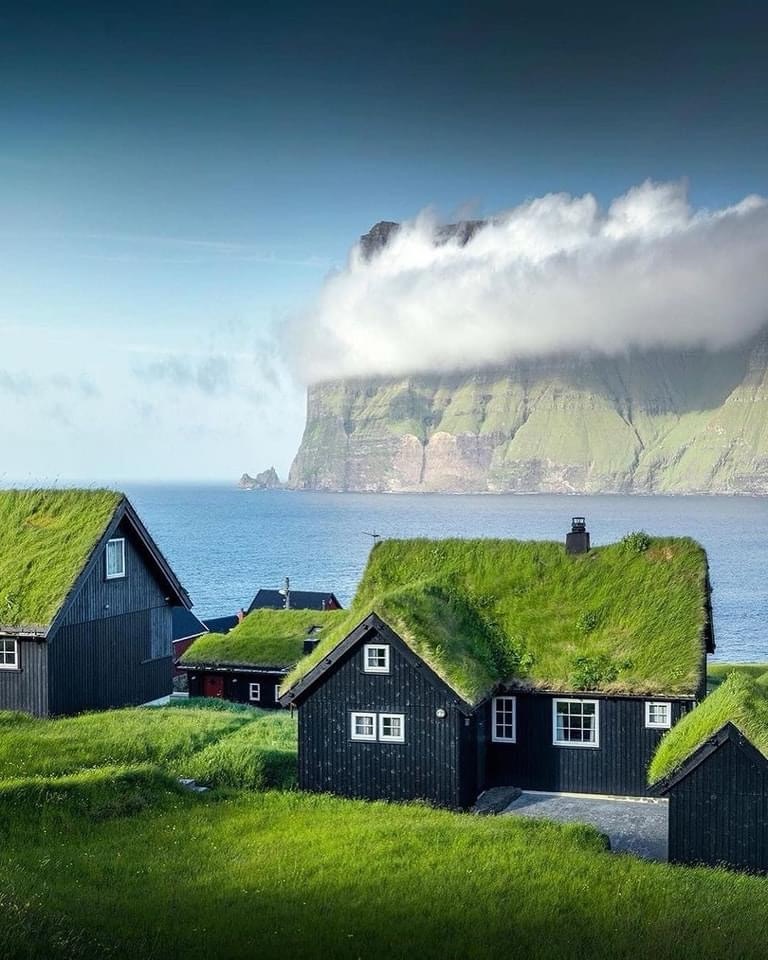
The Faroe Islands are becoming increasingly popular with travelers seeking untouched natural landscapes and solitude. Some of the most remarkable places to visit include the cliffs of Vágar Island, the puffin colony on Mykines, and the scenic village of Gjógv with its natural harbor. The capital, Tórshavn, is known for its old town, Tinganes, with wooden turf-roofed houses that reflect the Faroese architectural heritage.
Hiking, bird watching, and experiencing the traditional Faroese lifestyle are among the top activities for visitors. The islands also offer a unique opportunity to see the Northern Lights during the winter months.
Challenges and Sustainability
As with many remote destinations, the Faroe Islands face challenges related to sustainability and environmental protection, especially with the increasing popularity among tourists. The local government and communities are actively working on sustainable tourism practices to ensure that the islands remain pristine for future generations.
In summary, the Faroe Islands offer a blend of breathtaking natural beauty, rich cultural traditions, and a strong sense of community. They remain one of the few places on Earth where one can experience the rugged and raw beauty of nature, relatively untouched by the modern world.

 SummerSimo Travel Troubles Notes and The Purring Page
Leave a comment