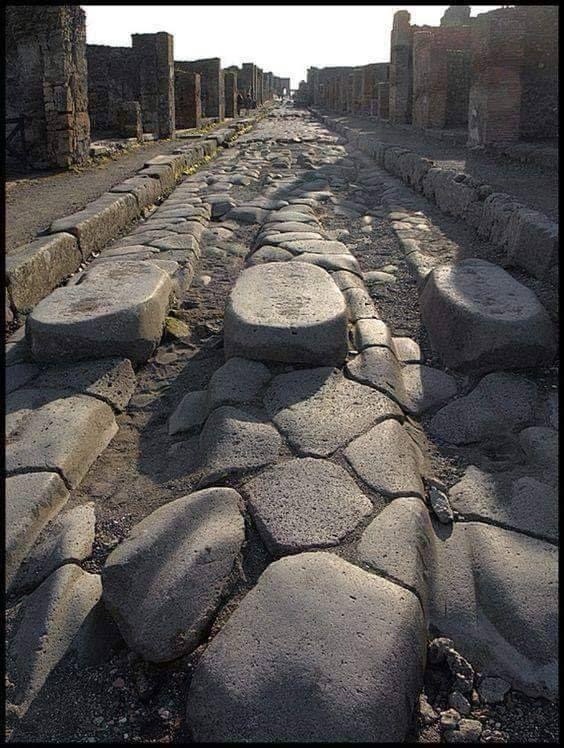
In the bustling streets of ancient Pompeii, navigating the city wasn’t just about dodging carts and pedestrians; it was also about battling the elements. The Romans, ever the engineers, came up with an ingenious solution for their urban centers, one that is still visible in the ruins of Pompeii today: the raised stone crosswalks.
These large stones, strategically placed across the streets, were the ancient equivalent of pedestrian crossings. However, they served a dual purpose. Not only did they allow citizens to cross the busy thoroughfares without stepping into the traffic of chariots and animals, but they also acted as stepping stones during the heavy rains that could turn the streets into miniature rivers.
The spacing between these stones was carefully calculated. It was wide enough to allow the wheels of carts and chariots to pass through without hindrance, showcasing the Roman knack for practicality and precision. This thoughtful urban planning ensured that commerce and daily life in Pompeii could continue smoothly, regardless of the weather.
These ancient pedestrian crossings highlight the Roman commitment to infrastructure and public convenience, qualities that made their cities marvels of the ancient world. They remind us that the Romans were not just conquerors and builders of empires but also pioneers of the urban experience, making their cities functional, navigable, and resilient against the forces of nature.

 SummerSimo Travel Troubles Notes and The Purring Page
Leave a comment