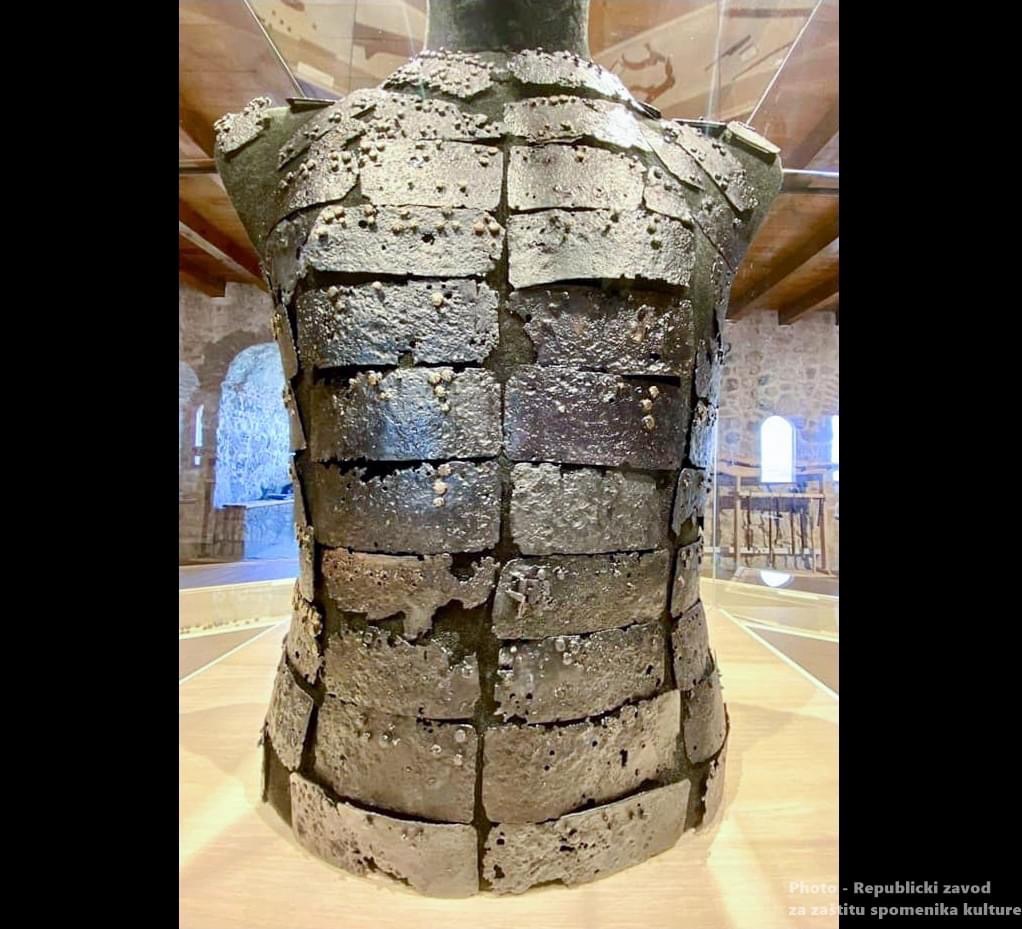
Amazing discovery from Golubac fortress in Serbia, late medieval body armor of brigandine type originating from 15th century, was presented to the public few days ago – Golubac fortress is located on the right bank of the Danube river in eastern Serbia, it was built over the remains of ancient Roman fortification, most likely in late 13th or 14th century. The area was under Serbian rule from 13th century until the Ottoman conquest in the 15th century, with control of the region changing many times between Hungarians, Bulgarians and Serbs before then. It is unclear whether the medieval fortress was built by Bulgarians, Serbs or Hungarians. Golubac is strategically located on the embankment of the Danube River where it narrows to form the Iron Gate gorge, and therefore was a site of many significant battles between Christian armies from all Europe and invading Ottoman Turks in first half of the 15th century.
Such past left many interesting archaeological traces. During restoration of the fortress in the last few years archaeological excavations revealed remains of civil settlement around the fortress and numerous interesting artifacts such as pottery, tools and weapons. Among those finds were 10 000 arrowheads, leftovers of numerous sieges.
During excavation of Tower 4 between 2015 and 2017 archaeologists have found more than 2000 metal plates, fragments of late medieval armors from 15th century, most likely belonging to members of a single military unit.
After the conservation one of the armors originating from 15th century, consisting of steel plates and rivets, is reconstructed and presented to the public two days ago. It belongs to a “brigandine“ type of body armor, which was typically made of heavy cloth, canvas, or leather, lined internally with small oblong steel plates riveted to the fabric. The brigantine armor from Golubac was most likely made in Italy, based on the stamp on one of the plates. The armor will be permanently displayed in the fortress

 SummerSimo Travel Troubles Notes and The Purring Page
Leave a comment