The foundation of the Knights Templar resides in the context of the Crusades. For Christians in the 11th century, Jerusalem was the focus of the world, the holy city housing the Tomb of Christ and the memory of significant moments of his life. Pilgrimages had been growing since 1000 AD, but they became increasingly threatened when the Seljuk Turks, recently converted to Islam, invaded Asia Minor.
Starting from 1049, the Seljuk Turks dominated Iran, Iraq, Syria, and Armenia. In 1071, they crushed the Byzantine army, seizing control of the route to Jerusalem. In 1095, Pope Urban II appealed to the knights of the West to liberate Jerusalem at the Council of Clermont. They captured Antioch in 1098 and Jerusalem in 1099, Caesar in 1101, Acre in 1104, Tripoli in 1108. As pilgrims continued to pour in, the knights mostly returned to their Western lands, leaving the safety of the approaching pilgrims under threat.
Templar Missions
Initially, the Templars, a small group of “poor knights of Christ” who lived religiously and destitely, protected the routes, escorting the pilgrims approaching Jerusalem, especially in the narrow passes between Caesar and Haïfa or towards the emblematic places of the life of Jesus, like the Lake of Jordan.
At the request of King Baldwin II of Jerusalem, they formed, after the Council of Troyes, the standing army of the Latin states of the East, alongside the Hospitallers of St John of Jerusalem and the Teutonic Knights, the two other main religious and military orders. In their orient fortresses and on the Iberian Peninsula, the Templars lived a life of prayer and war, silence and austerity, courage and discipline.
In the rear, in the commanderies that gradually stitched France and other countries like England, Scotland, Italy, Spain, and Portugal, the Templars worked in agricultural domains and urban commanderies on their commercial activities. The profits were used to fund campaigns in the East, supplying their brethren with horses, weapons, grains, dried meat, etc.
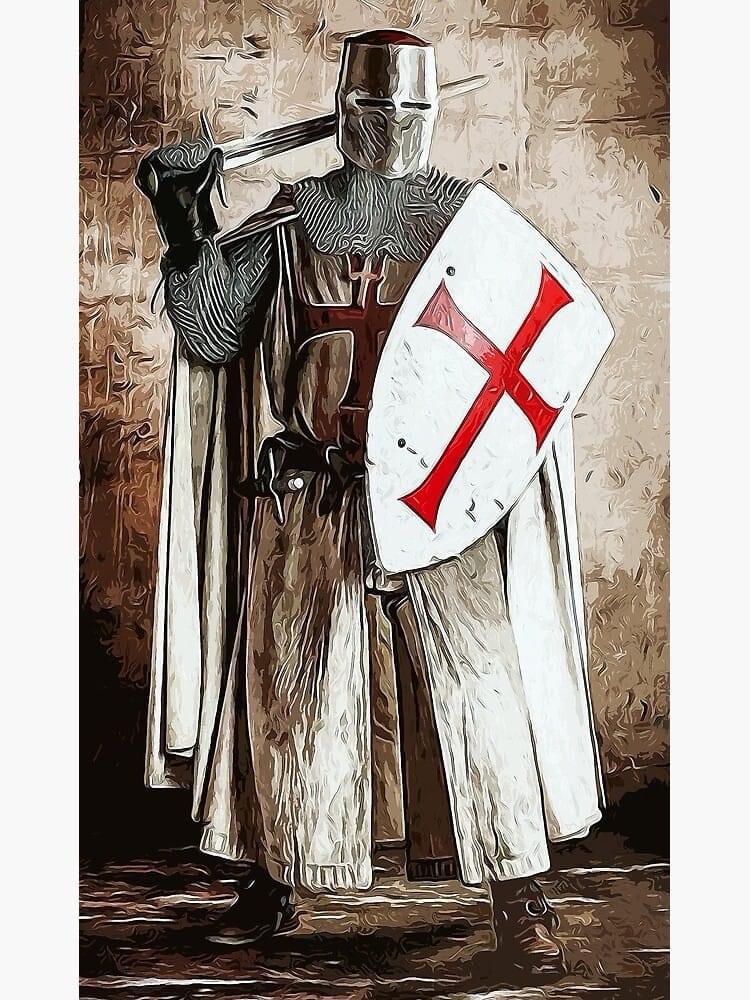
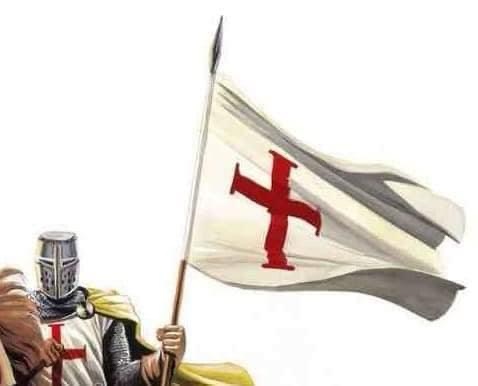
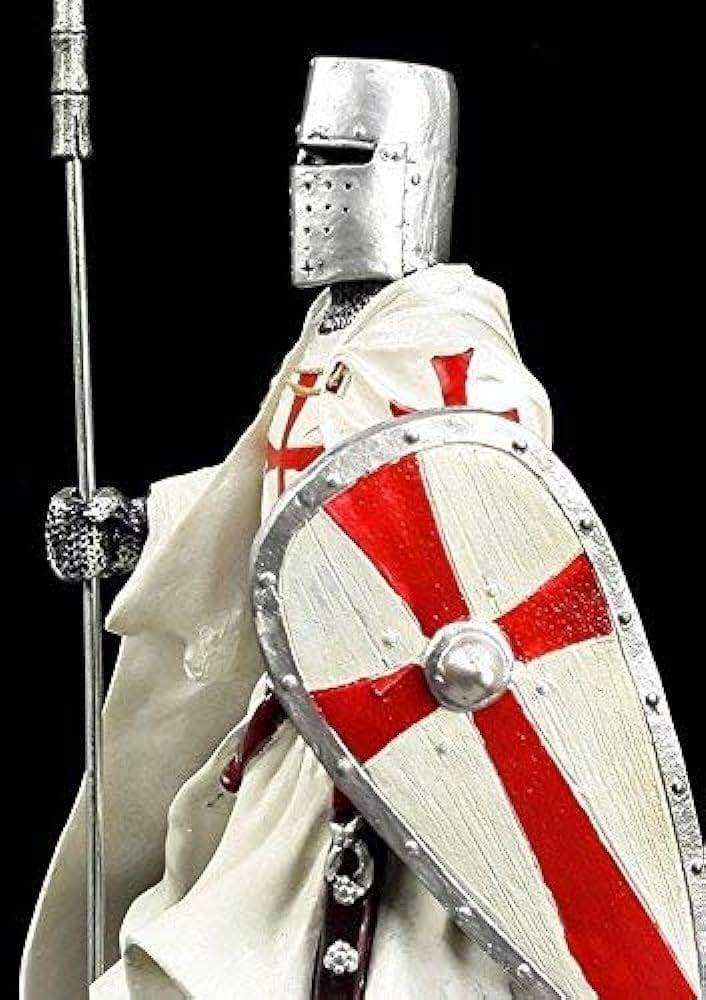
The Templars were divided into three groups: knights, serving brothers (or sergeants), and chaplains who were the only ones to be priests. All were identifiable by the red cross sewn on their mantles. The knight’s mantle was white, the serving brother’s mantle, black or brown.
After the loss of Saint John of Acre, the Templars established their headquarters in Cyprus, attempting to reestablish themselves in Palestine, but the initiatives of Jacques de Molay failed.
Suppression of the Knights Templar
In his conflict with the papacy, the King of France, craving absolutism, orchestrated a slanderous campaign against the Templars, whose order remained very powerful. Then, with the Inquisition’s complicity, he organized a massive police operation on Friday the 13th of October 1307, arresting all the Templars in the kingdom and confiscating their property.
Shocked and imprisoned, the Templars were brutalized and threatened, with most questioned in Paris, especially those of high-ranking, forced to confess what the inquisitors wanted. Accusations included forcing new recruits to spit on the cross, “obscene” kissing, inciting homosexuality, and idol worship. Arrests proceeded throughout Europe, but confessions were only made where torture was applied.
When,
in the spring of 1310, the Templars regained their senses and retracted their confessions, condemning the conditions of their questioning and imprisonment, and loudly proclaimed the innocence of the Knights Templar, 54 brothers were condemned to the stake and burned in Paris on May 12, 1310.
The Knights Templar was not condemned, but suppressed, on March 22, 1312, at the Council of Vienne (Isère), by Clement V, who attributed all the Templar property to the order of the Hospitallers of St. John of Jerusalem.
In 1314, the Grand Master Jacques de Molay and the Commander of Normandy Geoffroy de Charnay were burned in Paris while proclaiming the Knights Templar’s innocence.
Timeline of the Knights Templar
1092: Counts Raymond and Henri of Burgundy arrive, in the context of the Spanish Crusades called the Reconquista (Christian Reconquest).
1291: Death of Grand Master William of Beaujeu and end of the Latin States of the East; Templars evacuate their fortress of Pilgrim Castle for the island of Cyprus.
1319: At the request of King D. Dinis, Pope John XXII established the Order of Christ to replace the disappeared Templars.
1357: Tomar becomes the Order of Christ’s headquarters.



 SummerSimo Travel Troubles Notes and The Purring Page
Leave a comment