
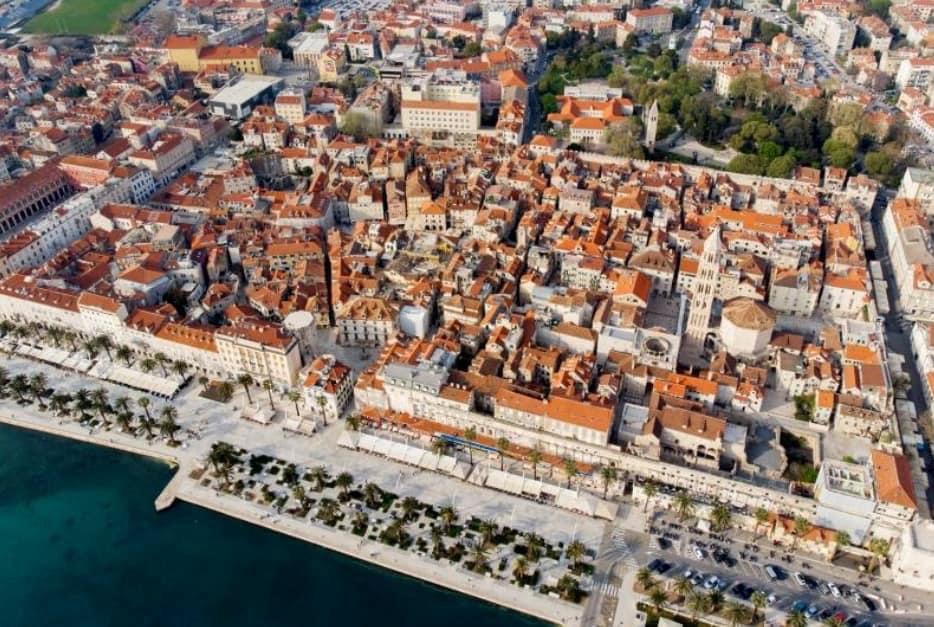
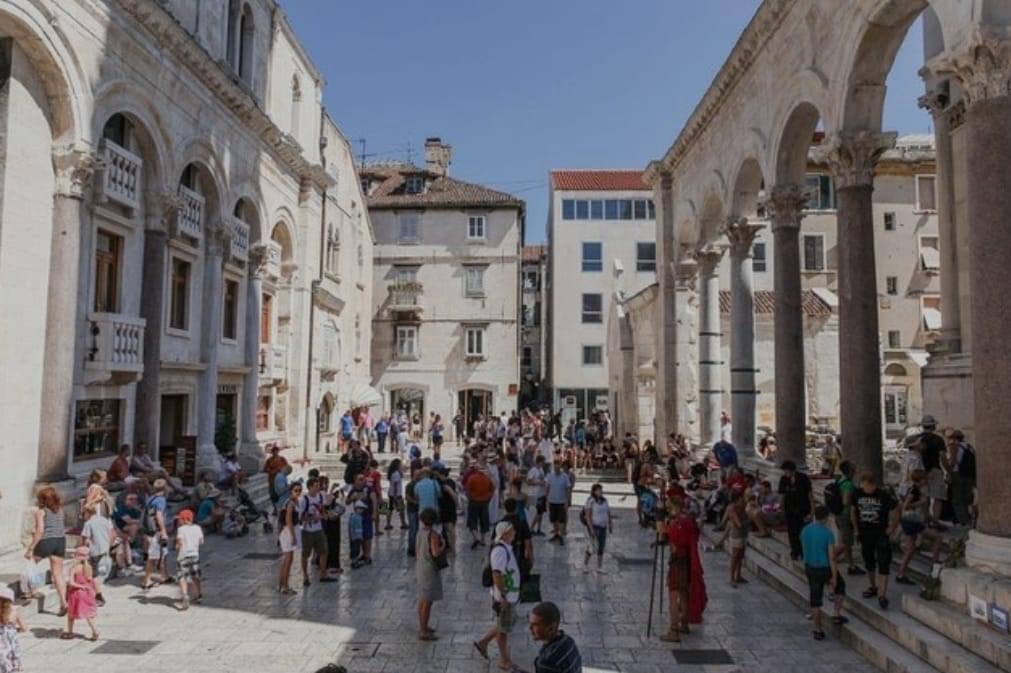
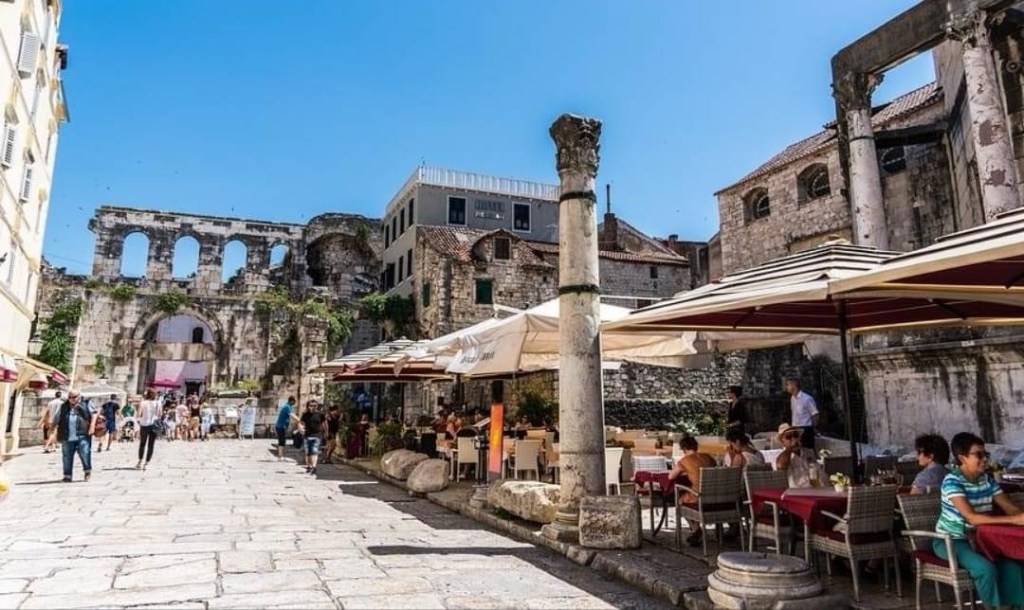
Diocletian’s Palace is one of the best preserved monuments of Roman architecture in the world. Around the year 300, it was built by the Roman emperor Diocletian and he lived there after abdication (305) until his death (316). It was built in the bay of the peninsula 5 km southwest of Salona, then the capital of the Roman province of Dalmatia.
The emperor’s palace was built as a combination of a luxurious villa – a summer house and a Roman military camp (castrum), divided into four parts by two main streets. In that scheme, the southern part of the Palace was intended for the emperor, his apartment and the corresponding state and religious ceremonies, while the northern part was for the imperial guard – the army, servants, for storerooms and the like. The palace is a rectangular building (about 215 x 180 meters) with four large towers at the corners, doors on each of the four sides and four smaller towers on the walls. The lower part of the walls is without any openings, while the upper floor is open with a monumental portico to the south and corridors with large arched windows on the other three sides.
When the Slavs and Avars destroyed Salona in the 7th century, part of the population settled in the palace premises. Over time, the city of Split was built in its place, and the area of Diocletian’s Palace today forms a large part of the old historical core of the city, which was inscribed on the UNESCO list of world heritage sites in Europe in 1979.


 SummerSimo Travel Troubles Notes and The Purring Page
Leave a comment