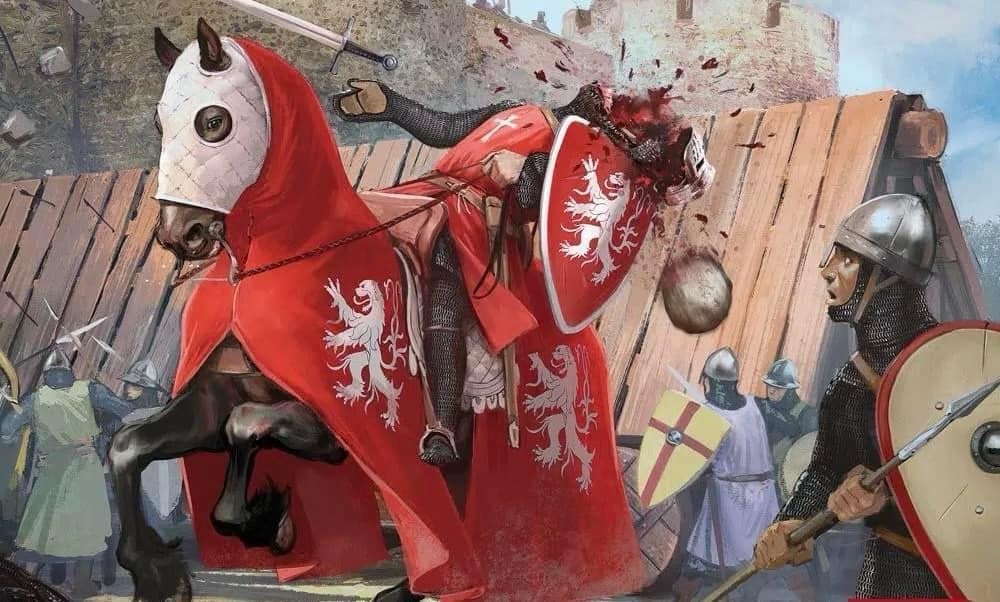
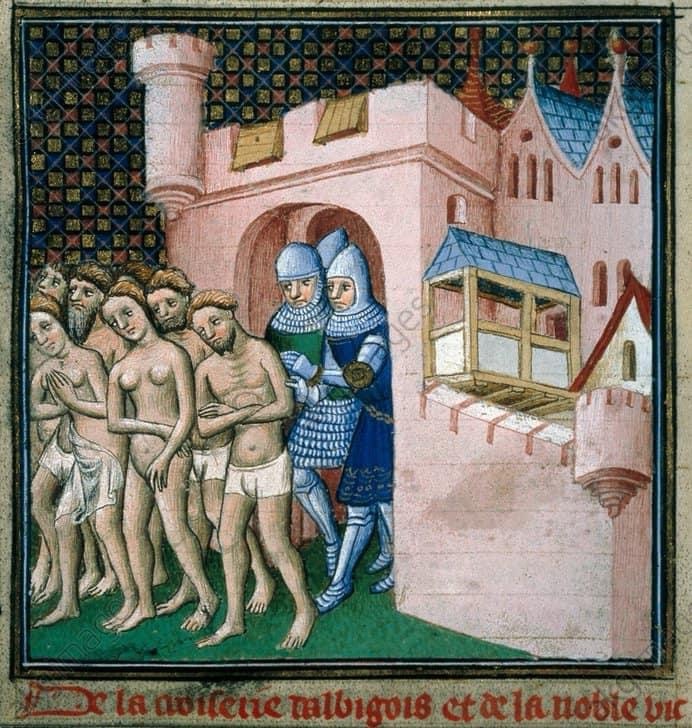
The Albigense Crusade, also known as the Crusade against the Cathars, was a religious and political conflict that took place in southern France in the early 13th century. Developed mainly between 1209 and 1229. The crusade was led by the Catholic Church against Catharic heresy, a form of Christianity considered heterodox by the Church.
The Cathars, also known as Albigens, were followers of a dualist current that rejected many of the teachings of the Catholic Church, including papal authority and the ecclesiastical hierarchy. The Languedoc region in the south of France was an important centre of Catarian heresy.
The crusade began in response to the assassination of Pierre de Castelnau, a papal legacy that had been sent to deal with the Cathars. Political and religious leaders, including Simon de Montfort, played a prominent role in the fight against Cathars. The crusade involved both Catholic nobles and crusaders from other regions.
After several decades of conflict, the crusade ended with the signing of the Treaty of Paris in 1229. This treaty established real control over the territory, but it also allowed for some religious tolerance. Although the Albigen crusade managed to suppress Cathar heresy, it left a deep imprint on the region and on the relationship between the Church and secular power.


 SummerSimo Travel Troubles Notes and The Purring Page
Leave a comment