The Herrenchiemsee Palace, located on Herreninsel, an island in the Chiemsee Lake in Bavaria, Germany, is one of King Ludwig II of Bavaria’s most ambitious and extravagant projects, often referred to as the Bavarian Versailles. It was intended to be a homage to Louis XIV of France and the grandeur of the Palace of Versailles. Although the palace was never completed due to Ludwig II’s death in 1886, what was finished reflects the king’s deep admiration for French absolutism and the arts of the Baroque and Rococo periods.
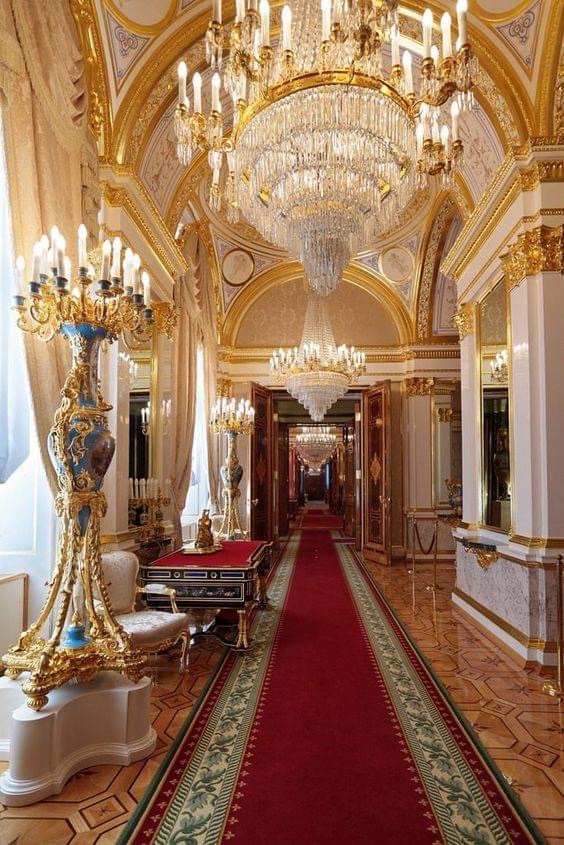
Upon entering Herrenchiemsee Palace, visitors are often struck by the grandeur and detail of its hallways that lead to the various rooms and sections of the palace. Some of the most notable areas within Herrenchiemsee include:
- The State Staircase: This is reminiscent of the Ambassador’s Staircase at Versailles, designed in an opulent manner with a lavish use of gold, mirrors, and paintings, creating a stunning entrance to the state rooms.
- The Great Hall of Mirrors: Much like its counterpart in Versailles, this hall stretches impressively with numerous mirrors reflecting the light from windows on one side and chandeliers on the other, magnifying the splendor of the room.
- The King’s State Bedroom: Modeled after the king’s bedroom in Versailles, it served a ceremonial purpose and was a symbol of royal authority. The bed, placed in a niche, dominates the room, surrounded by luxurious fabrics and ornate decorations.
- The Royal Chapel: A smaller replica of the Versailles Chapel, featuring intricate frescoes and a magnificent altar, showcasing the king’s religious devotion as well as his appreciation for artistic beauty.
- The Dining Room: Known for its “magic table” that could be lowered and raised through the floor to the kitchen below, allowing Ludwig II to dine alone without servants in the room, preserving his privacy.
- The Galleries and Side Rooms: These areas house various artworks, including paintings, sculptures, and tapestries, many of which are inspired by or directly reference the French monarchy and the Sun King, Louis XIV.
Visitors to the Herrenchiemsee Palace are often enchanted by the detailed craftsmanship, the opulent decoration, and the sheer scale of King Ludwig II’s vision. Although it stands as a monument to an era and a style of governance that had already faded by the time of its creation, Herrenchiemsee remains a fascinating testament to the king’s ambition, his love of art, and his deep connection to the past glories of European monarchies.

 SummerSimo Travel Troubles Notes and The Purring Page
Leave a comment