The Classense Library is also known for the presence of cats: among them 𝗧𝗲𝗿𝗲𝘀𝗮, named for Countess Teresa Gamba (1799-1873), and her brother 𝗕𝘆𝗿𝗼𝗻, after the lord and poet (1788-1824), who was once Countess Gamba’s lover. In addition, the monastery, in existence since about 1515, must certainly have had cats, very useful in keeping mice out of the libraries and storerooms: an illustrious presence is also that of the cat in the “Wedding at Cana” present in the refectory, now the Sala Dantesca.
With four-legged friends and vibrissae in mind, we thought we would show you some 𝗰𝘂𝗿𝗶𝗼𝘀𝗶𝘁𝗮̀ 𝗹𝗶𝗯𝗿𝗮𝗿𝗶𝗲 𝗶𝗻 𝘁𝗲𝗺𝗮 𝗳𝗲𝗹𝗶𝗻𝗼. Indeed, the library’s ancient holdings contain several volumes printed between the sixteenth and seventeenth centuries in which cats are depicted within the typographic marks.
For those who do not know, the 𝗺𝗮𝗿𝗰𝗵𝗲 𝘁𝗶𝗽𝗼𝗴𝗿𝗮𝗳𝗶𝗰𝗵𝗲 are, in short, trademarks; here we present four of them, relating to as many Italian publishers: Melchiorre Sessa from Venice, Francesco Tebaldini from Brescia, Lorenzo Pasquato from Padua, and finally Domenico Manzani from Florence. All chose to include in their brand the emblem of a cat or a she-cat.
𝗠𝗲𝗹𝗰𝗵𝗶𝗼𝗿𝗿𝗲 𝗦𝗲𝘀𝘀𝗮 was the son of Giovanni Battista, the progenitor of a Venetian family devoted to the art of typography from the sixteenth to the early seventeenth century.
The trademark of the Sessa family’s famous typography was the cat with a mouse in its mouth, whose early depictions were very simple, only to become richer in decorative elements over the years and thus produce numerous variations.
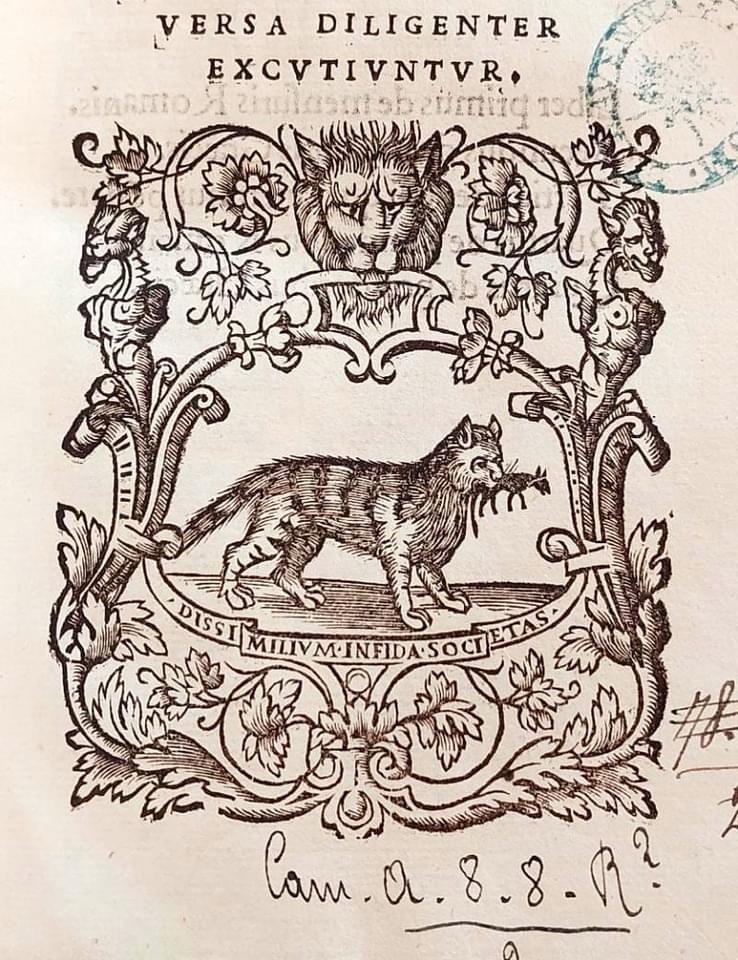
The specimen we show here is the Venetian edition (1535) of the work by the German physician Georg Agricola (Georg Bauer), published under the title 𝘓𝘪𝘣𝘳𝘪 5. 𝘋𝘦 𝘮𝘦𝘯𝘴𝘶𝘳𝘪𝘴 𝘦𝘵 𝘱𝘰𝘯𝘥𝘦𝘳𝘪𝘣𝘶𝘴: 𝘪𝘯 𝘲𝘶𝘪𝘣𝘶𝘴 𝘱𝘭𝘦𝘳𝘢𝘲𝘶𝘦 𝘢̀ 𝘉𝘶𝘥𝘢𝘦𝘰 𝘦𝘵 𝘗𝘰𝘳𝘵𝘪𝘰 𝘱𝘢𝘳𝘶𝘮 𝘥𝘪𝘭𝘪𝘨𝘦𝘯𝘵𝘦𝘳 𝘦𝘹𝘤𝘶𝘵𝘪𝘶𝘯𝘵𝘶𝘳.
On the title page appears the typographical mark depicting 𝗴𝗮𝘁𝘁𝗼 𝗰𝗼𝗻 𝘁𝗼𝗽𝗼 𝗶𝗻 𝗯𝗼𝗰𝗰𝗮, in a figured frame and accompanied by the motto “Dissimilium infida societas,” which we could translate as: “The company of dissimiles is unhealthy.”
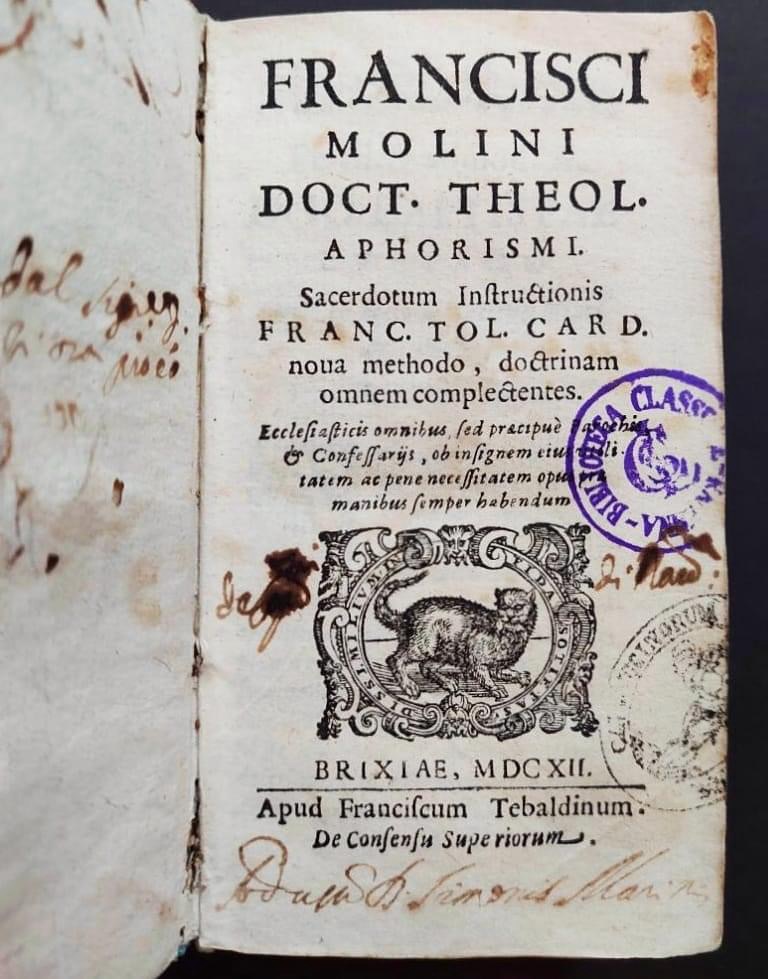
Also 𝗙𝗿𝗮𝗻𝗰𝗲𝘀𝗰𝗼 𝗧𝗲𝗯𝗮𝗹𝗱𝗶𝗻𝗶, a bookseller-publisher from Brescia who started his publishing business in the 17th cent, was inspired for his own brand by the image of a cat with a mouse in its mouth, very similar to that of the Venetian Sessa, adding a slight variation in the construction of the motto: “Infidas Societas dissimilium.”
The title page of the work is reproduced here 𝘍𝘳𝘢𝘯𝘤𝘪𝘴𝘤𝘪 𝘔𝘰𝘭𝘪𝘯𝘪 𝘥𝘰𝘤𝘵. 𝘵𝘩𝘦𝘰𝘭. 𝘈𝘱𝘩𝘩𝘰𝘳𝘪𝘴𝘮𝘪. 𝘚𝘢𝘤𝘦𝘳𝘥𝘰𝘵𝘶𝘮 𝘪𝘯𝘴𝘵𝘳𝘶𝘤𝘵𝘪𝘰𝘯𝘪𝘴 𝘍𝘳𝘢𝘯𝘤. 𝘛𝘰𝘭. 𝘤𝘢𝘳𝘥. 𝘯𝘰𝘶𝘢 𝘮𝘦𝘵𝘩𝘰𝘥𝘰, 𝘥𝘰𝘤𝘵𝘳𝘪𝘯𝘢𝘮 𝘰𝘮𝘮𝘦𝘦𝘮 𝘤𝘰𝘮𝘱𝘭𝘦𝘤𝘵𝘦𝘯𝘵𝘦𝘴 (1612), where we see the mark with cat passing by with its head in frontal view and a mouse in its mouth. Motto: “Dissimilium infida sotietas.”
A very different representation can be seen, on the other hand, in the typographic mark of 𝗟𝗼𝗿𝗲𝗻𝘇𝗼 𝗣𝗮𝘀𝗾𝘂𝗮𝘁𝗼, who was active mainly between Venice and Padua, where he was chamber imprinter, printer to the Accademia dei Coraggiosi, printer to the university and the Accademia degli Avveduti.
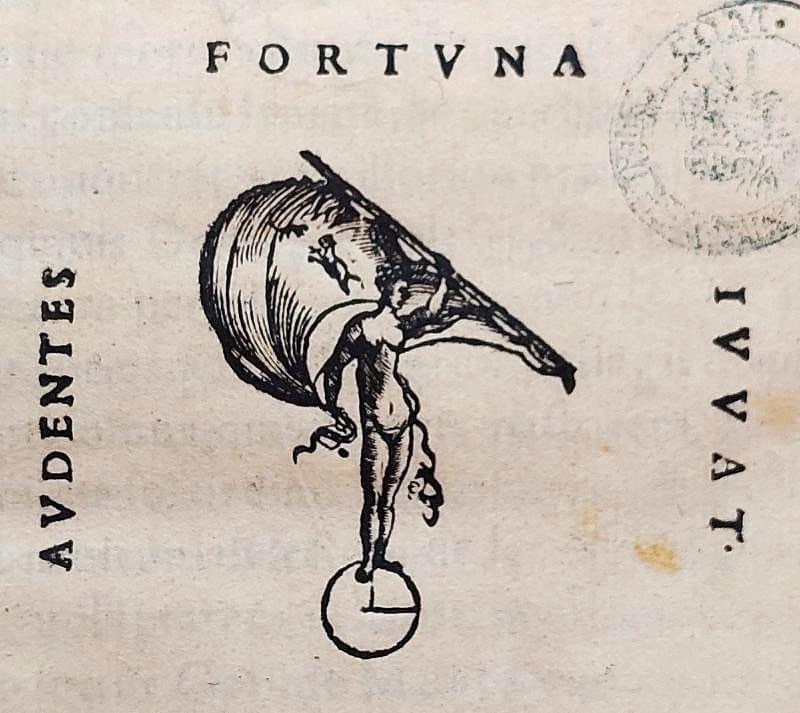
In the edition of the work of 𝗢𝘁𝘁𝗮𝘃𝗶𝗼 𝗔𝗯𝗯𝗶𝗼𝘀𝗶 (bishop of Pistoia in odor of heresy…) printed in 1566 under the title 𝘖𝘳𝘢𝘵𝘪𝘰 𝘢𝘥 𝘪𝘭𝘭𝘭.𝘮𝘶𝘮 𝘦𝘵 𝘳.𝘮𝘶𝘮 𝘥𝘥. 𝘐𝘶𝘭𝘪𝘶𝘮 𝘍𝘦𝘭𝘵𝘳𝘪𝘶𝘮 𝘢 𝘙𝘶𝘶𝘦𝘳𝘢𝘦 𝘚𝘰𝘳𝘢𝘦 𝘥𝘶𝘤𝘦𝘮 𝘴.𝘳.𝘦. 𝘱𝘳𝘦𝘴𝘣. 𝘤𝘢𝘳𝘥. 𝘵𝘪𝘵. 𝘚. 𝘗𝘦𝘵𝘳𝘪 𝘢𝘥 𝘝𝘪𝘯𝘤𝘶𝘭𝘢 𝘢𝘳𝘤𝘩𝘪𝘦𝘱𝘪𝘴𝘤𝘰𝘱𝘶𝘮 𝘙𝘢𝘶𝘦𝘯𝘯𝘢𝘦 𝘢𝘣 𝘖𝘤𝘵𝘢𝘶𝘪𝘰 𝘈𝘣𝘣𝘪𝘰𝘴𝘪𝘰, one of his typographic marks is depicted, namely fortune with a sail and feet on the sphere, and inside the sail, rather small 𝗴𝗮𝘁𝘁𝗼 𝗲 𝘁𝗼𝗽𝗼.
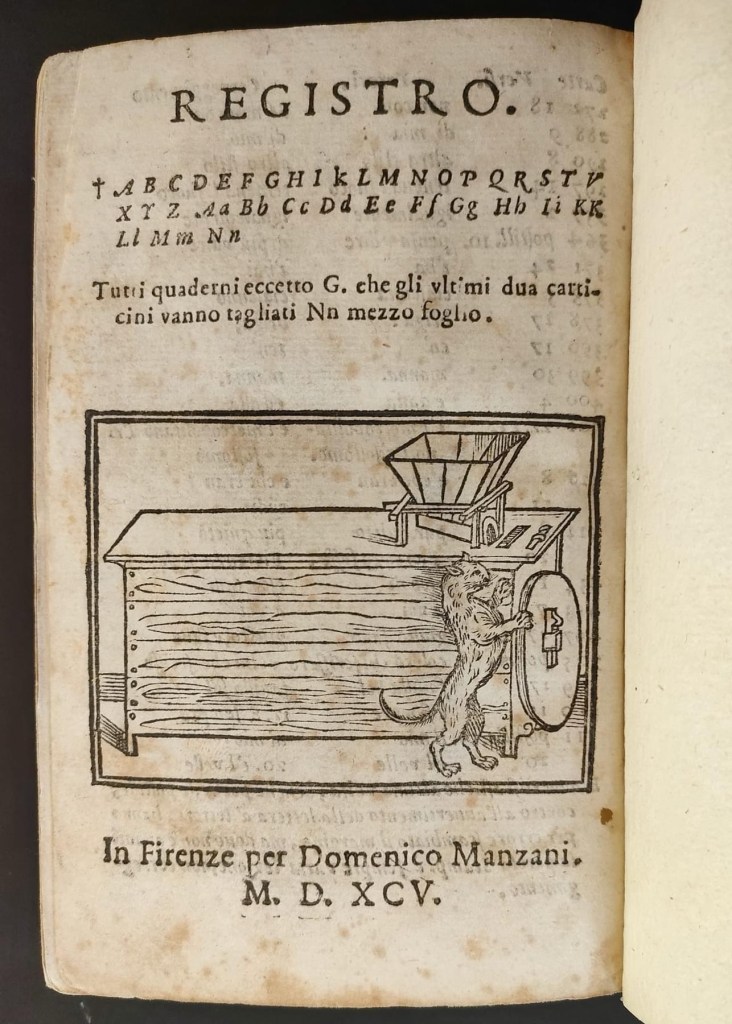
Finally, the last typographical curiosity we show you is the edition of 𝘓𝘢 𝘋𝘪𝘶𝘪𝘯𝘢 𝘤𝘰𝘮𝘮𝘦𝘥𝘪𝘢 𝘥𝘪 𝘋𝘢𝘯𝘵𝘦 𝘈𝘭𝘪𝘨𝘩𝘪𝘦𝘳𝘪 𝘯𝘰𝘣𝘪𝘭𝘦 𝘧𝘪𝘰𝘳𝘦𝘯𝘵𝘪𝘯𝘰 𝘳𝘪𝘥𝘰𝘵𝘵𝘢 𝘢 𝘮𝘪𝘨𝘭𝘪𝘰𝘳 𝘭𝘦𝘻𝘪𝘰𝘯𝘦 𝘥𝘢𝘨𝘭𝘪 𝘢𝘤𝘤𝘢𝘥𝘦𝘮𝘪𝘤𝘪 𝘥𝘦𝘭𝘭𝘢 𝘊𝘳𝘶𝘴𝘤𝘢, printed in Florence in 1595 by 𝗗𝗼𝗺𝗲𝗻𝗶𝗰𝗼 𝗠𝗮𝗻𝗻𝘇𝗮𝗻𝗶, which had a cat as its typographic mark.
Manzani was the printer of the first publications of the Accademia della Crusca and in his editions there is a contamination between two typographic marks: the one proper to the Accademia della Crusca, depicting a 𝗳𝗿𝘂𝗹𝗹𝗼𝗻𝗲 or 𝗯𝘂𝗿𝗿𝗮𝘁𝘁𝗼 (a machine that was used to separate bran from flour), and the one specific to Manzani, a cat.
The various passages of this mixture can be seen in the 1595 edition of the Divine Comedy, which shows on the title page the Accademia’s traditional frullone, while the colophon depicts the typographical mark of the cat, which, contrary to the typical laziness of cats, here operates the frullone at a good pace.
Friends of the Classense Library Association Municipality of Ravenna Library Network of Romagna and San Marino Ravenna Tourism Campus – Alma Mater Studiorum – University of Bologna Ravenna for Dante Accademia della Crusca rewrite

 SummerSimo Travel Troubles Notes and The Purring Page
Leave a comment