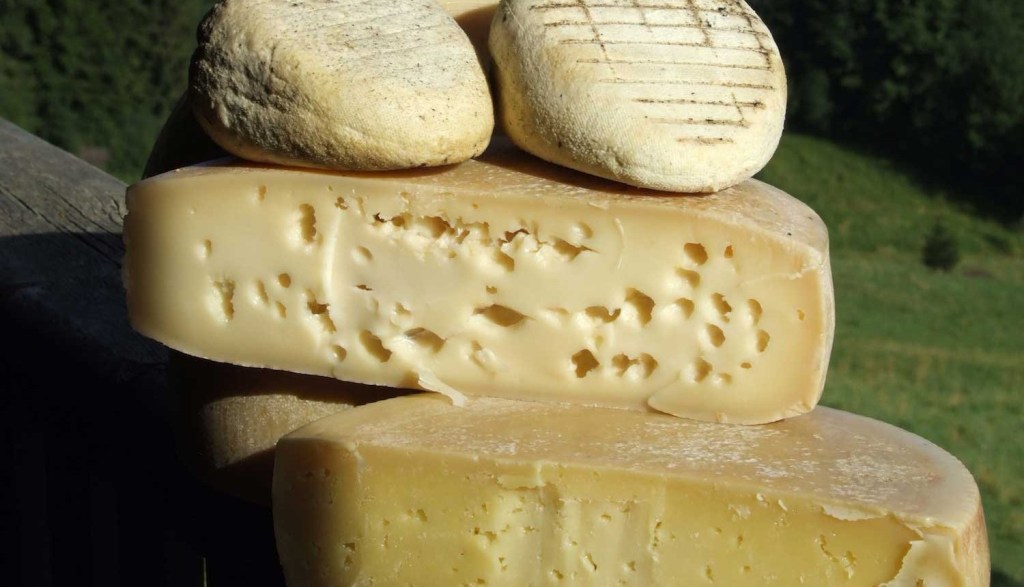
Alpine cheeses are treasured for their complex flavors, which are a result of the unique combination of mountainous terroir, diverse grasses, and the specific types of milk used in their production.
Alpine cheese refers to a variety of cheeses that are traditionally produced in the Alpine regions of Europe, particularly in Switzerland, France, Italy, and Austria. These cheeses are known for their distinct flavors, textures, and aromas, which are influenced by the unique environment and the specific types of milk used in their production.
- Cow’s Milk Alpine Cheeses: The most common type of Alpine cheese is made from cow’s milk. Cows graze on the lush, diverse grasses and herbs found in the Alpine meadows, which gives the milk a rich and flavorful character. The grasses in these mountainous regions are often high in nutrients due to the altitude and mineral-rich soil. The resulting cheeses, such as Gruyère, Comté, and Emmental, have a nutty, savory taste and a smooth, creamy texture.
- Goat’s Milk Alpine Cheeses: While less common than cow’s milk cheeses, there are also Alpine cheeses made from goat’s milk. Goat herds in the Alpine regions feed on a variety of plants and shrubs, including alpine grasses and herbs. The milk from these goats produces cheeses with a distinct flavor profile, which can range from mild and creamy to sharp and tangy. Chèvre des Alpes from France is one example of an Alpine goat’s milk cheese.
- Sheep’s Milk Alpine Cheeses: Sheep’s milk Alpine cheeses are another specialty of the region. The sheep graze on the alpine pastures, consuming a diverse array of grasses and wild herbs. The milk from these sheep is higher in fat and protein content compared to cow’s milk, resulting in cheeses with a richer, creamier texture and a more pronounced flavor. Examples of sheep’s milk Alpine cheeses include Sbrinz from Switzerland and Pecorino Romano from Italy.
The unique characteristics of Alpine cheeses can be attributed to the terroir of the mountainous regions, which includes factors such as the altitude, climate, soil composition, and the diverse range of grasses and herbs available for grazing. These factors influence the flavor, aroma, and texture of the milk produced by the animals, which in turn impacts the final cheese.
It’s worth noting that while the types of milk used in Alpine cheese production contribute to the overall flavor profile, the cheese-making process itself, including the methods of fermentation, aging, and other production techniques, also play crucial roles in shaping the final characteristics of the cheese.
The terroir of the Alpine regions plays a significant role in shaping the flavor of Alpine cheeses. Terroir refers to the combination of environmental factors, including climate, soil composition, altitude, and the surrounding vegetation, that influence the growth of the plants and the animals that graze on them. Here’s how the terroir affects the flavor of Alpine cheeses:
- Alpine Grasses and Herbs: The diverse range of grasses and wild herbs that grow in the Alpine meadows provide the primary source of nutrition for the grazing animals. These plants contribute unique flavors and aromas to the milk produced by the animals. The variety of grasses and herbs, which can include clover, dandelion, thyme, and alpine flowers, impart distinct characteristics to the milk, resulting in complex flavors in the cheese.
- Altitude and Climate: The high altitude and cool climate of the Alpine regions have an impact on the flavor development of the cheeses. The cooler temperatures slow down the growth of the plants and extend the grazing season, allowing the animals to feed for longer periods. This extended grazing period influences the composition of the milk, making it richer in fats and proteins, which contributes to the creamy texture and robust flavors of Alpine cheeses.
- Mineral-rich Soil: The soil composition in the Alpine regions is typically mineral-rich, thanks to the geological characteristics of the mountains. The plants and grasses absorb these minerals, which are then transferred to the milk produced by the animals. The minerals can add subtle nuances and complexity to the flavor profile of the cheese.
- Pure Alpine Water: The pristine water sources found in the mountains contribute to the quality of the milk used in cheese production. The animals drink from these crystal-clear streams and springs, which can enhance the overall flavor and purity of the milk.
- Traditional Cheese-making Techniques: Along with the terroir, the traditional cheese-making techniques specific to each Alpine region also play a crucial role in shaping the flavor of the cheeses. Factors such as the methods of fermentation, curdling, salting, and aging are carefully crafted to develop the desired characteristics of the cheese.
The combination of these environmental factors and traditional cheese-making techniques results in the unique and distinctive flavors found in Alpine cheeses. The terroir of the Alpine regions provides the foundation for the complex and nuanced taste profiles that cheese enthusiasts appreciate.


 SummerSimo Travel Troubles Notes and The Purring Page
Leave a comment