1st. After the 4th Crusade and the conquest of Constantinople by the Crusaders (1204), the old East Roman Empire was fragmented into several kingdoms or lordships, some led by Crusader leaders, and others by East Roman resistance. The main one of them was the so-called “Nicaea empire”, with its capital in that city, and based in Western Anatolia, under the direction of Theodore I Lascaris (1204-22), son-in-law of Alexios III, emperor overthrown by the Crusaders. Theodore’s son-in-law, John III Doukas Vataztés(1222-54) carried out a frugal economic policy, saving on luxuries and improving internal production and the living conditions of the lower classes, limiting the abuses of the authorities, choosing their administrators by merit and not by blood. This allowed him to have healthy coffers and rebuild many fortresses and reform the army (using, paradoxically, Latin mercenaries) and rebuild the navy. Launched to restore the old Empire, he maintained peaceful relations with the Turks, sought alliances with the Bulgarians or the Holy Emperor Frederick II to save himself from enemies. After expelling the Latins from Asia (1225) and reconquering the Aegean islands, he later recovered large territories in Europe from the Despot of Epirus, another of the East Roman princes who emerged after the collapse of the Crusade. And even in 1235 he came to besiege Constantinople, although he was unable to retake it due to the intervention of the Venetian fleet.
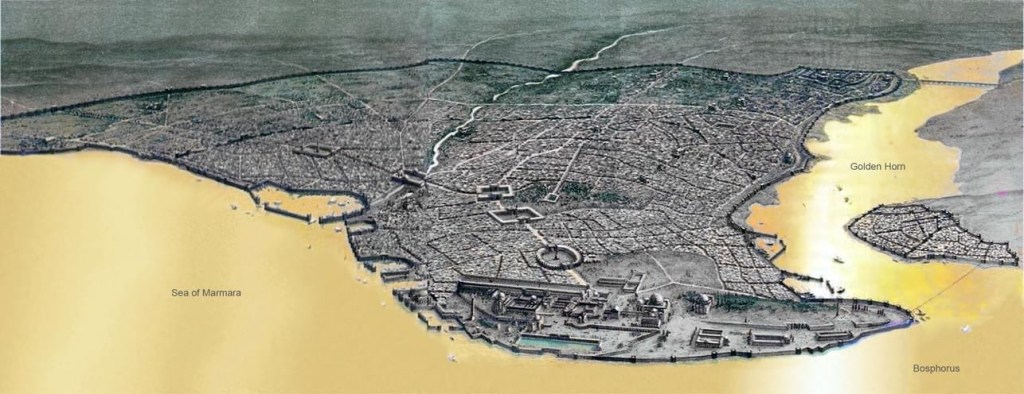
2nd. During those wars, Miguel Palaiologo, great-grandson of Alejo III and married to the niece of Juan III Doukas, stood out. He soon aroused suspicion of aspiring to the imperial throne: in 1253 he escaped a trial; but under the government of his cousin Theodore II (1254-8) he ordered to blind him, and Miguel fled with the Turks. But after Theodore II died, the throne remained in the hands of his youngest son, Juan IV, and his regents. However, the nobility and the army, supporters of Miguel, acclaimed him as regent (1258) and later as co-emperor (1259). Against him a coalition was formed, consisting of various Latin and Greek lords. Miguel sent a deserter to deceive the despot of Epirus, who fled thinking that his Latin allies would betray him; the next day Michael attacked the Latins: his cavalry of Hungarian and Cuman archers mowed down the Franks, and 30 great lords were captured in the battle of Pelagonia. After that, Michael VIII besieged Constantinople (1260), using many troops to isolate the Galata quarter (which enclosed the Golden Horn estuary), capturing fortresses, leading a major assault with siege weapons, and expecting betrayal from within. But unable to take the city, he signed a one-year truce with the Latin Emperor Baldwin II.
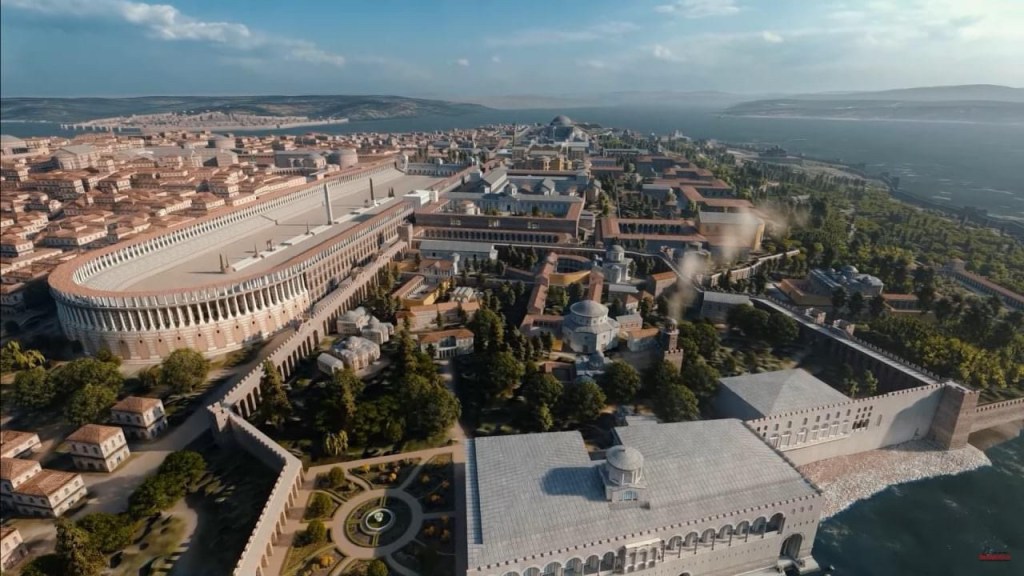
3º But Miguel VIII prepared another siege, allying himself with the Republic of Genoa against that of Venice. In July 1261, he sent his general Alexios Strategopoulos, with 800 Cuman mercenaries, to watch and spy. Alexios learned that the Latin troops and the Venetian fleet had gone on a raid and that Constantinople was undefended. Despite not having orders, he did not miss the opportunity. On the night of July 24-25, he approached the walls and hid in a monastery. He sent a small group into a water channel. The group attacked a sector of the walls, surprising the guards, and opened one of the city gates. Alexius entered with the rest of his troops, and the defenders, taken completely by surprise, put up little resistance. The news spread fast, and Emperor Baldwin II and his court fled. Alexios set fire to the Venetian quartersand sent letters to Emperor Michael VIII, who promptly sent reinforcements to secure the city, although he did not make his official entry until August 15.
4th. However, to prevent the Franks from recapturing the city, he quickly made a pact with the Venetians, and both to them and to the Genoese, he granted neighborhoods and maintained their privileges; and both Republics, seeing their interests maintained, gave up trying to recover the city. However, this, which was useful in the short term, was not so in the long run, since it prevented the trade of Constantinople, an important source of income, from recovering. Since the territories ruled by Miguel VIII in 1261 were very interior to those ruled in 1204 by his great-grandfather Alexios III.

 SummerSimo Travel Troubles Notes and The Purring Page
Leave a comment