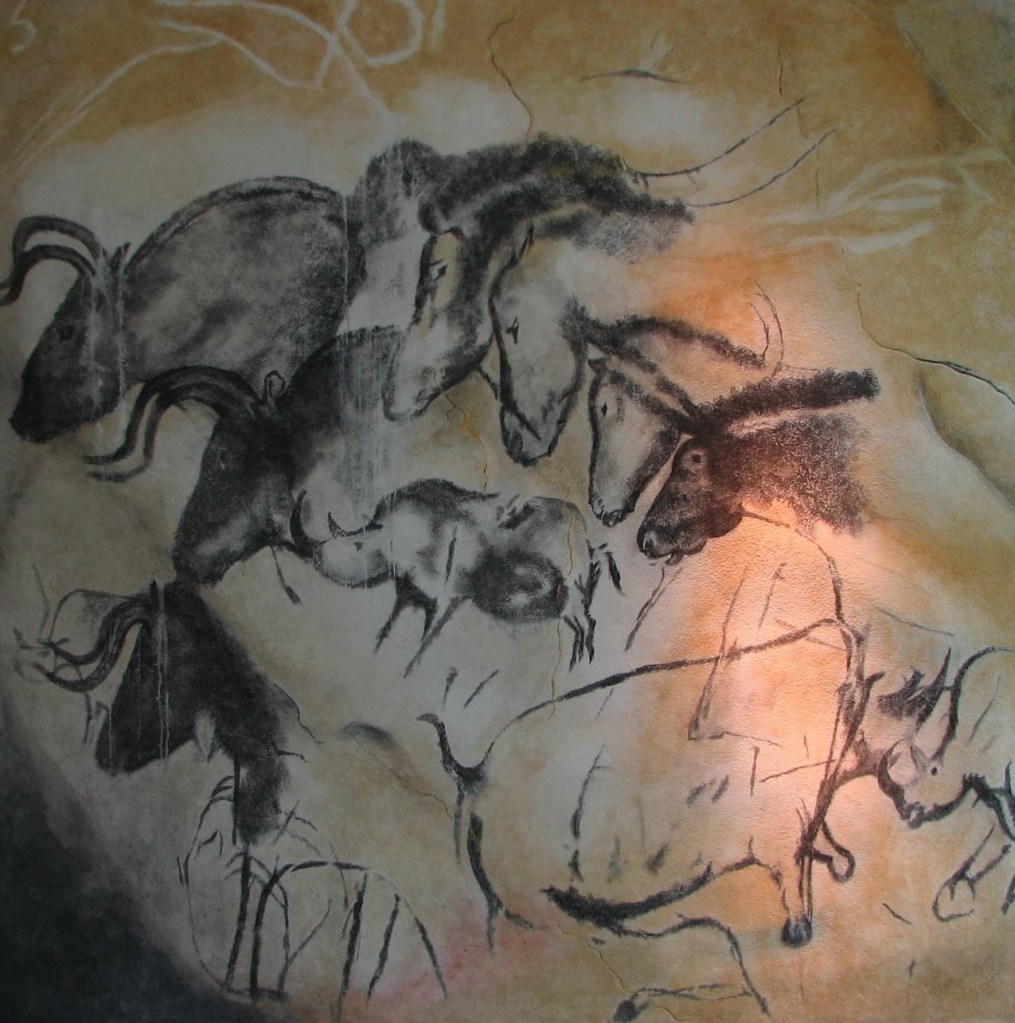
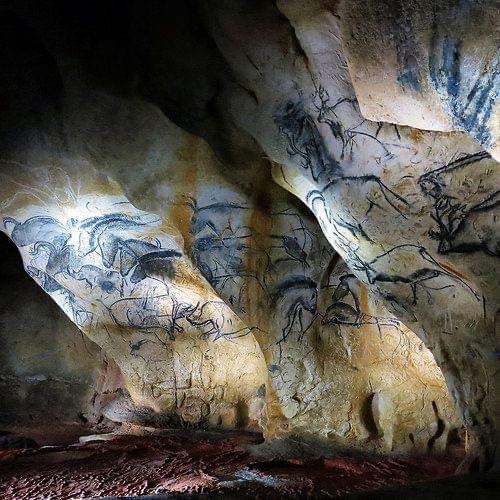
in the Ardèche department in the southeastern France, is a cave that contains some of the world’s best-preserved figurative rock paintings, as well as other evidence of life in the Upper Paleolithic. It is located near the commune of Vallon-Pont-d’Arc in a limestone cliff over the old river Ardèche, in the Gargantas del Ardèche.
Discovered in 1994, it is considered one of the most significant of prehistoric art. The cave is also a reference for the quality of rock art conservation and site management. In 2014 UNESCO chose the Chauvet Cave as a World Heritage Site. 5
The cave was explored for the first time on December 18, 1994 by a trio of speleologists: Éliette Brunel-Deschamps, Christian Hillaire and Jean-Marie Chauvet, from whom she took the name. 6 In addition to paintings and other tests of human activity they also discovered fossilized remains, footprints and marks of a variety of animals, some of which have become extinct. Additional study by French archaeologist Jean Clottes has revealed much about the site, although the dating has sparked some controversy.


 SummerSimo Travel Troubles Notes and The Purring Page
Leave a comment