Phyllo (or filo) dough is a thin sheet of dough widely used in Middle Eastern and Balkan cuisine. Here is a recipe for making it at home:
Ingredients:
- 400g flour
- 240ml lukewarm water
- 1 teaspoon salt
- 2 tablespoons extra virgin olive oil
- 2 teaspoons white vinegar
- Flour to taste for the pastry board and surface of the pastry sheet
- Melted butter to taste
Procedure:
- In a large bowl, sift the flour and salt.
- In another bowl, mix the water, extra virgin olive oil and white vinegar.
- Pour the liquid mixture into the bowl with the flour and mix well until smooth.
- Transfer the dough to a floured pastry board and knead vigorously for at least 10 minutes, until it becomes smooth and elastic.
- Form a ball with the dough and cover it with an upside-down bowl. Let the dough rest for about 30 minutes.
- Divide the dough into 6-8 pieces and form into balls.
- Roll out each ball of dough with a rolling pin on a floured pastry board until very thin (about 1-2 mm).
- Brush each sheet with melted butter.
- Overlap the sheets, one on top of the other, to form a single layer of phyllo sheet.
- Cut the phyllo sheet according to recipe requirements.
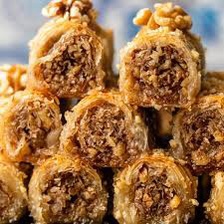
Phyllo pastry lends itself to many preparations, both sweet and savory. It can be used to make rolls, pies, baklava, strudel, and more.


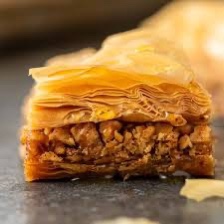
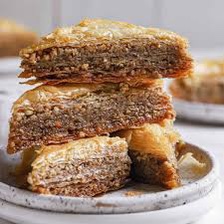
Here is a traditional Greek baklava recipe:
Ingredients:
- 1 pound phyllo dough
- 1 pound unsalted butter, melted
- 4 cups chopped walnuts
- 1 teaspoon ground cinnamon
- 1/2 teaspoon ground cloves
- 1 cup granulated sugar
- 1 cup water
- 1/2 cup honey
- 1 tablespoon lemon juice
Instructions:
- Preheat the oven to 350°F (175°C).
- In a large bowl, mix together the chopped walnuts, cinnamon, and cloves.
- Brush a 9×13 inch baking dish with melted butter.
- Lay a sheet of phyllo dough in the bottom of the pan, and brush it with melted butter. Repeat with 7 more sheets of phyllo, brushing each layer with butter.
- Spread half of the nut mixture over the phyllo layers.
- Place another layer of phyllo on top of the nuts, and brush it with butter. Repeat with 7 more sheets of phyllo, brushing each layer with butter.
- Spread the remaining nut mixture over the phyllo layers.
- Place another layer of phyllo on top of the nuts, and brush it with butter. Repeat with 7 more sheets of phyllo, brushing each layer with butter.
- Using a sharp knife, score the top layer of phyllo into diamond or square shapes.
- Bake the baklava in the preheated oven for 45-50 minutes, or until golden brown.
- While the baklava is baking, make the syrup. In a small saucepan, combine the sugar, water, honey, and lemon juice. Bring the mixture to a boil, then reduce the heat and simmer for 10-15 minutes, or until the syrup has thickened slightly.
- When the baklava is done, remove it from the oven and let it cool for 5-10 minutes.
- Pour the syrup over the baklava, making sure to cover all of the scored lines.
- Let the baklava cool completely before serving.
Here are some tricks for making Greek baklava extra special:
- Use a mix of nuts: While traditional Greek baklava is made with walnuts, you can mix it up by using a variety of nuts, such as almonds, pistachios, and hazelnuts. This will give your baklava a unique flavor and texture.
- Add spices: You can add a variety of spices to your nut mixture to give your baklava a unique flavor. Some commonly used spices include cinnamon, cloves, and nutmeg.
- Use flavored syrups: Instead of using a plain sugar syrup, you can add flavorings such as orange blossom water, rose water, or vanilla extract to give your syrup a unique flavor.
- Experiment with phyllo dough: While traditional phyllo dough is made with wheat flour, you can also use other types of phyllo dough, such as whole wheat or spelt, to add a nuttier flavor and texture to your baklava.
- Decorate the top: Once your baklava is baked and has cooled, you can decorate the top with chopped nuts or a dusting of powdered sugar to make it look even more special.



 SummerSimo Travel Troubles Notes and The Purring Page
Leave a comment