The world’s largest automaker, Toyota, has revealed that it plans to use regenerative fuel technology for the lunar rover, which is scheduled to be launched by the end of this decade, Reuters reported. Toyota is collaborating with the Japan Aerospace Exploration Agency (JAXA) on the rover.
In recent years, Japan has strengthened its ambitions in response to the emerging space race between the United States and China. Fifty years after the historic moon landing, the United States is preparing for another lunar mission called Artemis and establishing an outpost called Gateway in lunar orbit. Japan plans to have its astronaut at this lunar outpost and, through JAXA, is also working closely with the United States on the Artemis mission. Part of this agreement is a two-person lunar rover that Toyota is building, which has now been revealed to be powered by regenerative fuel technology.
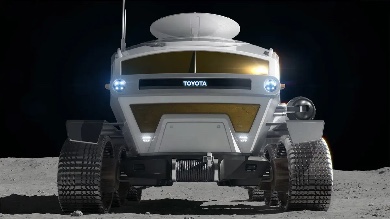
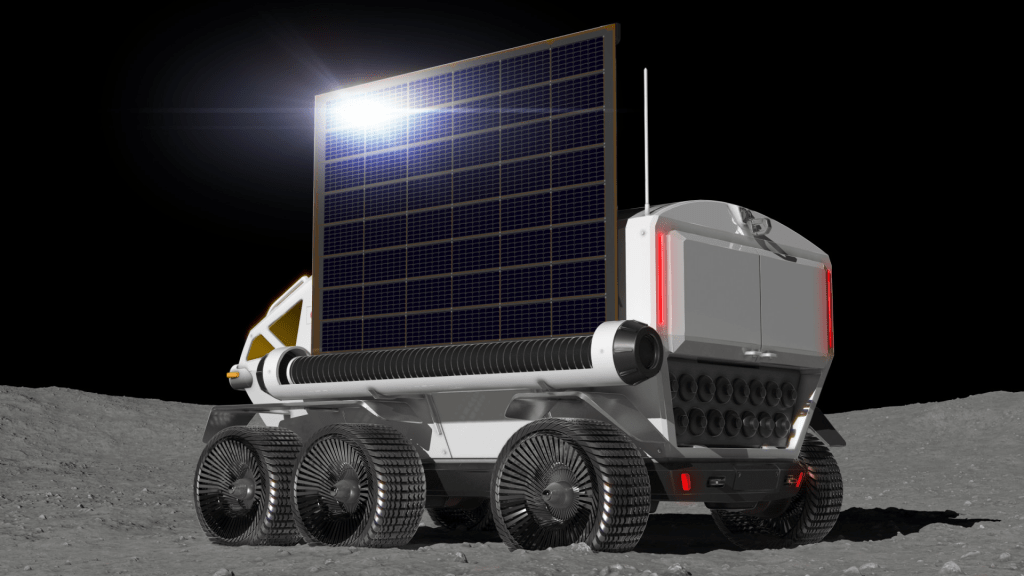
Toyota’s Lunar Cruiser will be powered by regenerative fuel technology The manned pressurized rover (dubbed “Lunar Cruiser”) is currently being developed by Toyota Motor Corporation.
Toyota’s lunar super rover.
The rovers on space missions have used solar power to generate energy and store it in their batteries for use at night. On the Moon, however, a single night is the equivalent of 14 days on Earth, and battery-based energy storage is challenging, if not impossible. In addition, Toyota’s plans for the rover dubbed Lunar Cruiser include a vehicle that can carry two humans for long periods, such as a month, for stable, long-term exploration of the Moon.
The rover, which is expected to weigh 10 tons, will face dusty environments and extreme temperatures on the Moon, making sure the inhabitants are protected from the elements and continue their exploratory work. For these reasons, Toyota’s Lunar Cruiser will be powered by regenerative fuel technology, which ensures better performance in the mission it has to accomplish Regenerative fuel technology
This is where regenerative fuel technology can help. According to Toyota’s recent update on the Lunar Cruiser, the manned vehicle will use solar energy to split water into hydrogen and oxygen through electrolysis during the long days on the Moon and store it in fuel cells for use overnight.
The energy stored in the fuel cells will then be converted into electricity and used to power the rover. At first, the water to be used will be sent from Earth. At a later time, Toyota has not ruled out using frozen water from the lunar poles to power its rover.
The Lunar Cruiser is expected to have a mission life of 10 years and work for more than 42 days a year carrying astronauts to the Moon. This would require a lot of water, and Toyota hopes another space company can figure out the logistics of extracting water ice or transporting the critical ingredient for its fuel cells to the Moon.
On Earth, water is not scarce, and Toyota is also looking to use the technology to power its future vehicles. As countries look for ways to move away from fossil fuels, fuel cells are being widely explored to power transportation.
In this way, the lunar rover also helps the development of terrestrial technology and adds a possibility to usable forms of locomotion on Earth

 SummerSimo Travel Troubles Notes and The Purring Page
Leave a comment