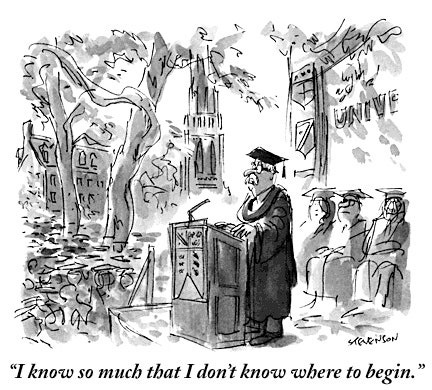
A research by two professors reveals: “Companies greatly appreciate uncritical, unthinking thinking and optimism. Smart people, who question things, embarrass” Is your career goal? Okay, you must look like an idiot
It was the brightest things to design the financial algorithms that led to disaster. “In that case, intelligent people did what they were asked to do, losing the overall vision. No one questioned what everyone thought was right to do, and the crisis broke out”.
ALVESSONE SPICER explored the galaxy of British and American organizations. “But the general principles are also valid for Europe, as for all contemporary organizations” specifies Alvesson. “For many years we have studied people who work in public and private companies, including many managers. In addition we have consulted academic research and examples from the mass media”.
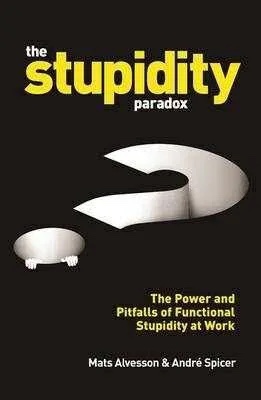
PAUL DIMALIO quotes Dilbert’s Principle: “A retarded chimpanzee can drink a case of beer and still be able to perform most managerial functions.” Twenty years after Scott Adams’ cartoon on corporate stupidity, the seal of science arrives: idiots, at work, make a career. Proof of this is a book entitled The paradox stupidity, power and Pitfalls of Functional Stupidity at Work, by Mats Alvesson and Andre Spicer. The former teaches “Business administration” at the University of Lund, Sweden; the second chairs the chair of “Organisational Behaviour” at the Cass Business School in London. The conclusion is merciless: “The uncritical thought Editor: and thoughtless, blind optimism, is much applauded in companies – explains Alvesson. Intelligent people question things, embarrassing people who accept the corporate order out of interest. You can become unpopular if you raise problems”,
The collapse of Wall Street is a typical example of functional stupidity, according to Alvesson’s definition: “A limited and narrow, conformist thought, of someone who never leaves his box”. The result? Don’t have doubts. Always be positive. “Optimism is a universal rule-explains Alvesson-, but the risk is to ignore serious problems and make wrong decisions”. Nokia learned this the hard way. “The culture of positivity, in part, has led to a poor sense of reality,” explains the Swedish professor. On the wings of optimism, Nokia has committed itself to overly ambitious projects. The smartphone to replace the iPhone arrived late and disappointed users. Before long, Nokia fell into the abyss, devoured by Microsoft.
The book
Hiding dust under the carpet helps harmony. Blindly believing that everything will turn out for the best lifts the spirit. Dodging problems is a panacea for the corporate mood. As the boat sinks, the yesmen gain favor from the upper echelons. The more capable, on the other hand, adjust so as not to have trouble, locking their intelligence in a drawer. After all, it is the most rational and convenient choice.
Alvesson Andre Spicer
“Many managers espouse a paradox – Alvesson explains -: they want autonomous and competent people, but also faithful, docile, reliable, who do not question their bosses and company regimes”. As during the 2008 financial crisis, triggered by the subprime mortgage bubble.
“Managers are sometimes victims of the exaltation of the ego – says Alvesson –

 SummerSimo Travel Troubles Notes and The Purring Page
Leave a comment