The Baalbek Megaliths are a set of ancient stone blocks located in the city of Baalbek, Lebanon. The blocks are some of the largest ever used in construction, with some weighing over 1,000 tons. The most famous of these blocks is the “Stone of the Pregnant Woman,” which weighs an estimated 1,000 tons.
The precise origin and purpose of the Baalbek Megaliths remain a subject of debate among historians and archaeologists. Some theories suggest that they were part of a temple complex built by the Phoenicians or the Romans, while others propose that they may have been used in prehistoric times for some unknown purpose.
The construction of these megaliths is particularly remarkable given the tools and technology available at the time they were supposedly built. The sheer scale of the blocks and their precise placement suggest a level of engineering expertise that is difficult to explain without modern technology.
Despite their ancient origins, the Baalbek Megaliths continue to fascinate researchers and visitors alike, and their mystery remains a subject of ongoing study and speculation.
There are several theories about the purpose of the Baalbek Megaliths, and challenges in determining its purpose:
- Religious or ceremonial use: One of the most popular theories is that the megaliths were used in religious or ceremonial contexts. Some researchers believe that the stones were part of a temple complex dedicated to the worship of Baal, a Phoenician deity, or Jupiter, a Roman god.
- Astronomical observatory: Some scholars have suggested that the megaliths were used as an astronomical observatory, with the stones marking the positions of the stars or planets.
- Defensive purposes: Another theory proposes that the megaliths were used as part of a defensive structure, possibly as part of a wall or fortress.
- Quarries or mines: Some researchers think that the megaliths were never actually used for construction, but rather were quarried or mined to be used elsewhere.
- Prehistoric use: Finally, some theories suggest that the megaliths may have been used for some unknown purpose in prehistoric times, long before the Phoenicians or Romans inhabited the region.
- Lack of historical records: One of the main challenges is the lack of historical records from the time period in which the megaliths were constructed. While there are some written accounts from the ancient Phoenician and Roman civilizations, they offer limited information about the purpose of the megaliths.
- Limited archaeological evidence: Another challenge is the limited archaeological evidence available. While some excavations have been conducted at the site, many of the megaliths are still buried underground, making it difficult to study them in detail.
- Age determination: The exact age of the megaliths is also unclear. While some researchers believe they date back to the Roman period, others have suggested that they may be much older, possibly dating back to prehistoric times.
- Unknown construction methods: The construction methods used to move and place the megaliths are still not fully understood. Given their enormous size and weight, it is unclear how ancient builders could have transported them over long distances, lifted them into place, and fitted them together so precisely.
- Multiple possible uses: Finally, there are multiple possible uses for the megaliths, and it is difficult to determine which theory is correct. Without more evidence, it may be impossible to definitively determine their original purpose.
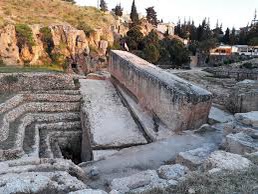

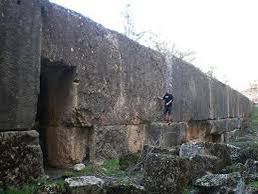
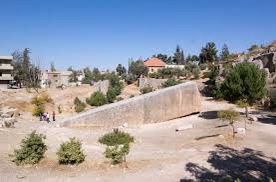

The Baalbek Megaliths are located in the city of Baalbek, Lebanon, which was known as Heliopolis during ancient times. The megaliths consist of several massive stone blocks, the largest of which is known as the “Stone of the Pregnant Woman.” This stone weighs an estimated 1,000 tons and is considered one of the largest single stones ever used in construction.
The megaliths are believed to have been constructed during the Roman period, around the 1st century AD, although some researchers have suggested that they may be much older, possibly dating back to prehistoric times. The stones were likely quarried from nearby mountains and transported to the construction site using a system of ramps and pulleys.
The purpose of the megaliths is still a subject of debate among historians and archaeologists. Some researchers believe that they were used in the construction of a massive temple complex dedicated to the worship of Jupiter, while others have proposed that they may have been used for astronomical observation or as part of a defensive structure.
Perhaps the most remarkable aspect of the Baalbek Megaliths is their incredible size and weight. Moving stones of this size and weight would have required a level of engineering expertise that is difficult to explain without modern technology. It is believed that the ancient builders used a combination of ramps, pulleys, and other simple machines to transport and position the stones.
The Baalbek Megaliths continue to be a source of fascination and mystery for researchers and visitors alike, and their significance to ancient cultures and civilizations is still a subject of ongoing study and exploration.

 SummerSimo Travel Troubles Notes and The Purring Page
Leave a comment