What is less known about SUNFLOWERS
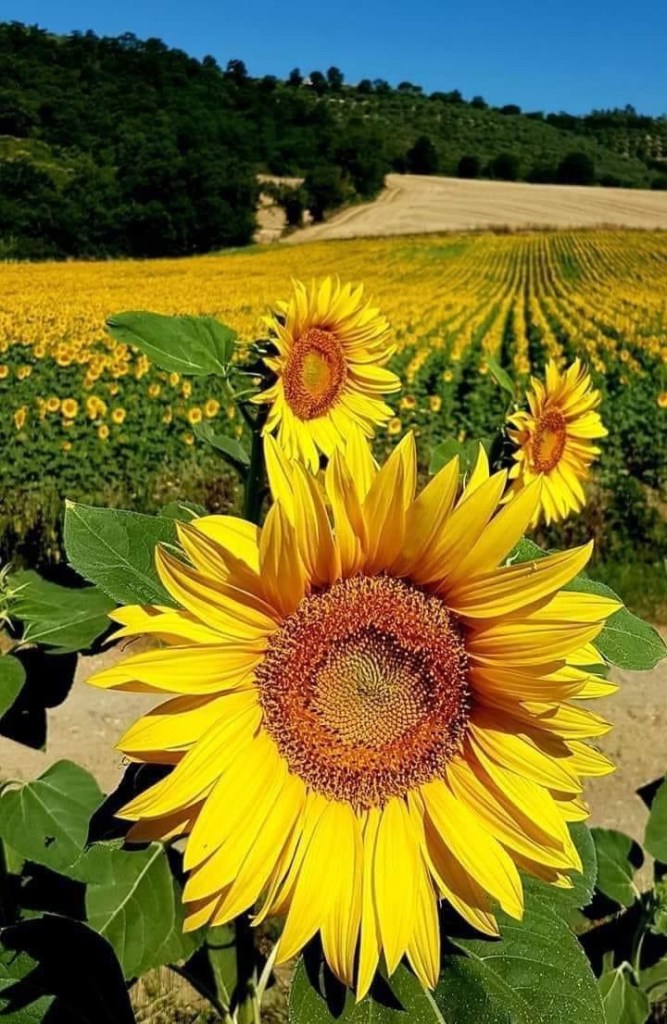
- Sunflowers are not just yellow – they can also be red, orange, maroon, brown, and even bi-colored.
- The tallest sunflower on record was grown in Germany and measured 30 feet and 1 inch tall!
- Sunflowers are not just pretty to look at – they’re also used to extract toxins from contaminated soil in a process called phytoremediation.
- Sunflower seeds were a popular food among Native American tribes, who ground them into flour for cakes and bread.
- The sunflower is the state flower of Kansas, USA, and is also the national flower of Ukraine.
- Sunflowers are not just for humans – they are also a popular food for birds, especially finches and chickadees.
- In addition to their use in cooking and as bird feed, sunflower seeds are also used to make biodiesel fuel.
- Sunflowers were used by the ancient Aztecs as a symbol of their sun god and were also used for medicinal purposes.
- Sunflowers have been grown in space as part of experiments to study their growth and development in zero-gravity conditions.
- Sunflowers are related to other members of the daisy family, including asters, chrysanthemums, and dandelions.
Phytoremediation
Phytoremediation is the process of using plants to remove or neutralize pollutants from contaminated soil, water, or air. Sunflowers are one of several plant species that have been used in phytoremediation projects due to their ability to absorb and break down toxins.
Sunflowers are particularly effective at removing heavy metals from contaminated soil. The plants absorb the metals through their roots and transport them to their leaves and stems, where they accumulate. Once the plants have reached maturity, they are harvested and removed from the site, along with the toxic metals they have absorbed.
The effectiveness of phytoremediation using sunflowers depends on several factors, including the concentration and type of contaminants present in the soil, as well as the specific sunflower variety and growing conditions. In some cases, it may be necessary to combine phytoremediation with other cleanup methods, such as excavation or chemical treatment.
Phytoremediation is considered to be a more environmentally friendly and cost-effective method of cleanup compared to traditional methods, which can involve excavation and transportation of contaminated soil to a landfill. However, the process can be slow, and it may take several years to achieve complete remediation of a contaminated site.
After sunflowers have absorbed toxins from contaminated soil, they can be removed from the site and disposed of in a manner that prevents the toxins from re-entering the environment. The process of removing the sunflowers and disposing of them depends on the level and type of contamination present in the soil.
If the contamination is low to moderate, the sunflowers may be harvested and taken to a landfill or a hazardous waste facility for disposal. In some cases, the sunflowers may be composted, which can help break down the toxins and render them less harmful.
If the contamination is severe, the sunflowers may be considered hazardous waste themselves, and special precautions may be required for their removal and disposal. In such cases, the sunflowers may be incinerated or treated with specialized chemical processes to neutralize the toxins before disposal.
It’s worth noting that while phytoremediation is a promising method for cleaning up contaminated sites, it may not be suitable for all situations. The effectiveness of phytoremediation depends on factors such as the type and concentration of toxins present, the growing conditions of the plants, and the specific plant species used. In some cases, traditional remediation methods such as excavation and removal of contaminated soil may be necessary.

 SummerSimo Travel Troubles Notes and The Purring Page
Leave a comment