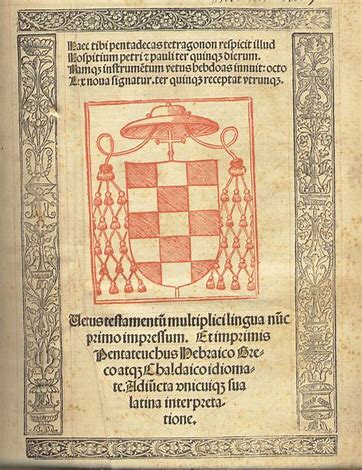
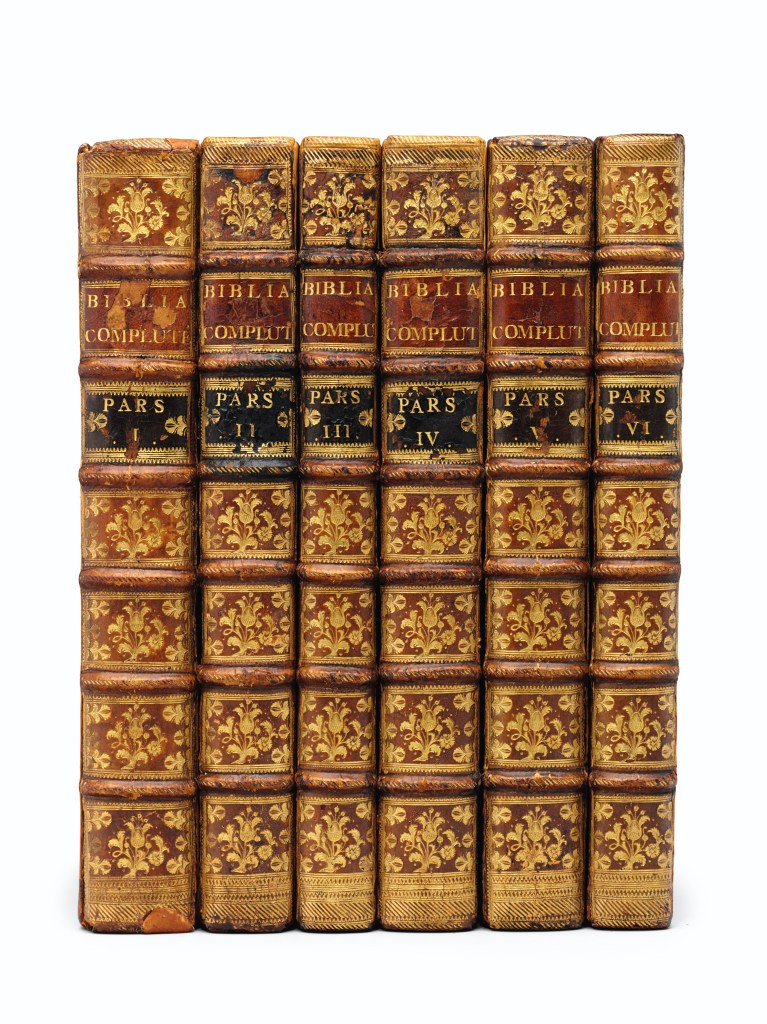
The Complutensian Polyglot Bible is a six-volume edition of the Bible in Hebrew, Greek, and Latin, with minor portions in Aramaic. It was produced at the University of Alcalá de Henares (also known as Complutense University) in Spain in the early 16th century.
The Complutensian Polyglot Bible was a monumental undertaking that required the collaboration of many scholars and experts in various fields. The project was initiated by Cardinal Francisco Jiménez de Cisneros, the Archbishop of Toledo and a leading figure in the Spanish Catholic Church. He was motivated by a desire to produce a new, accurate edition of the Bible that could serve as a basis for theological scholarship and for the defense of the Catholic faith.
The Complutensian Polyglot Bible is notable for its high level of scholarship and its attention to detail. The text was carefully edited and checked against multiple sources, and the edition includes extensive notes, commentaries, and annotations. The Hebrew text of the Old Testament was based on the Masoretic text, while the Greek text of the New Testament was based on the Textus Receptus.
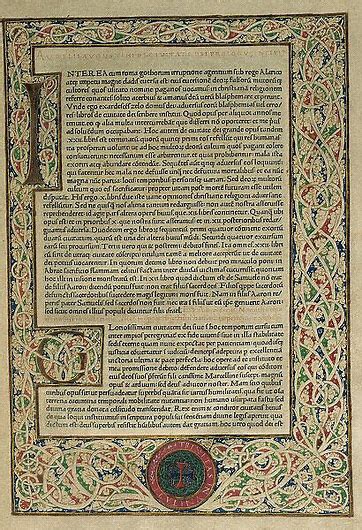
The Complutensian Polyglot Bible was also notable for its beautiful design and craftsmanship. The text was printed on high-quality paper, with clear and legible typefaces, and was adorned with decorative initials and borders. The pages were also carefully arranged and formatted, with the Hebrew and Greek text in the center of the page, and the Latin translation and commentary in the margins.
The Complutensian Polyglot Bible was a significant achievement in the history of biblical scholarship and printing. It helped to establish the critical study of the Bible as a scholarly discipline, and set the standard for subsequent editions of the Bible. Today, the Complutensian Polyglot Bible is highly prized by collectors and libraries, and is considered a cultural and artistic treasure.
The Complutensian Polyglot Bible had a significant impact on the Catholic Church in several ways.
First, it helped to promote the study of the Bible and the development of biblical scholarship within the Catholic Church. Prior to the publication of the Complutensian Polyglot Bible, many scholars within the Church relied on the Latin Vulgate version of the Bible, which was the standard translation used by the Church. However, the Complutensian Polyglot Bible provided access to the original Hebrew and Greek texts of the Bible, which allowed scholars to engage in more detailed and accurate textual analysis.
Second, the publication of the Complutensian Polyglot Bible helped to reinforce the authority of the Catholic Church. The Bible was a central text in the Church’s teachings, and the publication of a new, accurate edition of the Bible helped to strengthen the Church’s position as the ultimate authority on matters of faith and doctrine.
The Complutensian Polyglot Bible played a role in the Catholic Church’s response to the Protestant Reformation. The Protestant Reformers had challenged many of the traditional teachings and practices of the Catholic Church, and had emphasized the importance of studying the Bible in its original languages. The publication of the Complutensian Polyglot Bible helped to demonstrate that the Catholic Church was also committed to biblical scholarship and the study of original texts.
The Complutensian Polyglot Bible helped to advance the study of the Bible within the Catholic Church, reinforced the Church’s authority, and played a role in the Church’s response to the Protestant Reformation. It remains an important artifact of Catholic history and a symbol of the Church’s commitment to scholarship and learning.
Before the publication of the Complutensian Polyglot Bible, the Catholic Church primarily relied on the Latin Vulgate as its official translation of the Bible. The Latin Vulgate was a translation of the Bible into Latin completed by St. Jerome in the late 4th century, and it remained the standard translation used by the Catholic Church for many centuries.
In addition to the Latin Vulgate, the Catholic Church also used a wide range of other texts to help interpret and explain the Bible. These included commentaries, theological treatises, sermons, and other works by Church Fathers, such as Augustine of Hippo, Ambrose of Milan, and Gregory the Great. These works were often highly influential in shaping the Church’s understanding of the Bible and its teachings.
The Catholic Church also relied on various liturgical texts and prayers, such as the Mass and the Liturgy of the Hours, which drew heavily on the language and imagery of the Bible. These texts helped to reinforce the Church’s teachings and to integrate the Bible more fully into the life and worship of the Church.
The Catholic Church had a rich and diverse tradition of biblical interpretation and scholarship that extended back to the early centuries of Christianity. While the Latin Vulgate was the primary translation used by the Church, it was supported by a wide range of other texts and resources that helped to shape the Church’s understanding of the Bible and its teachings.
Yes, the Complutensian Polyglot Bible had some impact on the Protestant Reformation, although its influence was limited.
One way in which the Complutensian Polyglot Bible impacted the Protestant Reformation was by providing Catholic scholars with access to the original Hebrew and Greek texts of the Bible, which had been largely neglected in Catholic scholarship up to that point. This allowed Catholic scholars to engage in more detailed and accurate textual analysis, and helped to promote a more critical approach to biblical interpretation. This approach was similar to the approach taken by many Protestant Reformers, who emphasized the importance of studying the Bible in its original languages.
However, the publication of the Complutensian Polyglot Bible did not have a significant impact on the course of the Protestant Reformation itself. By the time the Complutensian Polyglot Bible was published in 1517, the Protestant Reformation was already underway, and many Protestant leaders had already begun to publish their own translations and interpretations of the Bible.
Furthermore, the Complutensian Polyglot Bible was produced under the auspices of the Catholic Church, and was intended to reinforce the Church’s authority and teachings. As a result, it did not challenge many of the doctrinal and institutional issues that were at the heart of the Protestant Reformation, such as the role of the Church, the authority of the Pope, and the doctrine of salvation. Instead, it sought to promote a more critical and scholarly approach to the Bible within the Catholic Church.
While the Complutensian Polyglot Bible did have an impact on the development of biblical scholarship and interpretation, its influence on the Protestant Reformation itself was relatively limited.
The Complutensian Polyglot Bible was a unique and groundbreaking work that differed from other translations of the Bible in several ways.
First, the Complutensian Polyglot Bible was the first published edition of the Bible to include the original Hebrew and Greek texts of the Old and New Testaments, respectively, alongside a Latin translation. This made it a valuable resource for scholars who wished to study the Bible in its original languages, and it set a new standard for biblical scholarship and translation.
Second, the Complutensian Polyglot Bible was a highly scholarly work that was the product of many years of careful research and editing. The text was based on a variety of manuscripts and sources, and the editors paid close attention to issues of textual criticism and accuracy. The edition also included extensive annotations, commentaries, and other supplementary material that helped to explain the text and its historical context.
Third, the Complutensian Polyglot Bible was a beautifully designed and crafted work that was intended to be both aesthetically pleasing and functional. The text was printed on high-quality paper with clear and legible typefaces, and it included decorative initials and borders. The pages were carefully arranged and formatted, with the Hebrew and Greek text in the center of the page and the Latin translation and commentary in the margins. The Complutensian Polyglot Bible was a groundbreaking work that represented a significant advance in the field of biblical scholarship and translation. Its combination of original language texts, scholarly editing, and beautiful design set a new standard for subsequent editions of the Bible and helped to shape the way that scholars and readers approached the text of the Bible for centuries to come.


 SummerSimo Travel Troubles Notes and The Purring Page