Construction of the Porta Nigra began in the late 2nd century AD during the reign of the Roman Emperor Marcus Aurelius. It was initially part of a defensive wall surrounding the city of Augusta Treverorum, now known as Trier. The gate was designed to control and regulate access to the city.
The name “Porta Nigra” originated in the Middle Ages due to the darkened color of the weathered stones. Initially, the gate was built using light grey sandstone, but over time, it darkened and earned its name.
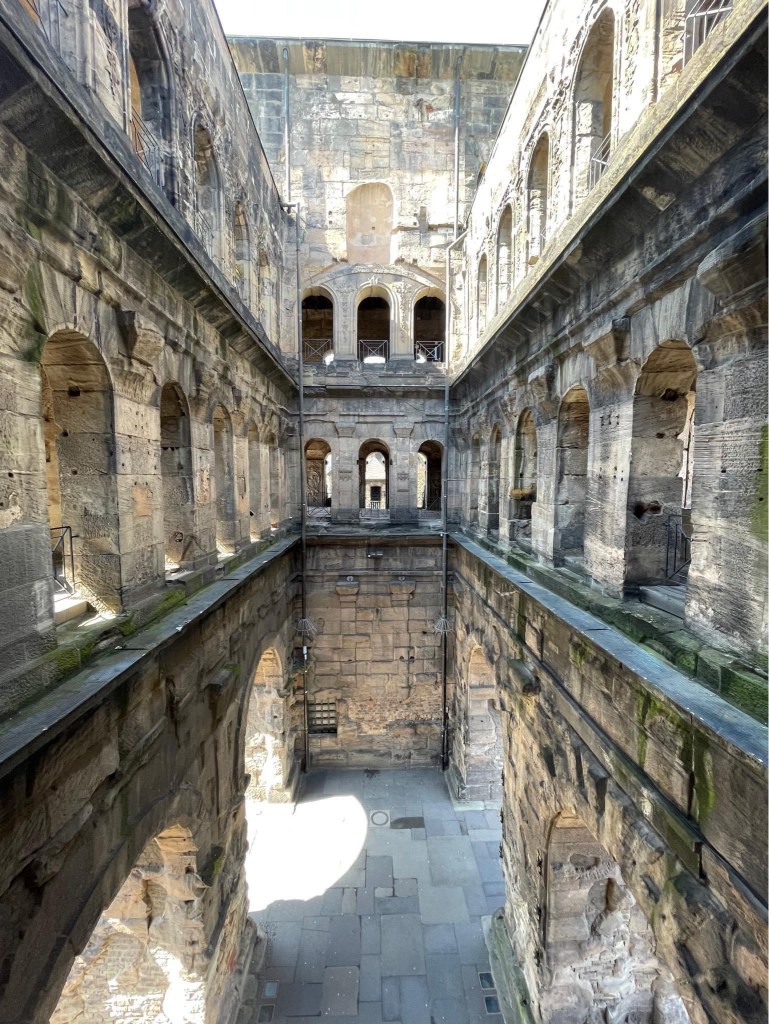
The Porta Nigra is a massive structure, consisting of four stories and reaching a height of approximately 30 meters. It is built in a rectangular shape, with two towers on the sides and a central archway for pedestrians and traffic. The gate was fortified with defensive features such as battlements and watchtowers.
Over the centuries, the purpose of the Porta Nigra had transformed. After the fall of the Roman Empire, it was used as a church, resulting in modifications such as the addition of chapels and windows. However, during the medieval era, the gate was no longer considered essential for defense, and it fell into disrepair. It was only in the 19th century that efforts were made to restore and preserve the structure.
Today, the Porta Nigra stands as a remarkable testament to Roman engineering and craftsmanship. Its architectural style reflects the influence of Roman military and monumental architecture. Visitors can explore the gate and its interior, learn about its history in the adjacent museum, and enjoy panoramic views of Trier from its upper levels.
The Porta Nigra serves as a remarkable link to the past, showcasing the enduring legacy of the Roman Empire and providing a glimpse into the grandeur and sophistication of ancient Roman civilization.
- Original Purpose: While the Porta Nigra is commonly associated with being a defensive city gate, recent archaeological findings suggest that its original purpose might have been more ceremonial. Some scholars believe that the gate was constructed as a monument to Emperor Marcus Aurelius, who was revered in Trier.
- Entry Requirements: The gate originally had three entrances: the central one for pedestrians and two side entrances for carriages and carts. However, it is worth noting that ordinary citizens were not allowed to use the central entrance, which was reserved for officials and the military.
- Hidden Rooms: During the restoration efforts in the 19th century, multiple hidden rooms were discovered within the Porta Nigra. These rooms were likely used for storage, housing soldiers, or providing space for ceremonies held in the structure.
- Symbolic Significance: The dark color that gave the gate its name, Porta Nigra, served as a symbol of power and authority. The Romans deliberately chose blackened stones to create an imposing and awe-inspiring structure.
- Preservation Challenges: Despite being made from sturdy sandstone, the Porta Nigra faced severe deterioration over the centuries. In the 19th century, efforts to restore the gate faced many challenges due to the use of iron clamps in the original construction, which caused havoc during the restoration process.
- World War II Damage: During World War II, the Porta Nigra suffered significant damage from air raids. The gate was hit by several bombs, leading to the collapse of portions of its upper levels. However, after the war, extensive efforts were made to repair and restore the gate to its former glory.
These lesser-known facts add depth and intrigue to the story of the Porta Nigra, showcasing its multifaceted history and the challenges faced in preserving this ancient Roman monument. Today, the Porta Nigra stands as a fascinating symbol of the enduring legacy of the Roman Empire.

 SummerSimo Travel Troubles Notes and The Purring Page