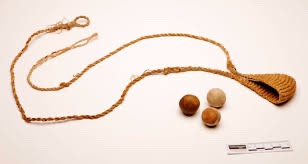
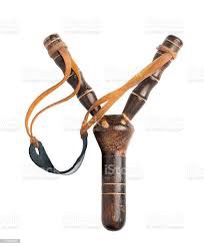
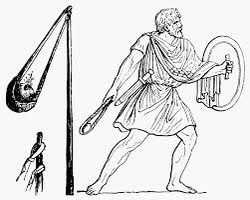
Slingshots were actually used in battle during ancient and medieval times. Slings have a long history dating back thousands of years, and they were used as effective projectile weapons in various cultures.
The reason slingshots may not have been as prevalent as other weapons like swords or bows in certain periods or regions is likely due to factors such as availability, cultural differences, and tactical considerations. Here are a few possible reasons:
- Cultural preferences: Different cultures had their own preferred weapons based on their military traditions and available resources. For example, civilizations that had advanced knowledge of metallurgy might have favored swords or spears over slingshots due to their durability and effectiveness in close combat.
- Skill and training requirements: The effective use of a sling required significant skill and practice. It takes time to develop accuracy and power with a sling, as it involves precise timing and coordination. Some armies may have prioritized training in other weapons that were easier to learn and use effectively.
- Tactical considerations: Slingshots had specific advantages and limitations in terms of range and accuracy. They were highly effective against lightly armored opponents and were particularly useful in siege warfare, where they could launch larger projectiles to break through structures or walls. However, in open battlefields, archers and cavalry might have been considered more versatile and flexible options.
- Availability of other weapons: Access to different types of weapons varied across regions and time periods. Slingshots were relatively simple to construct and were easily accessible to common folk, making them popular among guerrilla fighters and irregular troops. However, professional military forces may have had access to a wider array of weaponry, making slings less common among trained soldiers.
It’s essential to consider that historical records might not always provide a complete picture, and some instances of slingshot usage in warfare could have been underreported or lost to time. Nonetheless, while slingshots may not have been the primary weapon of choice in formalized battles, they did play a role in warfare and could be effective when used strategically.
Several ancient cultures widely used slings as weapons in battle. Here are a few examples:
- Ancient Greeks and Romans: Slings were commonly used by both Greeks and Romans. The Roman army, for instance, had specialized slingers known as funditores, who played important roles in their military campaigns.
- Ancient Persians: Persian slingers, known as slingers of the empire, were noted for their skill with slings. They were often used in siege warfare to launch projectiles at enemy fortifications.
- Balearic Islands: Perhaps the most renowned slingers in history were from the Balearic Islands (now part of Spain). Balearic slingers were highly skilled and gained a fearsome reputation for their accuracy and power with slings. They were employed as mercenaries by various ancient Mediterranean powers, including the Carthaginians and the Romans.
Advantages of slingshots in battle:
- Range and projectile power: Slingshots can propel projectiles at high speeds over considerable distances, allowing slingers to attack from outside the reach of many other weapons.
- Versatility: Slingshots can launch a wide range of projectiles, including stones, lead bullets, or even incendiary devices. This flexibility made them useful for a variety of purposes like skirmishing, siege assaults, or disrupting enemy formations.
- Low cost and availability: Slingshots were relatively inexpensive and easy to make, requiring materials like leather or woven fiber and a supply of stones or other suitable projectiles. This made them accessible to different social classes or even irregular forces.
Disadvantages of slingshots in battle:
- Skill and training: Developing skill with a slingshot requires significant practice and coordination. Achieving accuracy and power in using a sling effectively takes time and experience.
- Limited effectiveness against armored opponents: Slingshots were less effective against heavily armored foes, as their projectiles would have difficulty penetrating armor. They were more suited for engaging lightly armored or unarmored troops.
- Vulnerability in close combat: Slings offered limited utility in close-quarters combat compared to other weapons like spears or swords. Once engaged at short range, slingers were at a disadvantage unless they had additional weapons or support.
It’s worth noting that while slings were effective and widely used, they eventually fell out of favor as warfare evolved, with the introduction of more advanced projectile weapons such as bows, crossbows, and firearms.



 SummerSimo Travel Troubles Notes and The Purring Page